
By 400 CE, the …
Years: 411 - 411
By 400 CE, the traditional cremation burials characteristic of Suebi tribes such as the Quadi had disappeared in Bohemia, signaling shifts in cultural and migratory patterns.
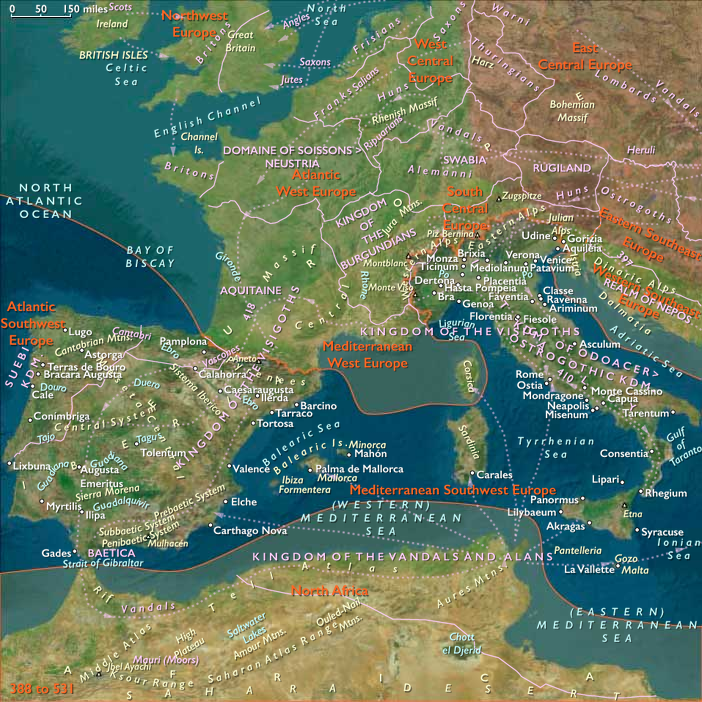
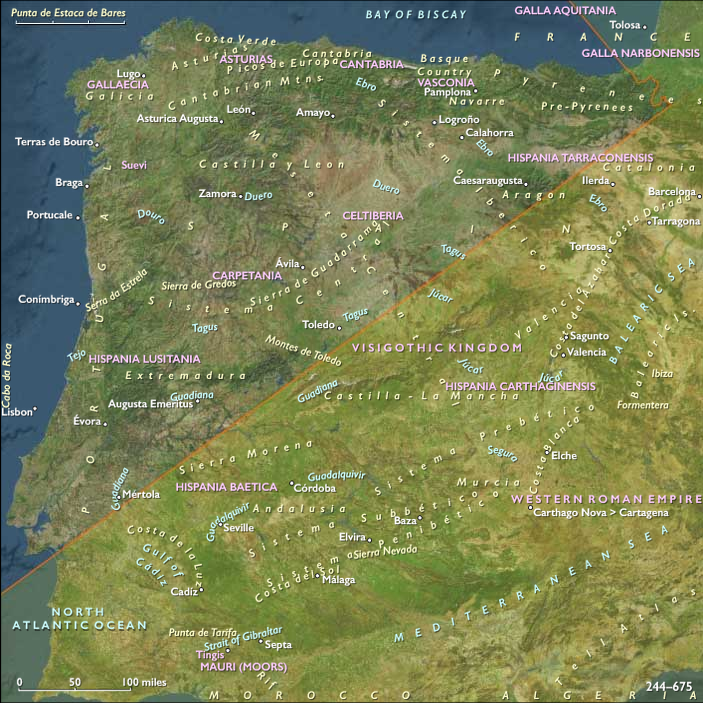
In December 409 CE, Hermeric, leader of a Suebi coalition, crossed the frozen Rhine alongside the Vandals and Alans, beginning their migration into Roman Hispania. After crossing the Pyrenees, his group—consisting of Quadi, Marcomanni, and Buri—establishes itself in the Roman province of Gallaecia (modern Galicia and northern Portugal).
The Question of Roman Recognition
The nature of the Suebi’s presence in Iberia remains debated. While Theodor Mommsen argued that they were foederati, and Ernst Stein suggested they had an agreement with the Roman usurper Magnus Maximus, granting them western Iberia, there is no primary evidence of any formal alliance between the Suebi and Rome.
In 411 CE (according to Ludwig Schmidt) or 417 CE (according to Felix Dahn), Hermeric supposedly made a treatywith Emperor Honorius. However, the only recorded event of 411 is the division of Iberia "sorte" (by lot) among the barbarian groups.
As a result of this division:
- The eastern part of Gallaecia, with its capital Bracara Augusta (modern Braga), falls under Suebi control.
- The western portion of the province is allocated to the Hasdingi Vandals, a larger and more populous group.
Locations
People
Groups
- Hasdingi
- Marcomanni (Germanic tribe)
- Suebi (Germanic tribe)
- Quadi (Germanic tribe)
- Buri (Germanic tribe)
- Italy, Praetorian prefecture of
- Roman Empire: Theodosian dynasty (Constantinople)
- Roman Empire, Western (Ravenna)
- Galicia, Kingdom of
- Suebic Kingdom of Galicia
Topics
- Middle Subatlantic Period
- Late Antiquity
- Migration Period
- Fall of the Western Roman Empire
- Vandal Raids on the Roman Empire
- Visigothic Raids on the Roman Empire, Later
Commodoties
Subjects
- Origins
- Commerce
- Environment
- Labor and Service
- Conflict
- Mayhem
- Faith
- Government
- Custom and Law
- Technology
- Movements
Regions
Subregions
Related Events
Showing 10 events out of 59149 total
Years: 411 - 411
Locations
People
Groups
- Hasdingi
- Marcomanni (Germanic tribe)
- Suebi (Germanic tribe)
- Quadi (Germanic tribe)
- Buri (Germanic tribe)
- Italy, Praetorian prefecture of
- Roman Empire: Theodosian dynasty (Constantinople)
- Roman Empire, Western (Ravenna)
- Galicia, Kingdom of
- Suebic Kingdom of Galicia
Topics
- Middle Subatlantic Period
- Late Antiquity
- Migration Period
- Fall of the Western Roman Empire
- Vandal Raids on the Roman Empire
- Visigothic Raids on the Roman Empire, Later
Commodoties
Subjects
- Origins
- Commerce
- Environment
- Labor and Service
- Conflict
- Mayhem
- Faith
- Government
- Custom and Law
- Technology
- Movements
Regions
Subregions