
Old Bering Sea Culture (100–243 CE) …
Years: 100 - 243
Old Bering Sea Culture (100–243 CE)
Ivory Ornamentation, Maritime Mastery, and Cross-Strait Connections
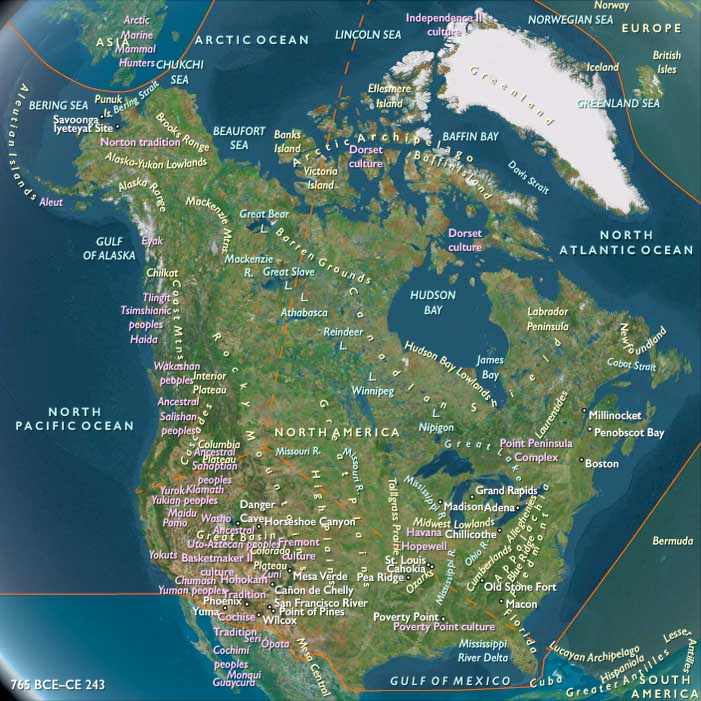
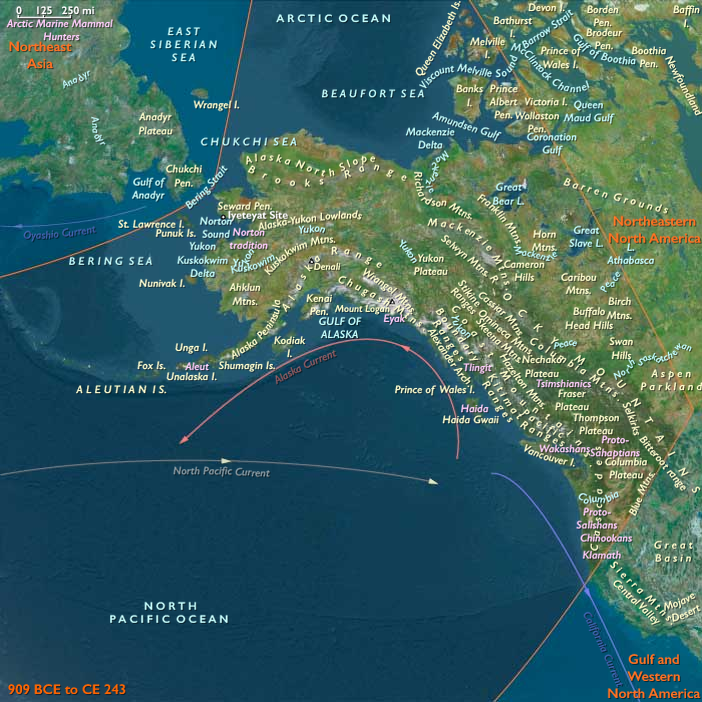
The Old Bering Sea culture (OBS) emerged in the early centuries of the Common Era along the Bering Strait, its sites scattered across northwestern Alaska, the Chukotka Peninsula, and intermediary islands like St. Lawrence and the Diomedes. OBS communities thrived in an environment defined by icy seas and rich marine resources, building a way of life that foreshadowed later Thule traditions.
Their settlements were small but strategic, perched on coasts close to sea-mammal migration routes. Houses were semi-subterranean, dug into permafrost for insulation, their superstructures reinforced with driftwood and whalebone. Within these homes, families crafted some of the most distinctive artifacts of the Arctic world. OBS artisans are celebrated for their elaborately engraved ivory: harpoon heads, knife handles, and ornaments decorated with sweeping curvilinear and geometric motifs. Many of these designs suggest symbolic or spiritual significance, blending functionality with artistry.
Economically, OBS people were consummate marine hunters. Seals, walrus, and small whales formed the subsistence base, augmented by caribou, birds, and fish. Harpoon technology was advanced, with toggling heads designed to secure prey in turbulent waters. Dog traction and umiak-style boats likely expanded mobility, enabling exchange and kinship ties across the Strait.
Most significantly, the Old Bering Sea horizon demonstrates the interconnectedness of Alaska and Siberia. Similarities in house types, tools, and ornament indicate sustained cross-Strait contact. OBS thus represents not an isolated community, but a cultural zone bridging continents, one that set the foundation for the later Thule expansion eastward across the Arctic.
Locations
Groups
Topics
Commodoties
Subjects
Regions
Subregions
Years: 100 - 243
Locations
Groups
Topics
Commodoties
Subjects
Regions
Subregions