
The octagonal church of San Vitale in …
Years: 548 - 548
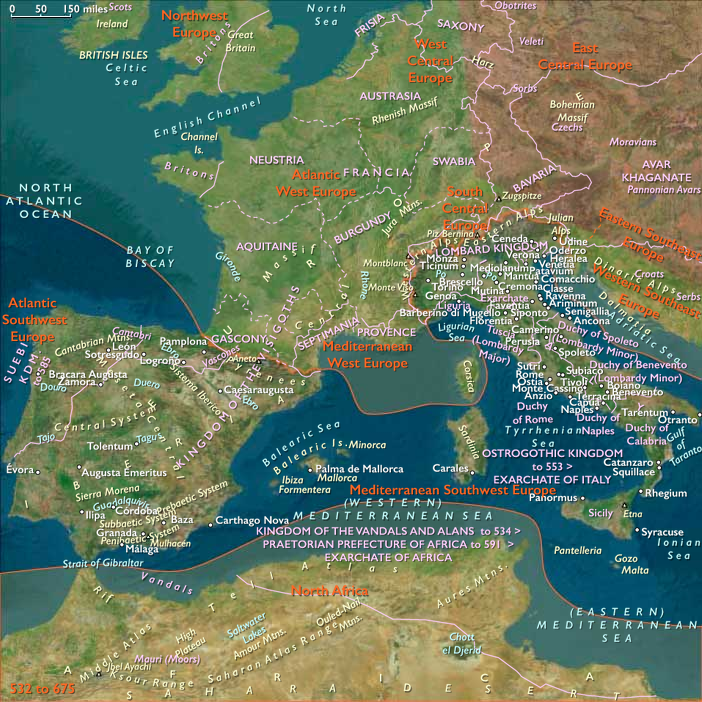
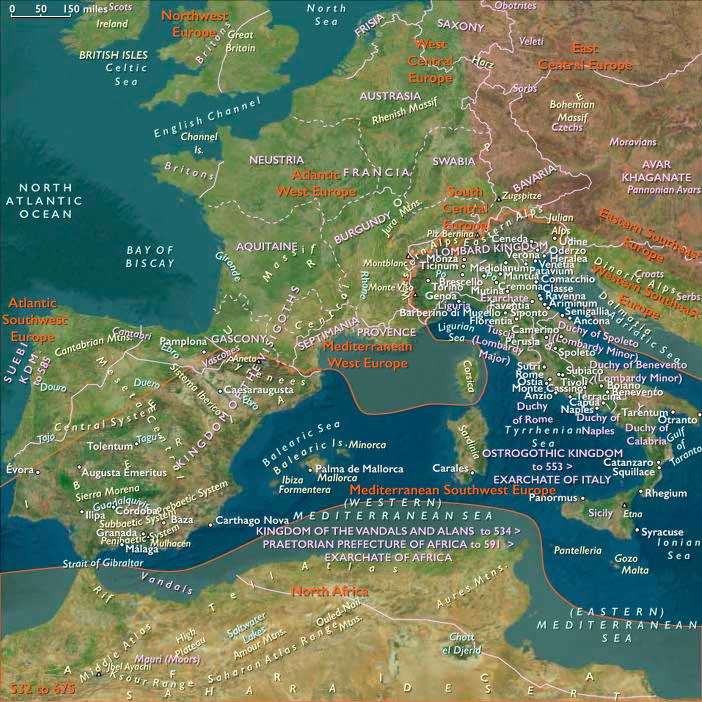
The octagonal church of San Vitale in Ravenna, begun in the 520s, is completed by 548.
Dedicated to the local saint, Vitalis, and noted for its fine mosaics, the church reflects the Late Roman interest in circular and octagonal domed structures.
The elaborate mosaics of the church of San Vitale occupy the extended chancel and apse.
The apse conch (half dome) depicts a beardless Christ in triumph flanked by angels, Saint Vitalis, and Bishop Ecclesius, during whose episcopate the building was begun.
The imagery portrays Christ bestowing a martyr’s crown on Saint Vitalis and receiving a model of the church from Ecclesius.
Above the richly sculpted arcades on each side are lunettes portraying Old Testament scenes whose themes are the offerings of Abel, Abraham, and Melchizedek.
Imaginative renditions of New Testament themes, as well as naturalistic Late Roman decorations, fill the arches, vaulting, and remaining space.
The two large wall panels flanking the altar depict the Eastern Roman emperor Justinian and his wife, the empress Theodora, with their retinues, presenting liturgical vessels to the church.
This naturalistic portrait of Justinian shows him as weary and troubled, but the bodies of the royal couple, overlapping one another like cutouts, appear weightless and without volume.
Despite their haloes, the monarchs are represented not as deities but as saintly rulers.
Locations
People
Groups
- East, or Oriens, Praetorian prefecture of
- Christianity, Chalcedonian
- Italy, Praetorian prefecture of
- Roman Empire, Eastern: Justinian dynasty
Topics
Commodoties
Subjects
- Commerce
- Architecture
- Watercraft
- Painting and Drawing
- Environment
- Labor and Service
- Conflict
- Faith
- Government
- Technology
- Movements
Regions
Subregions
Related Events
Showing 10 events out of 57651 total
Years: 548 - 548
Locations
People
Groups
- East, or Oriens, Praetorian prefecture of
- Christianity, Chalcedonian
- Italy, Praetorian prefecture of
- Roman Empire, Eastern: Justinian dynasty
Topics
Commodoties
Subjects
- Commerce
- Architecture
- Watercraft
- Painting and Drawing
- Environment
- Labor and Service
- Conflict
- Faith
- Government
- Technology
- Movements
Regions
Subregions