
The Obrotrite prince Gottschalk had conquered the …
Years: 1066 - 1066
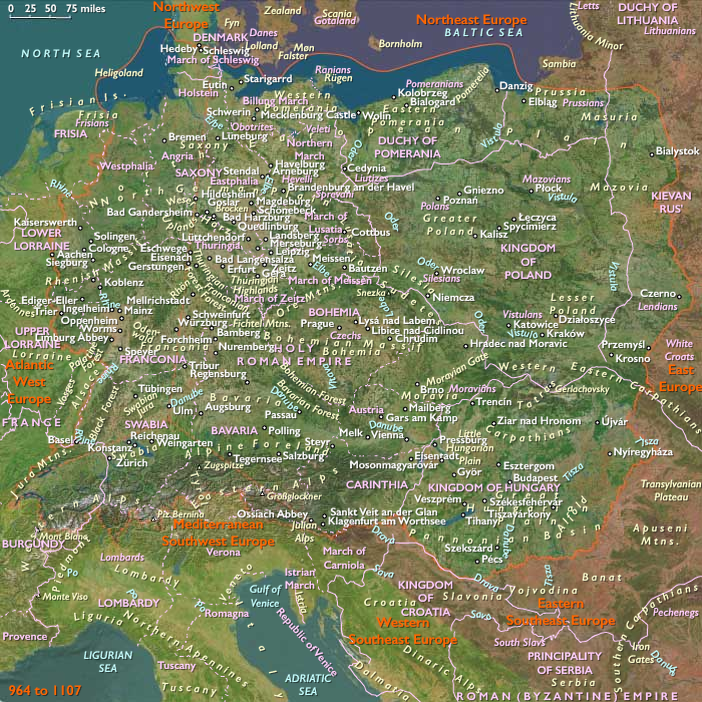
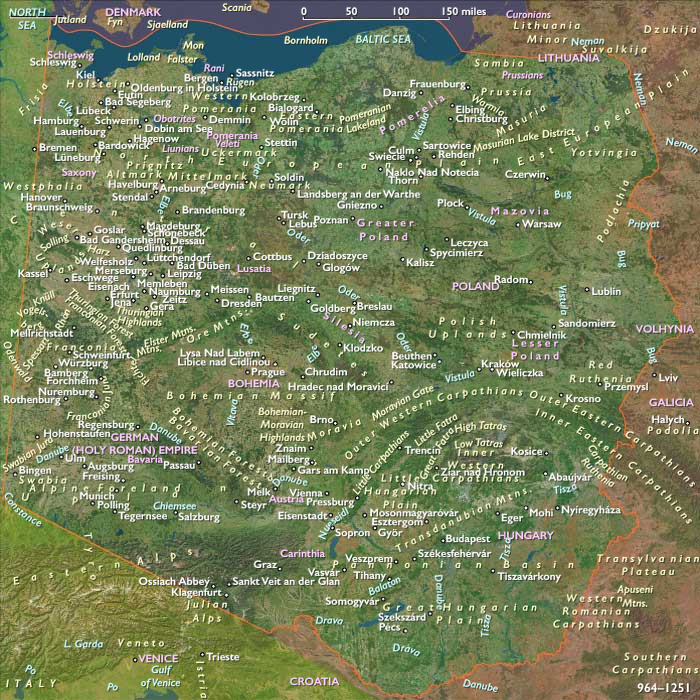
The Obrotrite prince Gottschalk had conquered the Circipani and Kessini during the so-called Liutizci Civil War (Lutizischer Bruderkrieg) of 1057.
He has secured the territory through the building of new fortresses; the old fortifications of the conquered tribes have been removed.
He nurtures alliance with his Christian neighbors, Scandinavian and German, and has joined in an alliance with Duke Bernard and King Magnus to defeat the Liutici in battle.
He has subdued the Liutici and the diocese of Bremen pays him tribute.
Allied with the Lutici, the Obotrites murder Gottschalk in a 1066 rebellion, capturing the castle of Lenzen and forcing his sons Henry and Budivoj to flee to Denmark and to Lüneburg respectively.
John, the bishop of Mecklenburg, is captured and sacrificed at Radgosc in the course of the rebellion.
As a consequence, the bishop of Halberstadt and the emperor will sack and destroy Radgosc in subsequent campaigns.
Locations
People
Groups
- Polytheism (“paganism”)
- Germans
- Rani (Slavic tribe)
- Polabian Slavs (West Slavs)
- Wends, or Sorbs (West Slavs)
- Christianity, Chalcedonian
- Obotrites (Slavic tribal confederation)
- Denmark, Kingdom of
- Danes (Scandinavians)
- Saxony, Duchy of
- German, or Ottonian (Roman) Empire
- Lutici (West Slavic Polabian tribe)
- Meissen, March of
- Magdeburg, Archbishopric of
- Norway, independent Kingdom of
Commodoties
Subjects
Regions
Subregions
Years: 1066 - 1066
Locations
People
Groups
- Polytheism (“paganism”)
- Germans
- Rani (Slavic tribe)
- Polabian Slavs (West Slavs)
- Wends, or Sorbs (West Slavs)
- Christianity, Chalcedonian
- Obotrites (Slavic tribal confederation)
- Denmark, Kingdom of
- Danes (Scandinavians)
- Saxony, Duchy of
- German, or Ottonian (Roman) Empire
- Lutici (West Slavic Polabian tribe)
- Meissen, March of
- Magdeburg, Archbishopric of
- Norway, independent Kingdom of
Commodoties
Subjects
Regions
Subregions