
Nine European men are released from the …
Years: 1657 - 1657
Nine European men are released from the VOC's service in 1657 , given the status of "free burghers," and granted blocks of land.
They were exempted from taxation for twelve years, but the VOC holds a mortgage on their lands.
They are free to trade with Khoikhoi for sheep and cattle, but they are prohibited from paying higher prices for the stock than does the VOC, and they are told not to enslave the local pastoralists.
They are encouraged to grow crops, especially grains, for sale to the VOC, but they are not allowed to produce anything already grown in the company's own gardens.
By such measures, the VOC hopes not only to increase local production and thereby to pay the costs of the settlement, but also to prevent any private producers from undercutting the VOC's control over prices.
They were exempted from taxation for twelve years, but the VOC holds a mortgage on their lands.
They are free to trade with Khoikhoi for sheep and cattle, but they are prohibited from paying higher prices for the stock than does the VOC, and they are told not to enslave the local pastoralists.
They are encouraged to grow crops, especially grains, for sale to the VOC, but they are not allowed to produce anything already grown in the company's own gardens.
By such measures, the VOC hopes not only to increase local production and thereby to pay the costs of the settlement, but also to prevent any private producers from undercutting the VOC's control over prices.
People
Groups
- Khoikhoi
- San (Bushmen)
- Dutch people
- Tswana people
- Xhosa people
- Zulu people
- Nguni people
- Netherlands, United Provinces of the (Dutch Republic)
- Dutch East India Company (Vereenigde Oostindische Compagnie or VOC in Dutch, literally "United East Indies Company")
- Cape Colony, Dutch East India Company's
Topics
Commodoties
Subjects
Regions
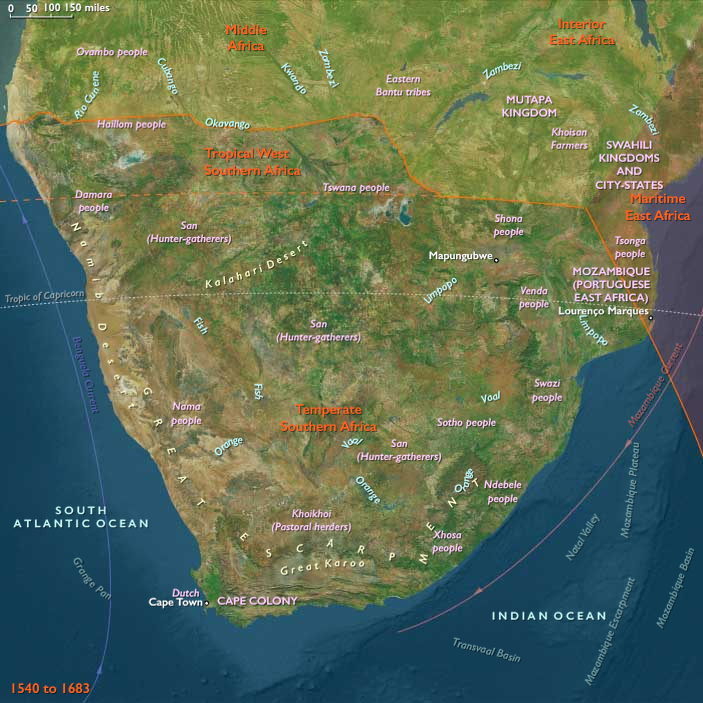
Subregions
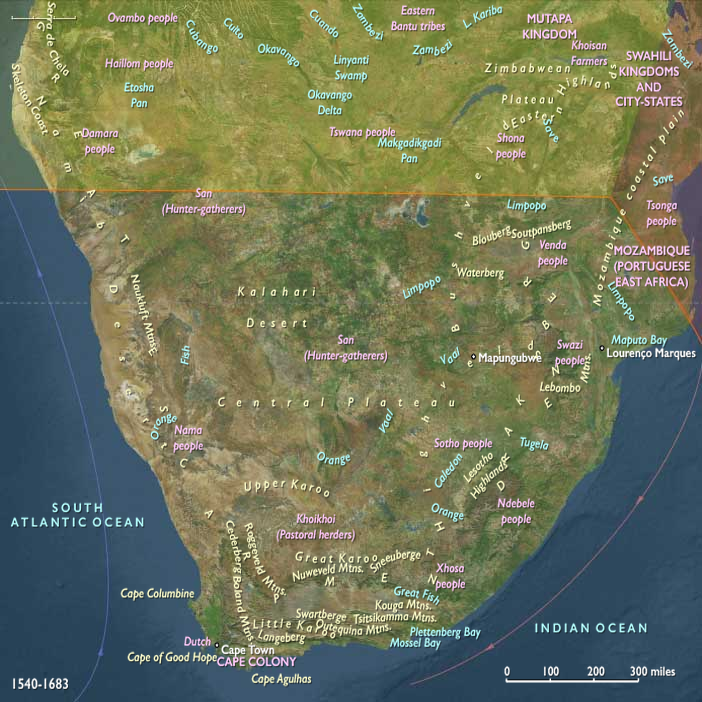
Related Events
Showing 10 events out of 31424 total
Years: 1657 - 1657
People
Groups
- Khoikhoi
- San (Bushmen)
- Dutch people
- Tswana people
- Xhosa people
- Zulu people
- Nguni people
- Netherlands, United Provinces of the (Dutch Republic)
- Dutch East India Company (Vereenigde Oostindische Compagnie or VOC in Dutch, literally "United East Indies Company")
- Cape Colony, Dutch East India Company's
Topics
Commodoties
Subjects
Regions
Subregions