
The Tulinids and the Ikhshidids have brought …
Years: 820 - 963
The Tulinids and the Ikhshidids have brought Egypt peace and prosperity by pursuing wise agrarian policies that increased yields, by eliminating tax abuses, and by reforming the administration.
Neither the Tulinids nor the Ikhshidids have sought to withdraw Egypt from the Islamic empire headed by the caliph in Baghdad.
Ahmad ibn Tulun and his successors were orthodox Sunni Muslims, loyal to the principle of Islamic unity.
Their purpose was to carve out an autonomous and hereditary principality under loose caliphal authority.
The Fatimids, the next dynasty to rule Egypt, unlike the Tulinids and the Ikhshidids, want independence, not autonomy, from Baghdad.
In addition, as heads of a great religious movement, Ismaili Shia Islam, they also challenge the Sunni Abbasids for the caliphate itself.
The name of the dynasty is derived from Fatima, the daughter of the Prophet Muhammad and the wife of Ali, the fourth caliph and the founder of Shia Islam.
The leader of the movement, who had first established the dynasty in Tunisia in 906, claimed descent from Fatima.
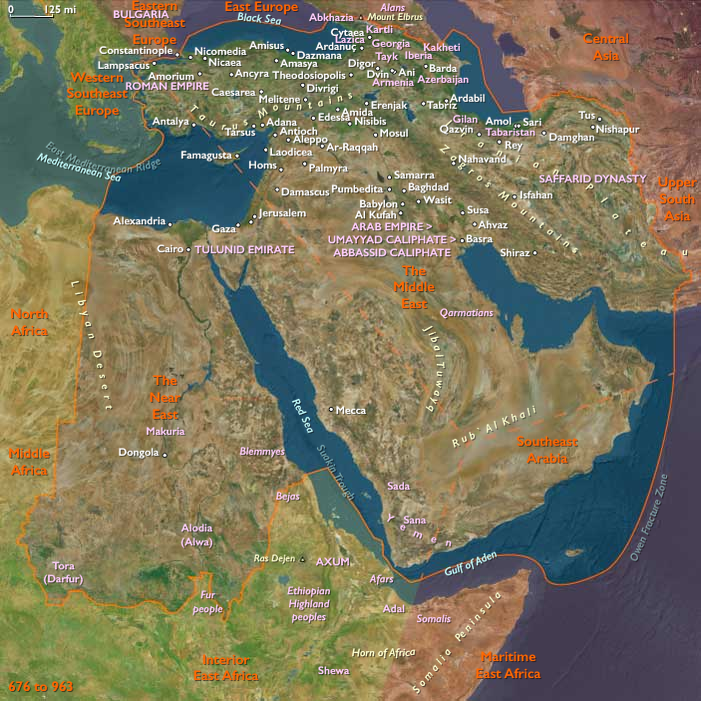
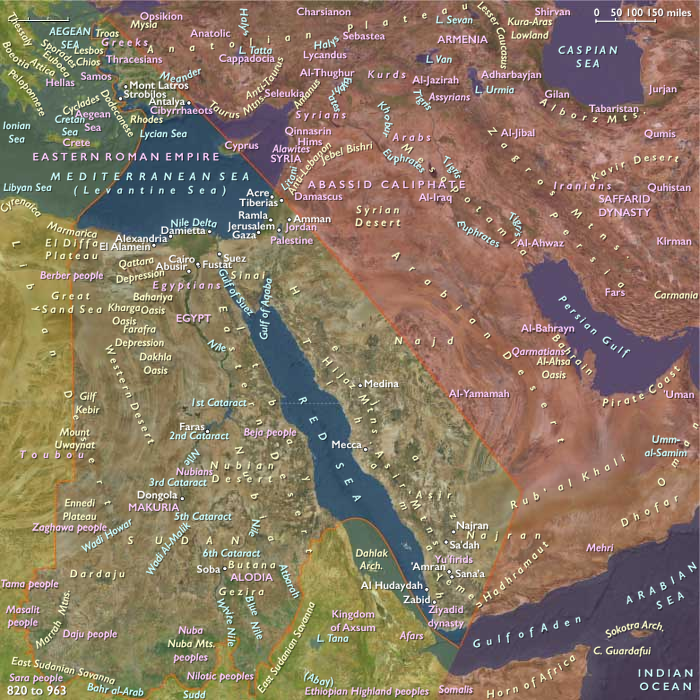
Under the Fatimids, Egypt becomes the center of a vast empire, which at its peak comprises North Africa, Sicily, Palestine, Syria, the Red Sea coast of Africa, Yemen, and the Hijaz in Arabia, including the holy cities of Mecca and Medina.
Control of the holy cities confers enormous prestige on a Muslim sovereign and the power to use the yearly pilgrimage to Mecca to his advantage.
Cairo is the seat of the Shia caliph, who is the head of a religion as well as the sovereign of an empire. The Fatimids establish Azhar in Cairo as an intellectual center where scholars and teachers elaborate the doctrines of the Ismaili Shia faith.
Locations
Groups
- Egyptians
- Arab people
- Jews
- Christians, Monophysite
- Christianity, Chalcedonian
- Coptic Orthodox Church of Alexandria
- Greeks, Medieval (Byzantines)
- Islam
- Egypt in the Middle Ages
- Muslims, Shi'a
- Ismailism
- Abbasid Caliphate (Baghdad)
- Ifriqiya, Fatimid Caliphate of
- Ikhshidid dynasty
- Ifriqiya, Fatimid Caliphate of
Subjects
Regions
Subregions
Years: 820 - 963
Locations
Groups
- Egyptians
- Arab people
- Jews
- Christians, Monophysite
- Christianity, Chalcedonian
- Coptic Orthodox Church of Alexandria
- Greeks, Medieval (Byzantines)
- Islam
- Egypt in the Middle Ages
- Muslims, Shi'a
- Ismailism
- Abbasid Caliphate (Baghdad)
- Ifriqiya, Fatimid Caliphate of
- Ikhshidid dynasty
- Ifriqiya, Fatimid Caliphate of
Subjects
Regions
Subregions