
There will be thirty emirates and the …
Years: 1828 - 1839
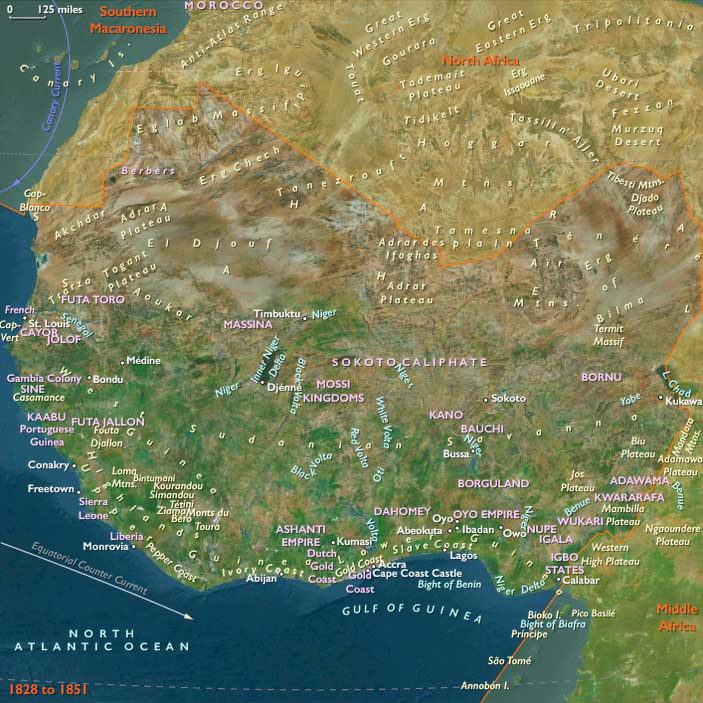
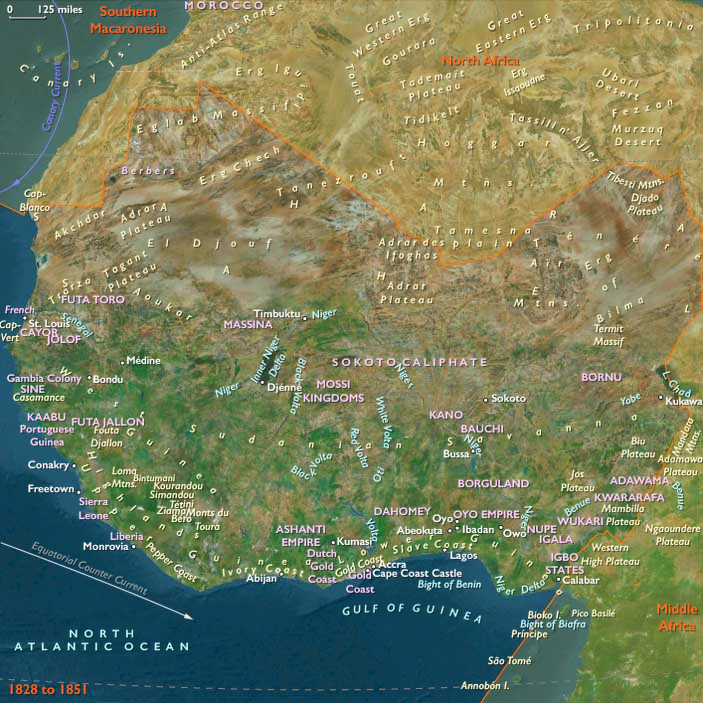
There will be thirty emirates and the capital district of Sokoto—which itself is a large and populous territory although not technically an emirate—by the middle of the nineteenth century in what is today Nigeria.
All the important Hausa emirates, including Kano, the wealthiest and most populous, are directly under Sokoto.
Adamawa, which had been established by Fulani forced to evacuate Borno, is geographically the biggest, stretching far to the south and east of its capital at Yola into modern Cameroon.
Ilorin, which becomes part of the caliphate in the 1830s, is initially the headquarters of the Oyo cavalry that had provided the backbone of the king's power.
An attempted coup d'etat by the general of the cavalry in 1817 had backfired when the cavalry itself revolted and pledged its allegiance to the Sokoto Caliphate.
The cavalry is largely composed of Muslim slaves from farther north, and they see in the jihad a justification for rebellion.
In the 1820s, Oyo had been torn asunder, and the defeated king and the warlords of the Oyo Mesi had retreated south to form new cities, including Ibadan, where they carry on their resistance to the Sokoto caliphate and fight among themselves as well.
Locations
Groups
- Igbo people
- Hausa Kingdoms, the
- Hausa people
- Yoruba people
- Ijaw people
- Kano (Hausa city state)
- Zaria (Zazzau), Hausa City-State of
- Katsina (Hausa city state)
- Gobir (Hausa city state)
- Benin Empire
- Ibibio people
- Bonny, Ijo city-state of
- Oyo Empire
- Calabar, Efik state of
- Khasso, Fulani Jihad State
- Aro Confederacy
- Fouta Djallon (Futa Jallon) Fulani Jihad State
- Elem, Ijo city-state of
- Fouta-Toro, or Futa Toro, Fulani Jihad State of
- Fulani Empire
- Sokoto, Kingdom of
- Macina (Masina), Fulani Jihad State of
- Zaria, Emirate of
- Oyo, Yoruba Kingdom of
Topics
Commodoties
Subjects
Regions
Subregions
Years: 1828 - 1839
Locations
Groups
- Igbo people
- Hausa Kingdoms, the
- Hausa people
- Yoruba people
- Ijaw people
- Kano (Hausa city state)
- Zaria (Zazzau), Hausa City-State of
- Katsina (Hausa city state)
- Gobir (Hausa city state)
- Benin Empire
- Ibibio people
- Bonny, Ijo city-state of
- Oyo Empire
- Calabar, Efik state of
- Khasso, Fulani Jihad State
- Aro Confederacy
- Fouta Djallon (Futa Jallon) Fulani Jihad State
- Elem, Ijo city-state of
- Fouta-Toro, or Futa Toro, Fulani Jihad State of
- Fulani Empire
- Sokoto, Kingdom of
- Macina (Masina), Fulani Jihad State of
- Zaria, Emirate of
- Oyo, Yoruba Kingdom of
Topics
Commodoties
Subjects
Regions
Subregions