
Emperor Henry V’s Campaign Against Flanders and …
Years: 1106 - 1106
Emperor Henry V’s Campaign Against Flanders and the Peace of Douai (After 1105)
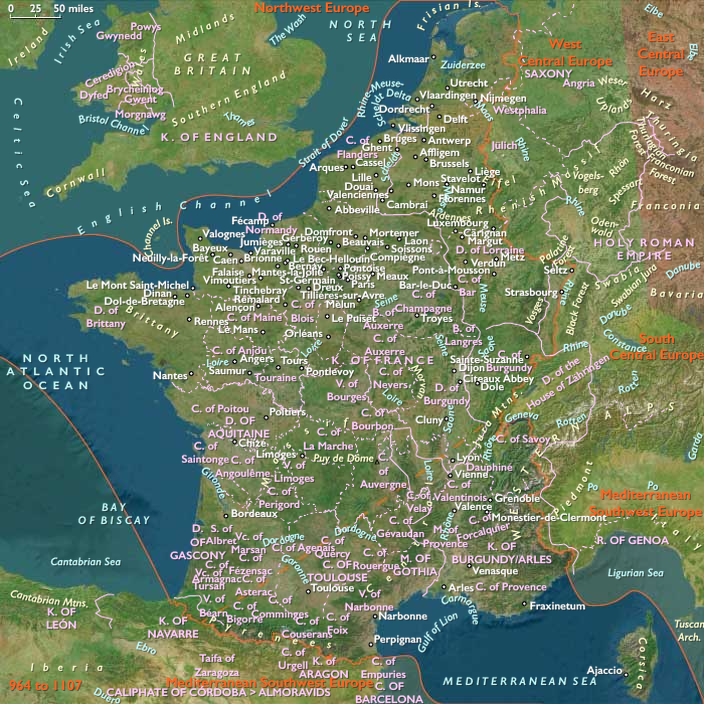
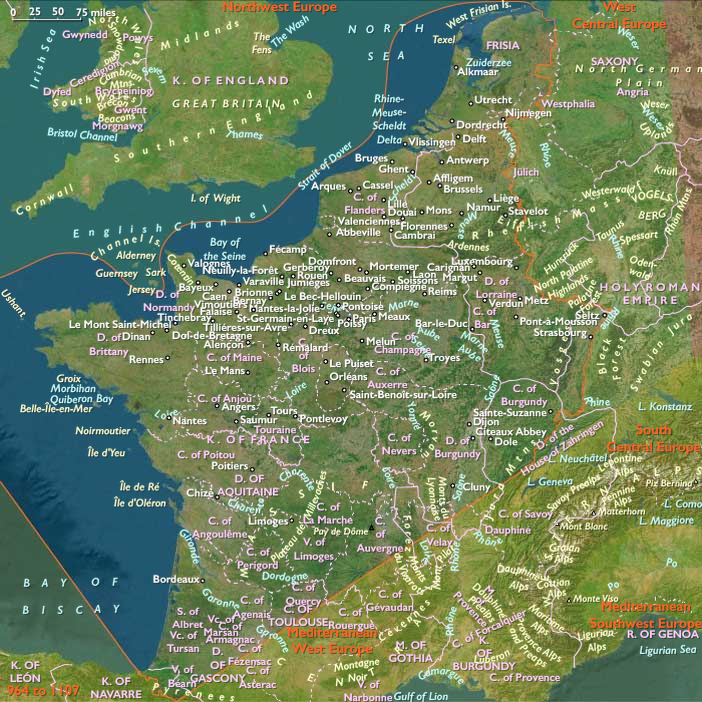
After 1105, the new Holy Roman Emperor, Henry V, marched into Flanders, seeking to reassert imperial authority over the region. He was supported by Baldwin III, Count of Hainaut, and an army from Holland, indicating that Henry V had allies within the Low Countries willing to challenge Count Robert II of Flanders.
However, Robert II successfully stopped Henry’s advance outside Douai, forcing the emperor to recognize Flemish control over key territories, particularly Douai and Cambrai.
Henry V’s Invasion of Flanders
- Following his accession to the imperial throne, Henry V sought to reinforce imperial control over Flanders, continuing the policies of his father, Henry IV.
- He was allied with Baldwin III of Hainaut, whose dynastic ambitions clashed with Robert II.
- An army from Holland also joined the imperial forces, further strengthening Henry’s coalition.
Robert II’s Defense and the Peace of Douai
- Robert II of Flanders met the imperial army outside Douai, where a decisive confrontation was averted.
- Rather than engaging in a prolonged conflict, both sides negotiated peace, with Henry V recognizing Robert’s control over Douai and Cambrai.
- This agreement secured Flanders’ independence from direct imperial rule, ensuring that Robert II remained a dominant force in northern Europe.
Consequences of the Peace
- Robert II’s successful defense reaffirmed Flemish autonomy, preventing Flanders from becoming a vassal state of the Holy Roman Empire.
- The treaty strengthened Robert’s territorial claims, securing Douai and Cambrai under Flemish rule.
- Henry V’s inability to defeat Robert signaled the limits of imperial authority in the Low Countries, forcing him to redirect his focus elsewhere in Europe.
The Peace of Douai, following Emperor Henry V’s failed campaign, marked another victory for Robert II of Flanders, allowing him to retain control over key strategic cities and maintain Flanders as a powerful, independent principality in medieval Europe.
Locations
People
Groups
- Germans
- Papal States (Republic of St. Peter)
- Flanders, County of
- German, or Ottonian (Roman) Empire
- Christians, Roman Catholic
Topics
Subjects
Regions
Subregions
Related Events
Showing 10 events out of 49914 total
Years: 1106 - 1106
Locations
People
Groups
- Germans
- Papal States (Republic of St. Peter)
- Flanders, County of
- German, or Ottonian (Roman) Empire
- Christians, Roman Catholic
Topics
Subjects
Regions
Subregions