
Filters:
The Franco-Scottish Army Prepares for Battle: The …
Years: 1424 - 1424
The Franco-Scottish Army Prepares for Battle: The Campaign Leading to Verneuil (August 1424)
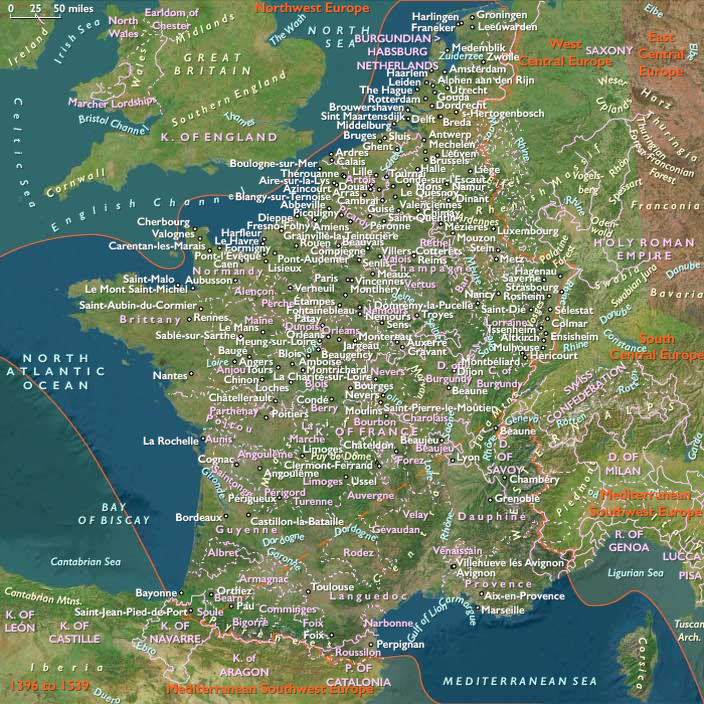
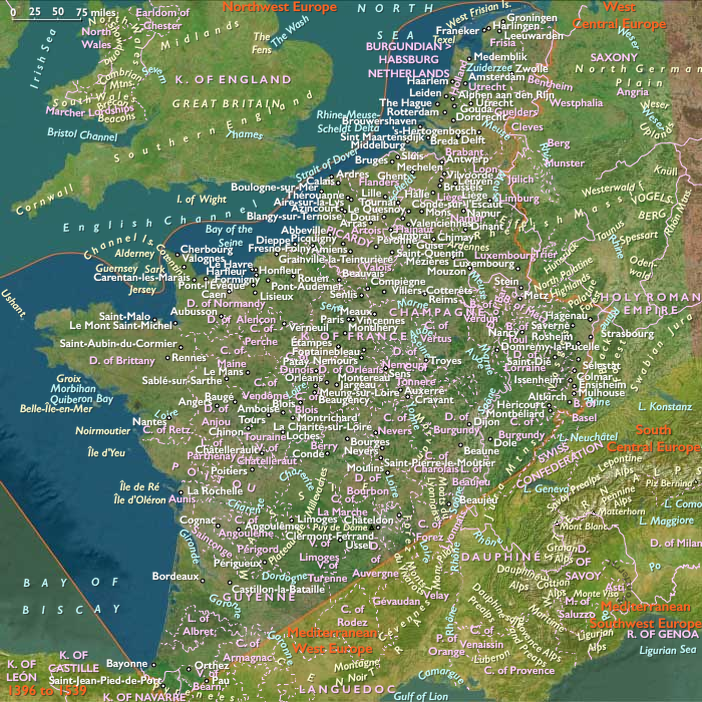
By August 1424, the newly reinforced Franco-Scottish army was ready to take action against the English forces of John of Lancaster, Duke of Bedford. Their initial objective was to relieve the castle of Ivry, near Le Mans, which was under siege by the English. However, before they could arrive, Ivry surrendered, forcing the allied commanders to reconsider their strategy.
I. The Franco-Scottish Army Marches to Relieve Ivry
- The army was led by:
- Archibald Douglas, Earl of Douglas (now Duke of Touraine).
- John Stewart, Earl of Buchan.
- They left Tours on August 4, 1424, aiming to join forces with French commanders:
- John, Duke of Alençon.
- The Viscounts of Narbonne and Aumale.
However, before they could reach Ivry, the castle surrendered to the English, creating uncertainty over their next move.
II. The War Council: A Divided Strategy
- The allied commanders held a council of war, debating their next course of action:
- The Scots and younger French officers were eager to engage the English in battle, hoping for another decisive victory like Baugé (1421).
- The senior French nobility, led by Narbonne, remained cautious, recalling the disastrous French defeat at Agincourt (1415) and fearing another catastrophe.
- As a compromise, the allied leaders decided to target English-held fortresses along the Norman border, instead of directly confronting Bedford’s main army.
III. The Decision to Attack Verneuil
- The first target chosen was Verneuil, a key stronghold in western Normandy.
- The attack on Verneuil was intended to:
- Disrupt English control over Normandy.
- Draw Bedford’s army into a battle on favorable terms for the Franco-Scottish forces.
- This decision would lead directly to the Battle of Verneuil (August 17, 1424), a brutal confrontation that would prove to be one of the most decisive battles of the Hundred Years’ War.
IV. Consequences and the Path to Verneuil
- The decision to march on Verneuil set the stage for one of the bloodiest battles in the conflict, where the fate of the Scottish forces in France would be decided.
- The Franco-Scottish army, emboldened by previous victories, was determined to challenge English supremacy in northern France.
The march to relieve Ivry in August 1424 ended in failure, but the shift to attacking Verneuil led directly to one of the most significant battles of the war, where both Scotland and France would face their greatest test against the English under Bedford.
Locations
People
- Alexander Buchanan
- Archibald Douglas
- Henry VI of England
- Jean II
- Jean VIII
- John Stewart
- John of Lancaster
- Philip the Good
- William II of Narbonne
Groups
- Scottish people
- Normandy, Duchy of
- French people (Latins)
- English people
- Scotland, Kingdom of
- France, (Valois) Kingdom of
- England, (Plantagenet, Lancastrian) Kingdom of
Topics
- Hundred Years' War
- Anglo-Scottish Wars
- Armagnac-Burgundian Civil War
- Hundred Years' War: Resumption of the war under Henry V
- Verneuil, Battle of
Commodoties
Subjects
Regions
Subregions
Years: 1424 - 1424
Locations
People
- Alexander Buchanan
- Archibald Douglas
- Henry VI of England
- Jean II
- Jean VIII
- John Stewart
- John of Lancaster
- Philip the Good
- William II of Narbonne
Groups
- Scottish people
- Normandy, Duchy of
- French people (Latins)
- English people
- Scotland, Kingdom of
- France, (Valois) Kingdom of
- England, (Plantagenet, Lancastrian) Kingdom of
Topics
- Hundred Years' War
- Anglo-Scottish Wars
- Armagnac-Burgundian Civil War
- Hundred Years' War: Resumption of the war under Henry V
- Verneuil, Battle of
Commodoties
Subjects
Regions
Subregions