
The Neolithic Subpluvial, an extended period of …
Years: 7101BCE - 6958BCE
The Neolithic Subpluvial, an extended period of wet and rainy conditions in the climate history of northern Africa, begin in the seventh millennium BCE and remains strong for about two thousand years; it wanes over time and ended in the fourth millennium BCE.
Then the drier conditions that had prevailed before the Neolithic Subpluvial returned; desertification advance, and the Sahara desert forms (or re-forms).
Arid conditions continue through to the present day.
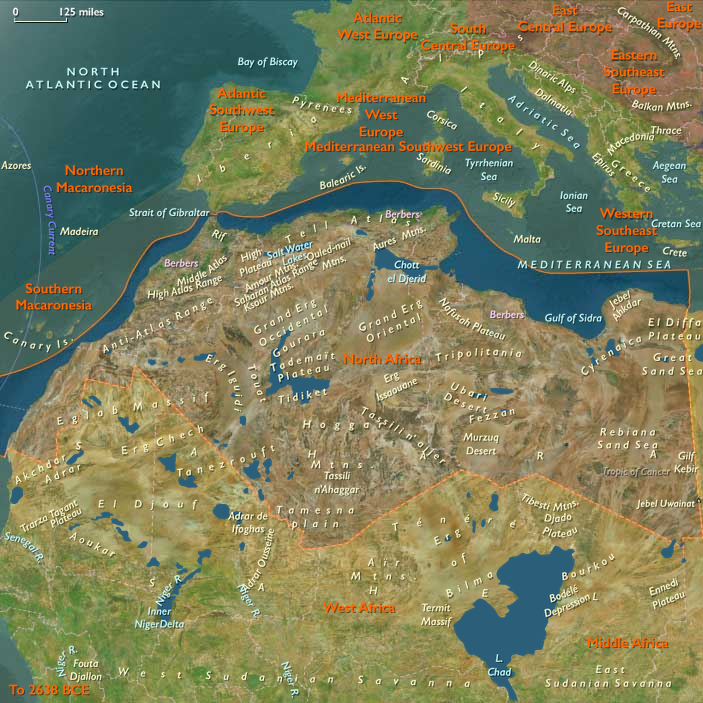
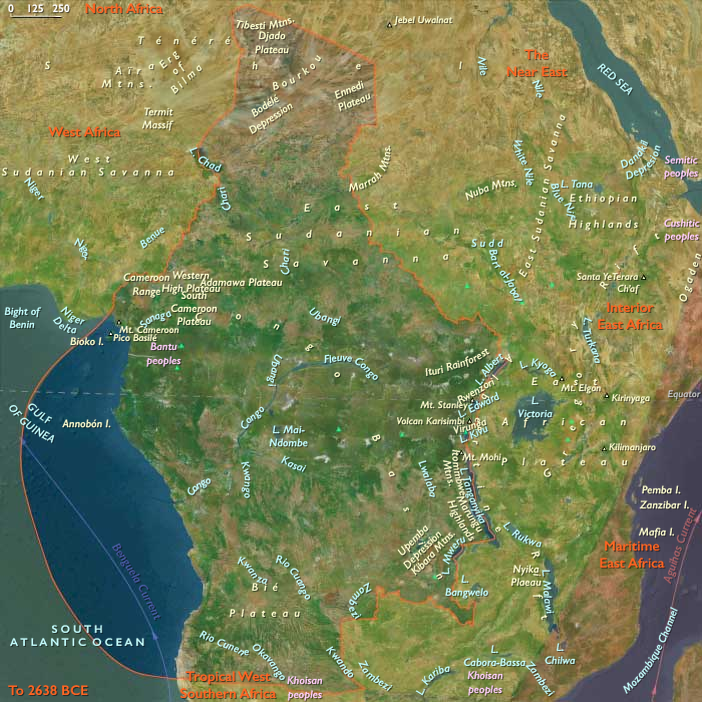
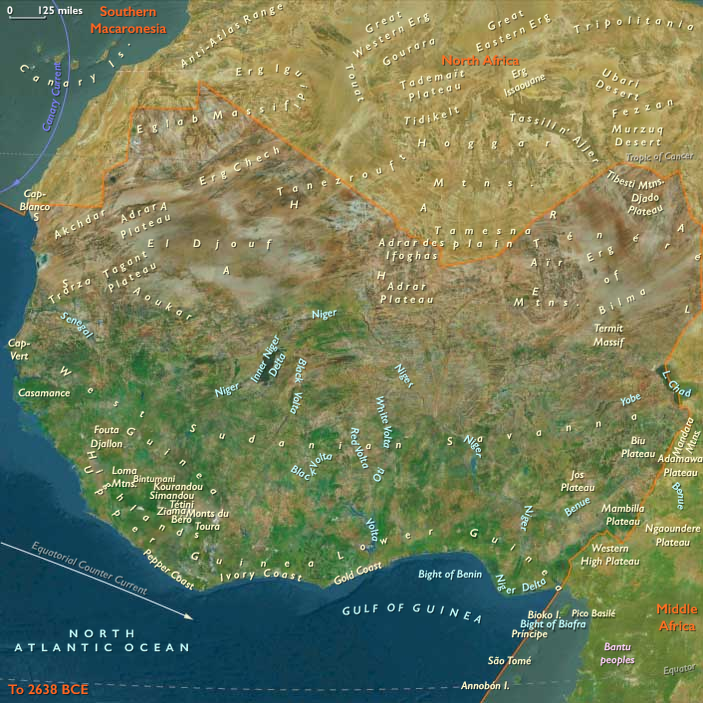
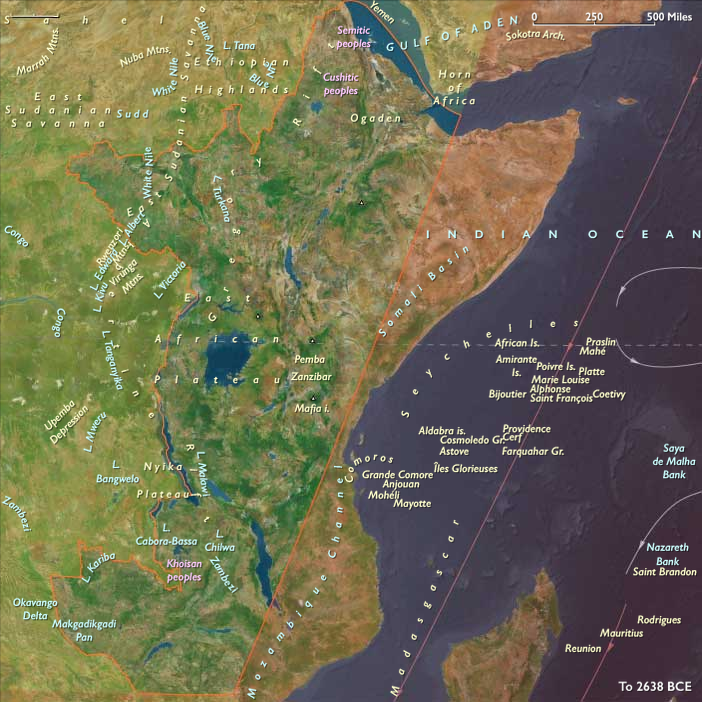
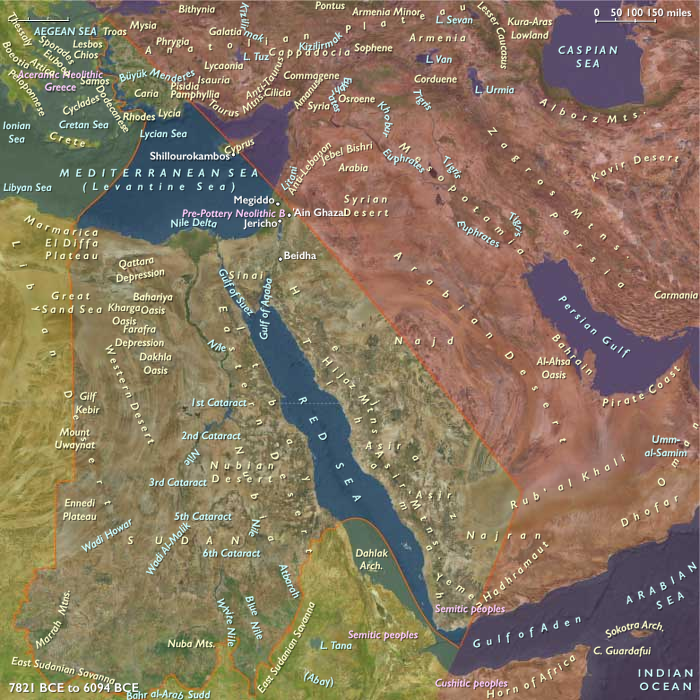
Large areas of North, Central, and East Africa at this time have hydrographic profiles significantly different from later norms.
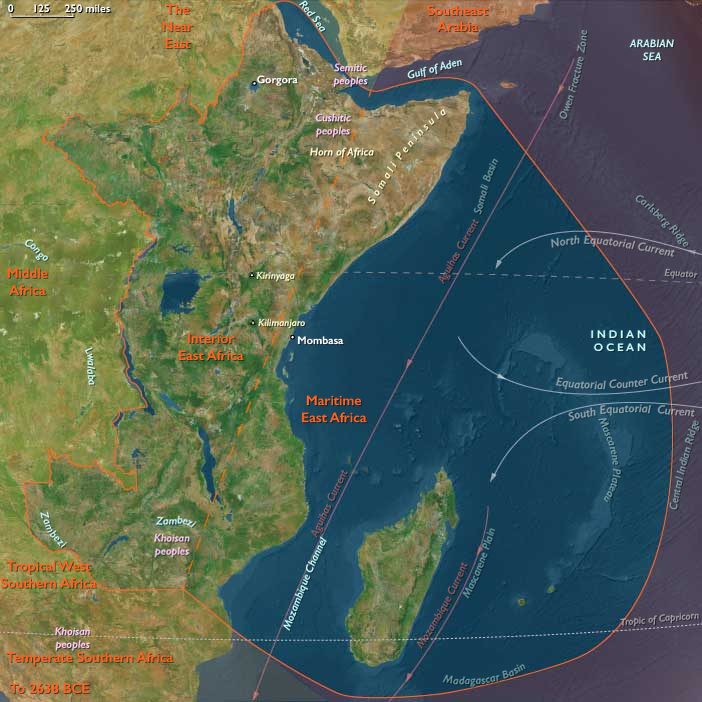
Existing lakes have surfaces tens of meters higher than today, sometimes with alternative drainages: Lake Turkana, in present-day Kenya, drains into the Nile River basin.
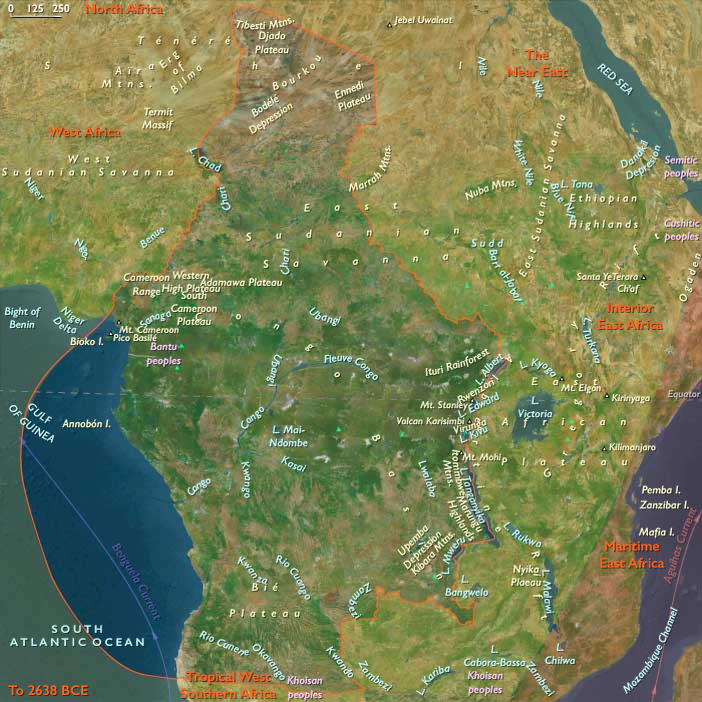
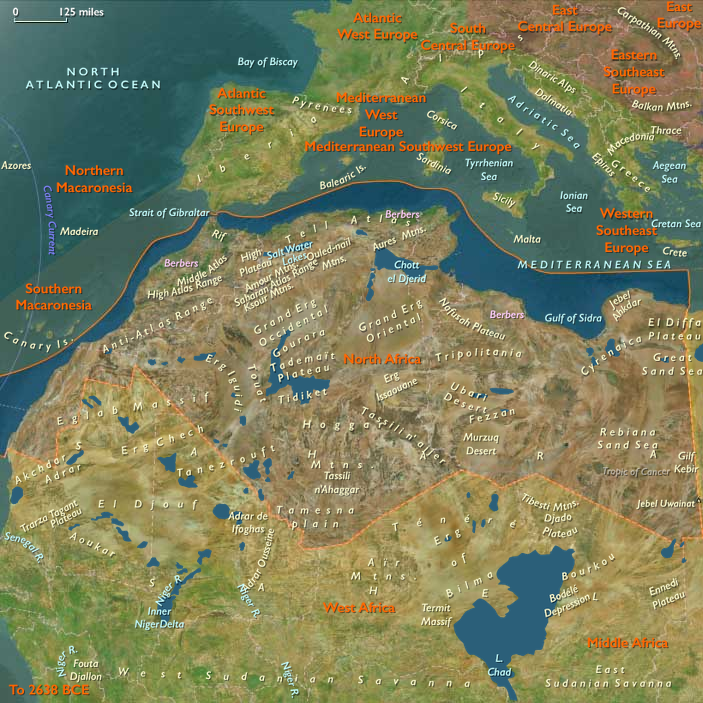
Lake Chad reaches a maximum extent of some four hundred thousand square kilometers in surface area, larger than the modern Caspian Sea, with a surface level about thirty meters (one hundred feet) higher than its twentieth-century average.
Some shallower lakes and river systems existe in the Subpluvial era that will later disappear entirely, and are detectable today only via radar and satellite imagery.
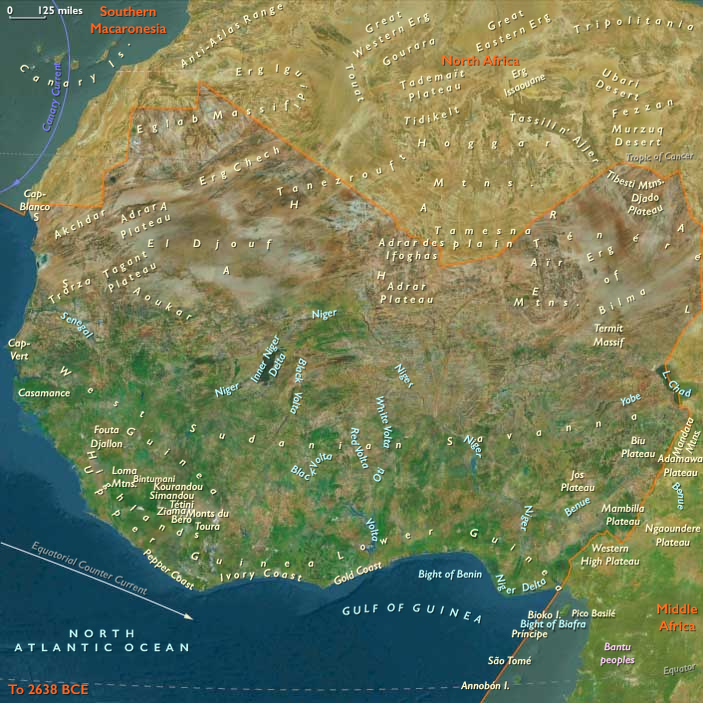
North Africa enjoys a fertile climate during the Neolithic Subpluvial; what is now the Sahara supports a savanna type of ecosystem, with elephant, giraffe, and other grassland and woodland animals now typical of the Sahel region south of the desert.
Clement and fertile conditions support human settlement of the Nile Valley in Egypt, as well as Neolithic societies in Sudan and throughout the region.
The culture that creates the rock art of Tassili n'Ajjer in southeastern Algeria flourishes during the subpluvial period.
Topics
- Neolithic Revolution
- Boreal Period
- Neolithic Subpluvial, or Holocene climatic optimum, or Holocene Wet Phase
Subjects
Regions
Subregions
Years: 7101BCE - 6958BCE
Topics
- Neolithic Revolution
- Boreal Period
- Neolithic Subpluvial, or Holocene climatic optimum, or Holocene Wet Phase
Subjects
Regions
Subregions