
The Neolithic population in China had reached …
Years: 2205BCE - 2062BCE
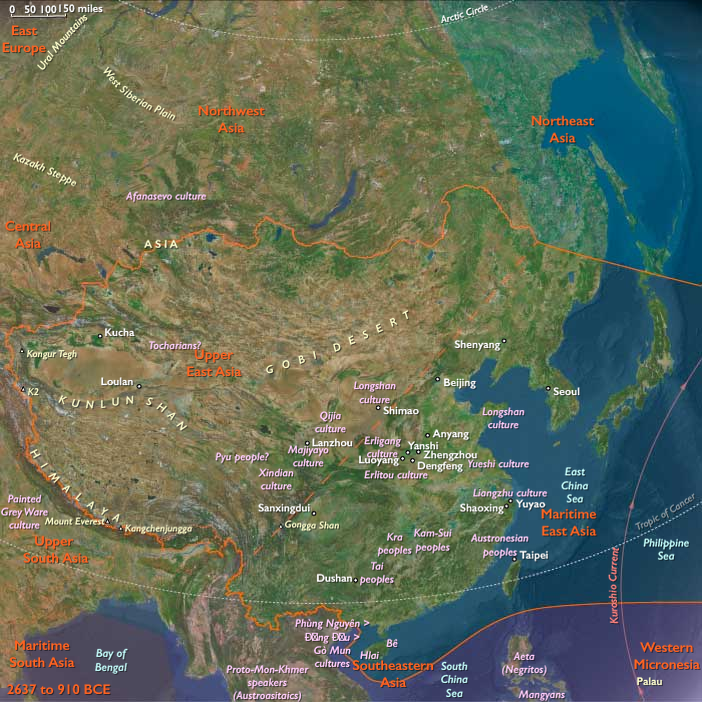
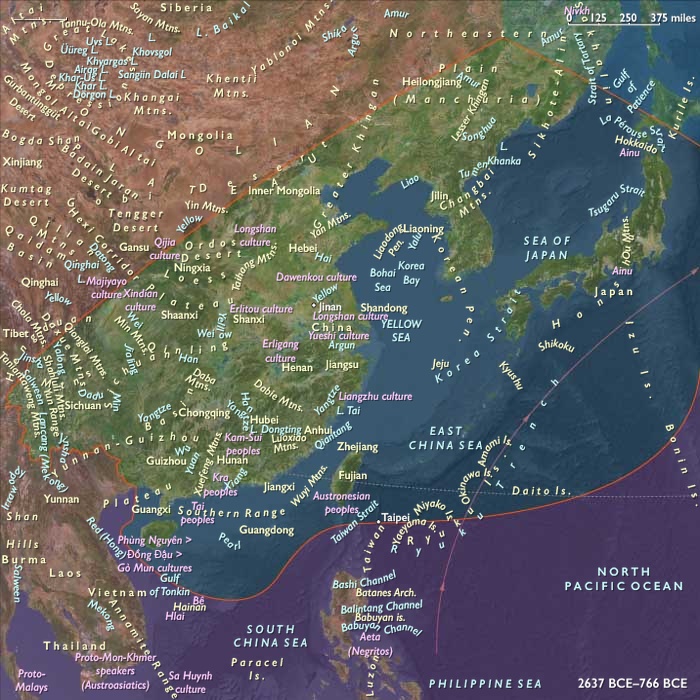
The Neolithic population in China had reached its peak during the Longshan culture.
The drought associated with the 4.2 kiloyear BP aridification event may have caused the collapse of Neolithic cultures around Central China during the late third millennium BCE.
In the Yishu River Basin, the flourishing Longshan culture is hit by a cooling that makes the rice paddies fall short in output.
The scarcity in natural resource leads to substantial decrease in population and subsequent drop in archaeological sites, marked by the disappearance of high-quality black pottery found in ritual burials.
About 4000 cal. yr BP, Longshan culture is displaced by cultures that are relatively underdeveloped, simple and unsophisticated.
Chinese events during this period are shrouded in legend, according to which the emperor Shun, later characterized by Confucius as a model of integrity and resplendent virtue, rules China.
Shun is credited with standardizing weights and measures, regulating waterways, and organizing the kingdom into twelve provinces or regions.
During his reign, marvelous phenomena reportedly occur in the heavens and on earth.
He makes the ingenious Yu, the Tamer of the Flood, his successor.
(Later Chinese traditions will honor this legendary culture hero as the shaper of the country's waterways and the originator of bronze technology.
The Taoist ritual known as Yu's Step, a dance in which one foot is dragged behind the other, commemorates the limp Yu supposedly developed as a result of his exhausting labors.)
As Yu the Great, he inaugurates China's Xia dynasty, named for the Si clan from which Yu springs, in about 2070, making the rulership hereditary in his family and thereby founding the first imperial dynasty in China. (According to other Chinese literary sources, this earliest Chinese dynasty is derived from a leading member of the village agricultural units that cooperated in valley defense against perennial intrusions of mounted nomad archers from Mongolia and Manchuria to the north.)
Groups
Topics
Commodoties
Subjects
- Commerce
- Environment
- Labor and Service
- Conflict
- Faith
- Government
- Technology
- Mythology
- Anthropology
- Archaeology
Regions
Subregions
Years: 2205BCE - 2062BCE
Groups
Topics
Commodoties
Subjects
- Commerce
- Environment
- Labor and Service
- Conflict
- Faith
- Government
- Technology
- Mythology
- Anthropology
- Archaeology
Regions
Subregions