
Near East (1108 – 1251 CE): Ayyubid …
Years: 1108 - 1251
Near East (1108 – 1251 CE): Ayyubid Cairo, Crusader Tyre, Nubian Resilience, and the Nicaean–Seljuk Shore
Geographic and Environmental Context
The Near East includes Israel, Egypt, Sudan, western Saudi Arabia, western Yemen, most of Jordan, southwestern Cyprus, and western Turkey (Aeolia, Ionia, Doria, Lydia, Caria, Lycia, and the Troad), plus Tyre in extreme southwest Lebanon.
-
Anchors: the Nile Valley (Egypt–Sudan), the southern Levant (with Tyre as the Near East’s sole Levantine polity), Hejaz and western Yemen along Red Sea corridors, southwestern Cyprus, and western Anatolia’s Aegean littoral.
Climate and Environmental Shifts
-
The Medieval Warm Period (c. 950–1250) modestly lengthened growing seasons in the Nile Delta and Aegean valleys.
-
Nile flood variability peaked in the late 12th century but recovered under Ayyubid hydraulic repairs.
-
Red Sea monsoon timing underpinned predictable sailing between Yemen and Egypt.
Societies and Political Developments
-
Egypt (Fatimids → Ayyubids):
-
Fatimid rule ended in 1171; Ṣalāḥ al-Dīn (Saladin) founded the Ayyubid dynasty, recentralizing Egypt, Syria, and the Hejaz under Sunni rule.
-
Cairo remained the capital; al-Azhar continued as a major center of learning.
-
-
Sudan (Nubia):
-
Christian Makuria and Alodia endured south of Egypt under the Baqṭ framework; diplomacy and intermittent raids marked the frontier.
-
-
Southern Levant (Tyre):
-
Tyre fell to the Kingdom of Jerusalem in 1124, becoming a key Crusader port and artisanal hub (glass, textiles).
-
After 1187, Ayyubid–Crusader truces and wars alternated; by 1251, Tyre remained a principal Latin stronghold and brokerage point with Egypt and Cyprus.
-
-
Western Arabia (Hejaz):
-
Mecca and Medina acknowledged Ayyubid suzerainty; Hajj caravans tied the Hejaz into Cairo’s fiscal–logistics system.
-
-
Western Yemen:
-
Sulayhids waned after Queen Arwa (d. 1138).
-
Ayyubids conquered Yemen in 1174, then Rasulids (from 1229) established a durable sultanate centered on Aden/Zabid, allied to Red Sea trade.
-
-
Southwestern Cyprus:
-
After 1191–1192, the Lusignan Kingdom of Cyprus controlled the island; its southwestern ports provisioned Crusader Syria and traded with Egypt (overtly or via truces).
-
-
Western Anatolia (Aegean coast):
-
The Komnenian recovery (to 1180) secured the littoral; Myriokephalon (1176) checked Byzantine inland advances.
-
Post-1204, the Empire of Nicaea held the Ionian/Carian coast against the Seljuks of Rum and Latin enclaves; by 1251, Nicaea dominated the Aegean shore while interior Anatolia remained Turkish.
-
Economy and Trade
-
Cairo–Nile: grain, flax, and sugar surpluses financed the Ayyubid realm; waqf endowments sustained schools and hospitals.
-
Red Sea–Indian Ocean: Aden/Zabid funneled spices, aromatics, cottons, and Indian goods to Aydhab and Qūṣfor Cairo; Yemen exported sāqiya-irrigated produce.
-
Tyre: exported fine glassware, dyed textiles, and served as a transshipment port between Egypt, Cyprus, and Crusader Syria.
-
Western Anatolia & Cyprus: wine, oil, timber, and manufactures moved through Ionian harbors and Cypriot ports, with Nicaean/Latin convoys policing lanes.
-
Nubia: traded ivory, gold, and slaves for Egyptian grain and textiles.
Subsistence and Technology
-
Hydraulics: Ayyubids dredged canals and maintained barrages after flood failures; Yemeni terraces and sāqiyawheels stabilized highland yields.
-
Institutions: Sunni education expanded via madrasas (Ayyubid patronage), while al-Azhar remained a major scholarly forum.
-
Military–fiscal: Ayyubids balanced iqṭāʿ-like land assignments with cash pay; Nicaea fielded professional troops and revived shipyards.
-
Shipbuilding: lateen-rigged merchantmen and galleys plied the Red Sea and Aegean.
Movement and Interaction Corridors
-
Nile corridor: Upper Egypt ⇄ Fusṭāṭ–Cairo ⇄ Alexandria.
-
Red Sea: Aden/Zabid ⇄ Aydhab/Qūṣ ⇄ Cairo, keyed to monsoon cycles.
-
Aegean littoral: Nicaean and Latin fleets contested Smyrna–Ephesus–Rhodes routes; southwestern Cyprus provisioned Levantine ports.
-
Pilgrimage: Hajj caravans crossed the Hejaz; Coptic and Nubian pilgrimages linked Upper Egypt and Nubia.
-
Tyre’s roadstead: remained Egypt’s key Levantine interface after 1187.
Belief and Symbolism
-
Sunni revival: Ayyubids strengthened Sunni law and institutions; jurists and Sufi networks expanded.
-
Coptic and Nubian Christianity: persisted across the Nile and Sudan; Nubian cathedrals and monasteries retained regional influence.
-
Latin Christianity: entrenched in Tyre and Cyprus; Latin and Greek rites met in contested ports.
-
Judaism: communities in Cairo and Tyre sustained trade finance and scholarship.
Adaptation and Resilience
-
Hydraulic recovery in Egypt after the 1060s crises restored agrarian stability.
-
Maritime redundancy: with much of the Levant in Latin hands after 1099, Tyre and Cyprus kept Egyptian–Aegean trade viable via truces and convoying.
-
Frontier strategy: Byzantium (Nicaea) pivoted to coastal control; Seljuk iqṭāʿ funded cavalry in interior Anatolia.
-
Hejaz–Yemen integration: monsoon schedules and Hajj logistics stabilized Red Sea commerce despite shifting overlords.
Long-Term Significance
By 1251, the Near East formed a polycentric web:
-
Ayyubid Cairo dominated Nile–Red Sea exchange and Sunni learning.
-
Tyre—now Latin—anchored Levantine trade, linking Egypt and Cyprus to Crusader and Byzantine markets.
-
Nubia remained a Christian buffer south of Egypt.
-
Western Anatolia (under Nicaea) sustained Aegean commerce while the interior Turkified under Rum Seljuks.
-
Western Yemen’s Rasulids secured Aden’s role in Indian Ocean trade.
These strands bound Nile, Hejaz–Yemen, Tyre–Cyprus, and the Aegean coast into a resilient system that would frame 13th-century confrontations and exchanges among Ayyubids/Mamluks, Crusaders, and Nicaea/Rum Seljuks.
People
Groups
- Egyptians
- Nubians
- Italian city-states
- Jews
- Kurdish people
- Makuria, Kingdom of
- Coptic Orthodox Church of Alexandria
- Alodia, or Alwa (Subah, or Soba), Kingdom of
- Islam
- Egypt in the Middle Ages
- Muslims, Sunni
- Muslims, Shi'a
- Abbasid Caliphate (Baghdad)
- Cyprus, East Roman (Byzantine)
- Fatimid Caliphate
- Yemen, Sulaihid State of
- Christians, Eastern Orthodox
- Christians, Roman Catholic
- Roman Empire, Eastern: Komnenos dynasty, restored
- Jerusalem, Latin Kingdom of
- Templar, Knights (Poor Knights of Christ and of the Temple of Solomon)
- England, (Plantagenet, Angevin) Kingdom of
- Damascus, Ayyubid Dynasty of
- Egypt, Ayyubid Sultanate of
- Yemen, Ayyubid State of
- Roman Empire, Eastern: Angelid dynasty
- Cyprus, Kingdom of
- Yemen, Rasulide State of
- Egypt and Syria, Mamluk Bahri Sultanate of
Topics
- Crusades, The
- Byzantine-Seljuk Turk War of 1110-1117
- Byzantine-Seljuk Turk War of 1158-76
- Myriokephalon, Battle of
- Crusade, Third
- Byzantine-Seljuq War of 1207-11
Commodoties
- Gem materials
- Glass
- Oils, gums, resins, and waxes
- Grains and produce
- Textiles
- Strategic metals
- Slaves
- Sweeteners
- Beer, wine, and spirits
- Lumber
- Aroma compounds
Subjects
Regions
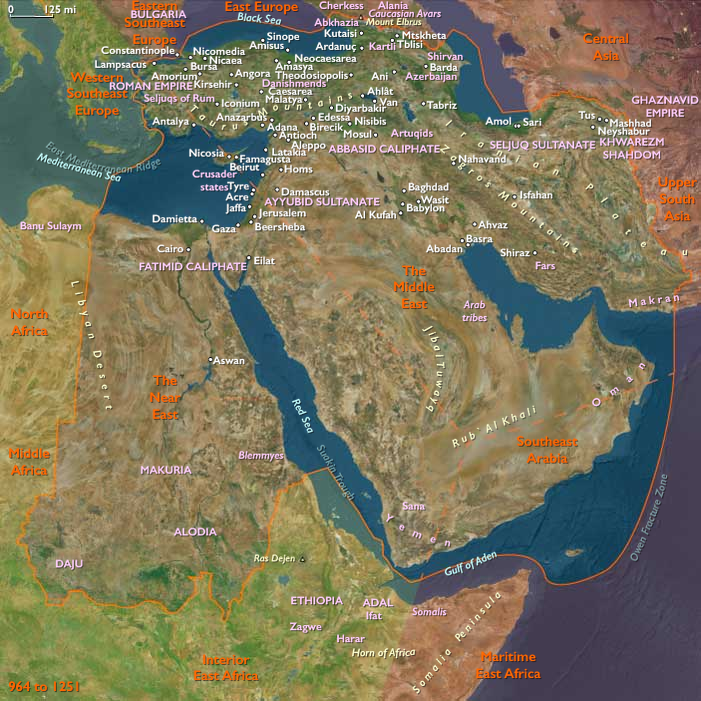
Subregions
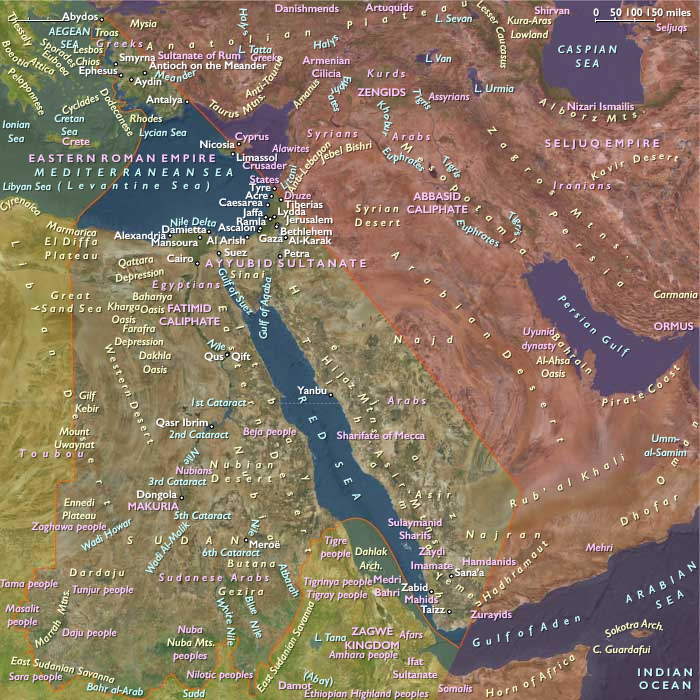
Related Events
Showing 1 events out of 1 total
Years: 1108 - 1251
People
Groups
- Egyptians
- Nubians
- Italian city-states
- Jews
- Kurdish people
- Makuria, Kingdom of
- Coptic Orthodox Church of Alexandria
- Alodia, or Alwa (Subah, or Soba), Kingdom of
- Islam
- Egypt in the Middle Ages
- Muslims, Sunni
- Muslims, Shi'a
- Abbasid Caliphate (Baghdad)
- Cyprus, East Roman (Byzantine)
- Fatimid Caliphate
- Yemen, Sulaihid State of
- Christians, Eastern Orthodox
- Christians, Roman Catholic
- Roman Empire, Eastern: Komnenos dynasty, restored
- Jerusalem, Latin Kingdom of
- Templar, Knights (Poor Knights of Christ and of the Temple of Solomon)
- England, (Plantagenet, Angevin) Kingdom of
- Damascus, Ayyubid Dynasty of
- Egypt, Ayyubid Sultanate of
- Yemen, Ayyubid State of
- Roman Empire, Eastern: Angelid dynasty
- Cyprus, Kingdom of
- Yemen, Rasulide State of
- Egypt and Syria, Mamluk Bahri Sultanate of
Topics
- Crusades, The
- Byzantine-Seljuk Turk War of 1110-1117
- Byzantine-Seljuk Turk War of 1158-76
- Myriokephalon, Battle of
- Crusade, Third
- Byzantine-Seljuq War of 1207-11
Commodoties
- Gem materials
- Glass
- Oils, gums, resins, and waxes
- Grains and produce
- Textiles
- Strategic metals
- Slaves
- Sweeteners
- Beer, wine, and spirits
- Lumber
- Aroma compounds
Subjects
Regions
Subregions