
The Near East (849–838 BCE): Dynastic Upheaval …
Years: 849BCE - 838BCE
The Near East (849–838 BCE): Dynastic Upheaval and Religious Conflicts
The End of Ahab’s Dynasty
During this era, political turmoil and religious struggles profoundly reshape the kingdoms of Israel and Judah. Following the death of King Ahab, the northern kingdom continues under the rule of his son Jehoram, who maintains the alliance with Judah forged by his father. However, Jehoram’s reign is marred by continuous warfare, notably an unsuccessful attempt to quell the Moabite revolt alongside King Jehoshaphat of Judah.
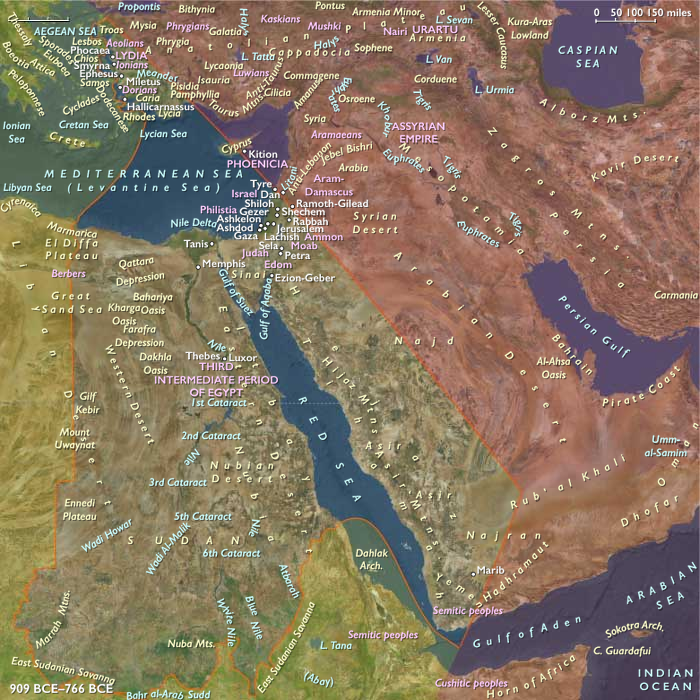
Jehoram later attempts to recapture Ramoth-gilead from the Aramean king Hazael, suffering severe wounds in battle. As he convalesces in Jezreel, his rule abruptly ends with a violent coup initiated by his own commander, Jehu. Acting on instructions from the prophet Elijah, Jehu leads a ruthless revolt around 843 BCE, eliminating Jehoram, his ally Ahaziah, king of Judah, and numerous royal family members, effectively exterminating the Omride dynasty. Notably, Jehu orders the defenestration of Jezebel, whose death—foretold by Elijah—symbolizes the end of the Phoenician alliance and the suppression of Baal worship in Israel.
Religious Strife and Prophetic Influence
Central to these upheavals is a fierce struggle over religious practices. Jezebel’s zealous promotion of Baal worship, involving hundreds of Baal prophets, is directly opposed by the prophetic activities of Elijah and his successor Elisha. Elisha, characterized by political astuteness, significantly shapes Israel's religious and political trajectory, navigating the complexities left by Elijah’s confrontational legacy.
The revolution led by Jehu, driven by religious fervor against Baal worship, underscores the continuing internal conflicts over Israelite religious identity. Although Jehu’s coup secures his ascendancy and ends the Omride dynasty, it simultaneously weakens Israel’s strategic alliances, leaving the kingdom vulnerable to external threats, notably from Assyria under Shalmaneser III. By 841 BCE, Assyria exacts tribute from Jehu, as well as from the Phoenician city of Sidon, highlighting Israel's reduced regional influence.
Judah’s Internal Struggles and Edomite Revolt
In Judah, following Jehoshaphat’s death in 849 BCE, his son Jehoram inherits the throne. Jehoram's reign, however, is plagued by severe internal unrest and external threats. His marriage to Athaliah, daughter of Ahab and Jezebel, strengthens the alliance with Israel but introduces Baal worship into Judah. Jehoram violently consolidates power by massacring his kinsmen, but his reign is destabilized by revolts from Edom and Libnah, and invasions by Philistines and Arabs, culminating in a devastating sack of Jerusalem.
After Jehoram's death, his son Ahaziah ascends the throne but reigns briefly until he is killed during Jehu’s purge. This opens the door for Athaliah’s rule. Intent on promoting Baal worship, Athaliah seeks to eliminate the Davidic line loyal to Yahweh, sparing only the infant heir Jehoash (Joash), hidden away by priests loyal to Yahweh. After six or seven years, Athaliah's reign ends violently through a priestly-led revolt, reinstating traditional worship and the Davidic lineage.
Ezion-Geber and Regional Shifts
The strategic port city of Ezion-Geber, rebuilt under Jehoshaphat, suffers destruction again around the mid-ninth century BCE, likely due to the Edomite rebellion against Judah. This event symbolizes broader shifts in regional power dynamics and the ongoing struggle to control economically critical routes.
Summary of the Era
The years 849–838 BCE mark a period of intense dynastic upheaval and religious conflict within and between the kingdoms of Israel and Judah. The violent end of the Omride dynasty under Jehu profoundly reshapes Israel’s internal and external political landscape. Concurrently, Judah experiences turmoil through revolts and invasions, complicated by religious divisions introduced by Athaliah. This tumultuous period underscores the complex interplay between dynastic politics, religious identity, and regional power struggles in the Near East.
People
- Ahab of Israel
- Ahaziah of Israel
- Athaliah
- Elijah
- Elisha
- Hazael
- Jehoash of Judah
- Jehoram of Israel
- Jehoshaphat
- Jehu of Israel
- Jezebel
- Shalmaneser III
Groups
- Tyre, Kingdom of (Phoenicia)
- Moabites, Kingdom of the
- Edomites, Kingdom of the
- Arab people
- Philistines
- Aram-Damascus (Syria), Kingdom of
- Judah, Kingdom of
- Israel (Northern Kingdom of)
Topics
Subjects
Regions
Subregions
Years: 849BCE - 838BCE
People
- Ahab of Israel
- Ahaziah of Israel
- Athaliah
- Elijah
- Elisha
- Hazael
- Jehoash of Judah
- Jehoram of Israel
- Jehoshaphat
- Jehu of Israel
- Jezebel
- Shalmaneser III
Groups
- Tyre, Kingdom of (Phoenicia)
- Moabites, Kingdom of the
- Edomites, Kingdom of the
- Arab people
- Philistines
- Aram-Damascus (Syria), Kingdom of
- Judah, Kingdom of
- Israel (Northern Kingdom of)
Topics
Subjects
Regions
Subregions