
The Near East (813–802 BCE): Persistent Conflict …
Years: 813BCE - 802BCE
The Near East (813–802 BCE): Persistent Conflict and Dynastic Rivalries
Between 813 and 802 BCE, political fragmentation and military conflict continue to define the Near East, particularly in Egypt and Israel, shaping regional dynamics and altering alliances.
Egypt's Continuing Dynastic Rivalries
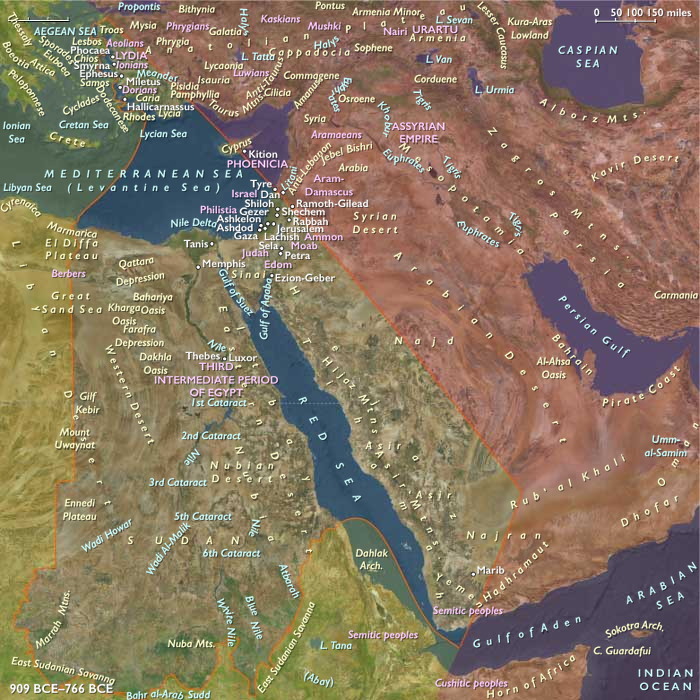
In Egypt, internal division persists and deepens. Shoshenq III maintains a tenuous hold over Lower Egypt from his stronghold in Memphis and the Delta, yet faces ongoing challenges from the rival Twenty-third Dynasty centered at Thebes. The claimant Pedubast I, asserting Libyan ancestry, continues to rule as Pharaoh in Upper Egypt, presiding over a complex network of alliances and rivalries.
Throughout this period, the descendants of Takelot II, notably Osorkon III, engage in fierce competition with both Shoshenq III and Pedubast I. Thebes, caught in the middle of these struggles, endures frequent political upheaval and periodic violence, highlighting the weakened and fragmented nature of Egyptian power during this phase of the Third Intermediate Period.
Israel under Pressure from Aram-Damascus
In the northern kingdom of Israel, King Jehoahaz struggles throughout his reign against the relentless aggression of Hazael, the powerful king of Aram-Damascus. Aramaean dominance severely restricts Israelite sovereignty, resulting in heavy territorial losses and deepening internal instability. Biblical accounts describe Jehoahaz’s rule as marked by constant military setbacks and diminished regional influence, reflecting the broader strategic ascendancy of Damascus in the region.
Jehoahaz’s efforts to defend and stabilize Israel yield little success. Consequently, Israel remains politically isolated and militarily weakened, struggling to maintain even its core territories against the encroaching Aramaeans.
Summary of the Era
The years 813–802 BCE in the Near East are characterized by persistent instability. Egypt continues to suffer intense dynastic rivalries, effectively fragmenting its political and territorial unity, while Israel, under Jehoahaz, endures continuous external threats and diminishing influence. This ongoing turbulence underscores the region’s fragility during this turbulent era, setting the stage for subsequent shifts in power and alliances.
People
Groups
- Aram-Damascus (Syria), Kingdom of
- Egypt (Ancient), Third Intermediate Period of
- Judah, Kingdom of
- Israel (Northern Kingdom of)
Subjects
Regions
Subregions
Related Events
Showing 10 events out of 66556 total
Years: 813BCE - 802BCE
People
Groups
- Aram-Damascus (Syria), Kingdom of
- Egypt (Ancient), Third Intermediate Period of
- Judah, Kingdom of
- Israel (Northern Kingdom of)
Subjects
Regions
Subregions