
The Near East (789–778 BCE): Expansion of …
Years: 789BCE - 778BCE
The Near East (789–778 BCE): Expansion of Judah under Uzziah
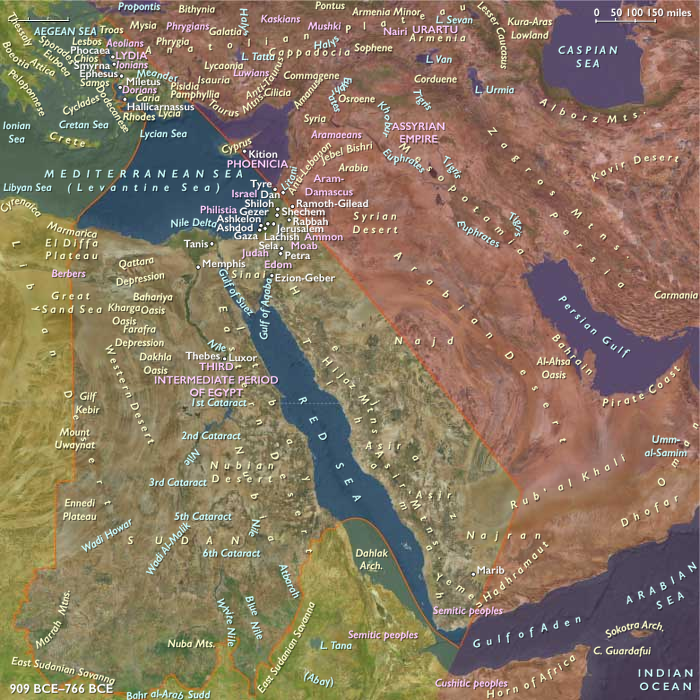
The period 789–778 BCE in the Near East witnesses the long and influential reign of Uzziah (also known as Azariah), king of Judah. According to the Hebrew Bible, Uzziah ascends the throne around 791 BCE, ruling for an impressive fifty-two years; however, Assyrian records present a slightly shorter reign of approximately forty-two years, spanning 783–742 BCE. Regardless of this chronological discrepancy, his tenure represents a significant era in Judah’s history.
Uzziah proves to be a capable and ambitious ruler, known particularly for his military successes and territorial expansion. Early in his reign, Uzziah undertakes a successful military campaign against the Philistines, capturing the strategically significant city of Ashdod (2 Chronicles 26:6). This victory not only enhances Judah's geopolitical influence but also expands its control over critical trade routes along the Mediterranean coast, further strengthening its economic foundations.
Simultaneously, in the northern kingdom, Jeroboam II continues his prosperous reign in Israel around 785 BCE, overseeing sustained economic growth and territorial consolidation.
Thus, between 789 and 778 BCE, Judah under Uzziah emerges as a powerful regional actor, mirroring the resurgence taking place concurrently in the northern kingdom under Jeroboam II. This era reflects a notable phase of renewed strength and stability for both Hebrew kingdoms, despite lingering differences and underlying tensions.
People
Groups
Subjects
Regions
Subregions
Related Events
Showing 10 events out of 66544 total
Years: 789BCE - 778BCE
People
Groups
Subjects
Regions
Subregions