
Near East (909–766 BCE): Consolidation, Conflict, and …
Years: 909BCE - 766BCE
Near East (909–766 BCE): Consolidation, Conflict, and Cultural Flourishing
Nubian Expansion and Egyptian Shifts
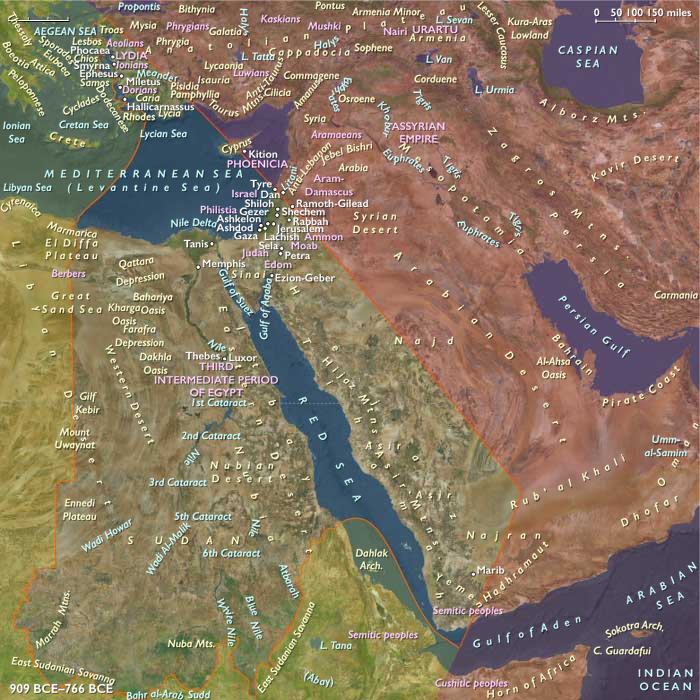
During the late ninth and early eighth centuries BCE, Egypt experiences significant geopolitical transformations. Kashta, a Kushite king based in Napata, expands his influence northward into Upper Egypt, notably installing his daughter Amenirdis I as the prospective God's Wife of Amun in Thebes. This effectively legitimizes Nubian dominance, paving the way for his son Piye to consolidate Kushite power across Egypt around 747 BCE. Under Piye's rule, Egyptian cultural and religious traditions experience revitalization, with an increasing adoption of Nubian elements.
Israel, Judah, and Regional Rivalries
This period sees Israel and Judah embroiled in frequent conflicts, both internally and with neighboring states. Notably, the Mesha Stele, or Moabite Stone, crafted by King Mesha of Moab around 850 BCE, provides critical historical insights. This stele details Mesha’s rebellion against Israelite domination under the "House of Omri," referencing the Israelite god Yahweh and potentially the earliest extrabiblical mention of the "House of David." The kingdoms of Edom and Moab also rise prominently, intensifying regional dynamics, with Edom gaining significance through increased trade and mining activities.
Israel under Omri (c. 876–869 BCE) and his son Ahab (c. 869–850 BCE) emerges as a significant regional power, marked by extensive military campaigns, construction projects, and an influential Phoenician alliance forged through Ahab’s marriage to Jezebel, daughter of Ithbaal of Tyre and Sidon. The internal religious turmoil intensifies with the clash between Phoenician Baal worship and Hebrew monotheism, particularly under the prophets Elijah and Elisha.
Assyrian Dominance and Local Autonomy
The Assyrian Empire, under rulers such as Shalmaneser III and later Tiglath-Pileser III, exerts considerable influence over the Near East, frequently subduing and extracting tribute from kingdoms such as Israel and the city-states of Phoenicia. Despite periodic revolts by city-states like Tyre and regional leaders, Assyria largely maintains its dominance through military might and political coercion, reshaping the political landscape significantly.
Sabaean Ascendancy and Arabian Trade
To the south, the Sabaean Kingdom in southern Arabia (biblical Sheba), beginning around the tenth century BCE, becomes a vital trade nexus connecting Arabia, Syria, and Mesopotamia. Controlling major caravan routes and flourishing economically, the Sabaeans significantly influence commerce and cultural exchanges across the Near East.
Greek Expansion in Anatolia and Cyprus
The collapse of Mycenaean civilization and the subsequent Dorian invasion in mainland Greece prompt waves of Ionian and Dorian refugees to establish new settlements in Asia Minor. The Ionian coast flourishes culturally and commercially with prominent cities such as Phocaea, Ephesus, and Miletus. Concurrently, the Dorians establish influential cities like Halicarnassus and Knidos, integrating into regional power dynamics through leagues like the Dorian Hexapolis. Cyprus also emerges as a significant cultural and commercial hub, with a Phoenician colony established at Citium around 800 BCE, contributing to the island's complex demographic and cultural landscape.
Cultural and Linguistic Developments
The Hebrew alphabet, evolving from Phoenician script, is reflected in early texts like the Gezer Calendar (tenth century BCE), demonstrating early literacy and agricultural traditions among the Israelites. Concurrently, the Elohist (E) textual source emerges, emphasizing Israel's northern kingdom perspectives, portraying a less anthropomorphic deity, Elohim, and competing religious practices.
Legacy of the Age
This age marks a profound consolidation and conflict across the Near East, with regional powers negotiating their positions amidst shifting alliances and rivalries. The cultural and political developments—ranging from Nubian expansion in Egypt, Hebrew religious struggles, Assyrian dominance, Greek colonization in Anatolia, to burgeoning Arabian trade—lay essential foundations for the complex historical trajectories that continue to shape the region's future.
People
- Ahab of Israel
- Amaziah of Judah
- Asa of Judah
- Athaliah
- Elijah
- Elisha
- Hazael
- Jehoash of Judah
- Jehoshaphat
- Jehu of Israel
- Jeroboam II of Israel
- Jezebel
- Kashta
- Mesha
- Omri of Israel
- Osorkon II
- Pedubast I
- Shalmaneser III
- Takelot II
- Tiglath-Pileser III
- Uzziah of Judah
Groups
- Nubians
- Carians
- Phoenicians
- Tyre, Kingdom of (Phoenicia)
- Edomites, Kingdom of the
- Ammonites, Kingdom of the
- Dorians
- Aeolians
- Ionians
- Philistines
- Lydia, Kingdom of
- Lycia
- Aram-Damascus (Syria), Kingdom of
- Egypt (Ancient), Third Intermediate Period of
- Kush, Kingdom of
- Miletus (Ionian Greek) city-state of
- Judah, Kingdom of
- Israel (Northern Kingdom of)
- Assyria, (New) Kingdom of (Neo-Assyrian Empire)
- Greece, classical
- Ephesus (Ionian Greek) city-state of
- Smyrna, (Aeolian) city-state of
- Knidos, City-State of
- Halicarnassus, Greek City-State of
- Cyprus, Classical
- Phocaea (Ionian Greek) city-state of
- Sheba, or Saba, Kingdom of
Topics
- Phoenician colonization
- Assyrian Wars of c. 909-c. 746 BCE
- Greek colonization
- Aram, Assyrian conquest of
Subjects
Regions
Subregions
Years: 909BCE - 766BCE
People
- Ahab of Israel
- Amaziah of Judah
- Asa of Judah
- Athaliah
- Elijah
- Elisha
- Hazael
- Jehoash of Judah
- Jehoshaphat
- Jehu of Israel
- Jeroboam II of Israel
- Jezebel
- Kashta
- Mesha
- Omri of Israel
- Osorkon II
- Pedubast I
- Shalmaneser III
- Takelot II
- Tiglath-Pileser III
- Uzziah of Judah
Groups
- Nubians
- Carians
- Phoenicians
- Tyre, Kingdom of (Phoenicia)
- Edomites, Kingdom of the
- Ammonites, Kingdom of the
- Dorians
- Aeolians
- Ionians
- Philistines
- Lydia, Kingdom of
- Lycia
- Aram-Damascus (Syria), Kingdom of
- Egypt (Ancient), Third Intermediate Period of
- Kush, Kingdom of
- Miletus (Ionian Greek) city-state of
- Judah, Kingdom of
- Israel (Northern Kingdom of)
- Assyria, (New) Kingdom of (Neo-Assyrian Empire)
- Greece, classical
- Ephesus (Ionian Greek) city-state of
- Smyrna, (Aeolian) city-state of
- Knidos, City-State of
- Halicarnassus, Greek City-State of
- Cyprus, Classical
- Phocaea (Ionian Greek) city-state of
- Sheba, or Saba, Kingdom of
Topics
- Phoenician colonization
- Assyrian Wars of c. 909-c. 746 BCE
- Greek colonization
- Aram, Assyrian conquest of
Subjects
Regions
Subregions