
The Middle East (28,577 – 7,822 …
Years: 28577BCE - 7822BCE
The Middle East (28,577 – 7,822 BCE) Upper Pleistocene II — Bølling–Allerød Abundance, Younger Dryas Stress, Early Holocene Recovery
Geographic and Environmental Context
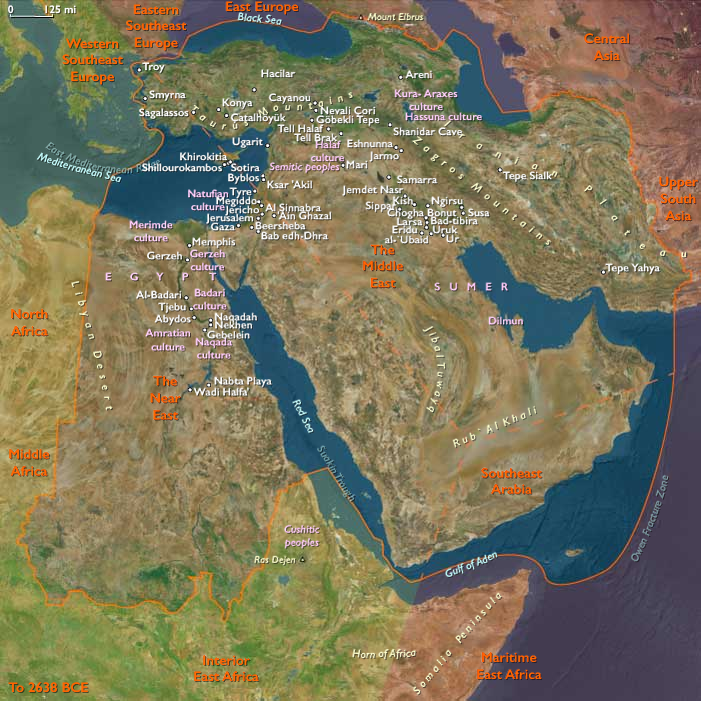
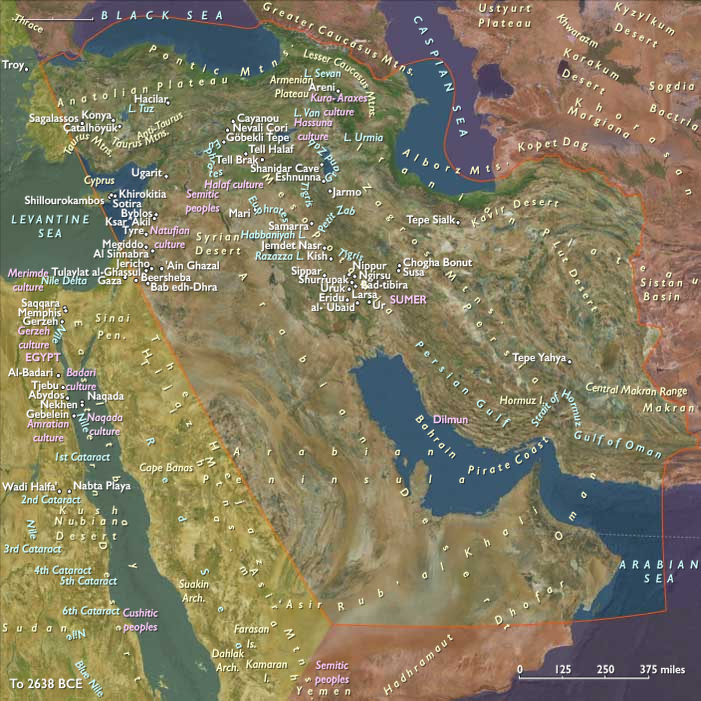
The Middle East includes Iraq, Iran, Syria, Armenia, Georgia, Azerbaijan, eastern Jordan, most of Turkey’s central/eastern uplands (including Cilicia), eastern Saudi Arabia, northern Oman, Qatar, Bahrain, the UAE, northeastern Cyprus, and all but the southernmost Lebanon.-
Anchors: the Tigris–Euphrates alluvium and marshes; the Zagros (Luristan, Fars), Alborz, Caucasus (Armenia–Georgia–Azerbaijan); northern Syrian plains and Cilicia; Khuzestan and Fars lowlands; the Arabian/Persian Gulf littoral (al-Ahsa–Qatar–Bahrain–UAE–northern Oman); northeastern Cyprus and the Lebanon coastal elbow (north).
Climate & Environment
-
Bølling–Allerød (c. 14.7–12.9 ka): rainfall rose; gallery woodlands expanded along Tigris–Euphrates and Zagros springs.
-
Younger Dryas (12.9–11.7 ka): cooler–drier snapback; steppe patches widened.
-
Early Holocene: stabilizing warmth; perennial springs recharged; Gulf shoreline advanced landward.
Subsistence & Settlement
-
Broad-spectrum foraging intensified (gazelle–onager–boar–fish–mollusks; seeds, acorns, pistachio/almond); semi-recurrent springhead hamlets in Zagros and Upper Mesopotamia (preludes to later Epipaleolithic “Natufian-like” economies outside our zone).
-
Seasonal coastal foraging at northeastern Cyprus and the Gulf rim.
Technology & Material Culture
-
Microlithic toolkits diversified; grinding stones and mortars for seeds/nuts; bone harpoons/fish gorges in marshy reaches.
-
Hafting resins, compound points; early basketry inferred.
Corridors
-
Zagros spring belts (Luristan–Kurdistan) and Upper Mesopotamian flanks; Caucasus piedmont fans; Gulf shelf retreat reshaped coastal access.
Symbolism & Ritual
-
Persistent ochre burials; ritual deposits at springs; engraved motifs (caprids, equids).
Adaptation & Resilience
-
Diet breadth + storage (dried meat/fish, nut pastes) buffered Younger Dryas shocks; flexible camp scheduling maintained returns.
Transition
Early Holocene stability primed semi-sedentary river–spring villages and the seed economies that will underpin later plant management.
(7,821 – 6,094 BCE) Early Holocene — Semi-Sedentary Spring Villages & Seed Processing
Climate & Environment
-
Thermal optimum onset: marsh–riparian mosaics in Lower Mesopotamia; wooded Zagros; productive Caucasus belts; Gulf continued transgression.
Subsistence & Settlement
-
Semi-sedentary hamlets on springheads/low terraces (Zagros–Upper Mesopotamia) combined hunting with seed–nut processing; wetland fishing/waterfowling in Tigris–Euphrates backwaters.
-
Early caprine management likely began on Zagros slopes (wild → managed herds).
Technology & Material Culture
-
Ground-stone mortars/querns proliferated; larger storage pits; microliths persisted; incipient pottery appears on the northern Iranian/Caspian periphery by late in the epoch.
Corridors
-
Zagros passes (Kermanshah–Khuzestan) linked uplands to Khuzestan plains; Karkheh–Karun marshes tied to the Upper Gulf.
Symbolism
-
House-based ritual (hearths, ancestor interments); stone slab markers; continued ochre.
Adaptation
-
Storage + proximity to springs anchored overwintering; mixed wetland–upland rounds hedged variability.
Transition
These lifeways foreshadow Neolithic cultivation/herding communities across the Zagros and Upper Mesopotamia.
Groups
Topics
- The Upper Paleolithic
- Last Glacial Maximum (LGM)
- Oldest Dryas
- Bølling Oscillation
- Older Dryas
- Allerød Oscillation
- Late Glacial Maximum
- Younger Dryas
- Neolithic Revolution
Commodoties
Subjects
Regions
Subregions
Years: 28577BCE - 7822BCE
Groups
Topics
- The Upper Paleolithic
- Last Glacial Maximum (LGM)
- Oldest Dryas
- Bølling Oscillation
- Older Dryas
- Allerød Oscillation
- Late Glacial Maximum
- Younger Dryas
- Neolithic Revolution
Commodoties
Subjects
Regions
Subregions