
The Near East, 1996 to 2007 CE: …
Years: 1996 - 2007
The Near East, 1996 to 2007 CE: Crisis, Conflict, and Political Shifts
Sudan: Darfur Crisis and International Intervention
The turn of the millennium marks a turbulent period for Sudan, especially the Darfur region, where a new rebellion led by the Sudan Liberation Movement/Army (SLM/A) and the Justice and Equality Movement (JEM) erupts in 2003. The rebels accuse the government of neglecting Darfur, sparking violent conflict. In response, government-aligned Janjaweed militias carry out widespread atrocities, causing a devastating humanitarian crisis, the Darfur Food Crisis. Tens of thousands perish, and millions become displaced, many fleeing to neighboring Chad.
In April 2004, under pressure from international communities, negotiations in N'Djamena lead to a fragile Humanitarian Ceasefire Agreement. However, violence persists, prompting the African Union (AU) to deploy ceasefire monitors, initially just a few hundred soldiers, but eventually expanding to about seven thousand under the African Union Mission in Sudan (AMIS). Yet, the crisis deepens, drawing greater international attention.
On September 18, 2004, the United Nations Security Council issues Resolution 1564, condemning Sudan's government for its continued military attacks and calling for expanded international monitoring. Negotiations remain strained until August 2006, when the Security Council passes Resolution 1706, authorizing a robust seventeen-thousand-strong peacekeeping force. Resistance from the Sudanese government delays deployment, eventually leading to a hybrid African Union–United Nations peacekeeping effort in Darfur.
Meanwhile, Sudan faces profound internal transformations. The National Islamic Front under Hasan al-Turabiintensifies its "top-down" Islamization policy. Educational reforms emphasize Islamic teachings, societal restrictions tighten, and the government supports jihadist ideologies, controversially sheltering figures like Osama bin Laden until his departure. Sudan’s economy struggles under international pressure and internal conflicts.
Cyprus: Divided Entry to the European Union
Cyprus, long divided between Greek and Turkish Cypriots, faces critical decisions in the early 2000s. In 2000, the European Union agrees to admit Cyprus, hoping membership would foster reunification. However, in 2004, a UN-brokered peace settlement referendum sees overwhelming rejection by Greek Cypriots despite Turkish Cypriot acceptance. Consequently, Cyprus enters the European Union as a divided island, with EU membership effectively suspended for Northern Cyprus.
Egypt: Persistent Political Struggles and Terrorism
Throughout this era, Egypt faces significant internal turmoil under President Hosni Mubarak. Terrorist activities escalate, particularly targeting tourists and the Coptic Christian minority, severely impacting tourism and domestic stability. Despite economic growth in sectors like agriculture and industry, rapid population growth continues to strain resources, amplifying poverty and urban overcrowding, notably around metropolitan Cairo, now home to over twenty million people.
In 2005, Mubarak introduces modest political reforms, allowing Egypt’s first multi-candidate presidential election. However, these reforms are limited, and Mubarak comfortably wins re-election amidst allegations of electoral interference. Post-election repression continues, exemplified by the imprisonment of prominent opposition figures such as Ayman Nour.
Israeli-Palestinian Conflicts and Fragile Peace Efforts
The Israeli-Palestinian conflict sees cycles of intense violence and diplomacy. The Israeli occupation of Southern Lebanon finally concludes in 2000, but regional tensions continue. The Second Palestinian Intifada breaks out, lasting from 2000 to 2005, significantly escalating hostilities. Efforts to revive peace negotiations lead to diplomatic agreements such as the Wye River Memorandum (1998) and subsequent discussions, but deep-rooted animosities impede lasting resolutions.
In 2006, the conflict within Palestinian factions escalates dramatically. The Fatah-Hamas conflict intensifies, culminating in the Battle of Gaza in 2007, effectively splitting the Palestinian territories between Hamas-controlled Gaza and Fatah-governed West Bank.
Chad-Sudan Cross-border Tensions
Cross-border tensions between Sudan and Chad escalate during this period, exacerbated by the Darfur conflict and resulting refugee crises. Armed skirmishes and mutual accusations of supporting rebel movements destabilize the region, contributing further to the broader humanitarian crisis.
Legacy of Instability
From 1996 to 2007, the Near East experiences continued political upheaval, significant humanitarian disasters, and profound shifts in regional alliances and internal politics. These events lay the groundwork for ongoing tensions and challenges, underscoring the complex interplay between internal conflicts, regional power dynamics, and international intervention.
People
- Abdel Rahman Suwar al-Dahab
- Ayman Nour
- Hassan al-Turabi
- Hosni Mubarak
- Omar al-Bashir
- Osama bin Laden
- Sadiq al-Mahdi
Groups
- Egyptians
- Arab people
- Jews
- Islam
- United States of America (US, USA) (Washington DC)
- Palestine, British Mandate of
- Britain (United Kingdom of Great Britain and Northern Ireland)
- United Nations, The (U.N.)
- IMF (International Monetary Fund)
- Israel
- Egypt, Arab Republic of
- Chad, Republic of
- Cyprus, Republic of
- PLO (Palestine Liberation Organization)
- Cyprus, Northern, Turkish Republic of
- Janjaweed
- AU (African Union)
Topics
- Sudanese Civil War, Second
- Israeli occupation of Southern Lebanon
- Wye River Memorandum
- Sudan: Famine of 1998
- Al-Aqsa Intifada
- Sudan-SPLM, SPLM faction, NDA, SAF
- Sudan-Chad
- Sudan-SLA, JEM
- Darfur, War in
- Darfur, Sudan: Food Crisis of 2003-
- Sudan-SLA, JEM
- Fath-Hamas conflict
- Battle of Gaza
Subjects
Regions
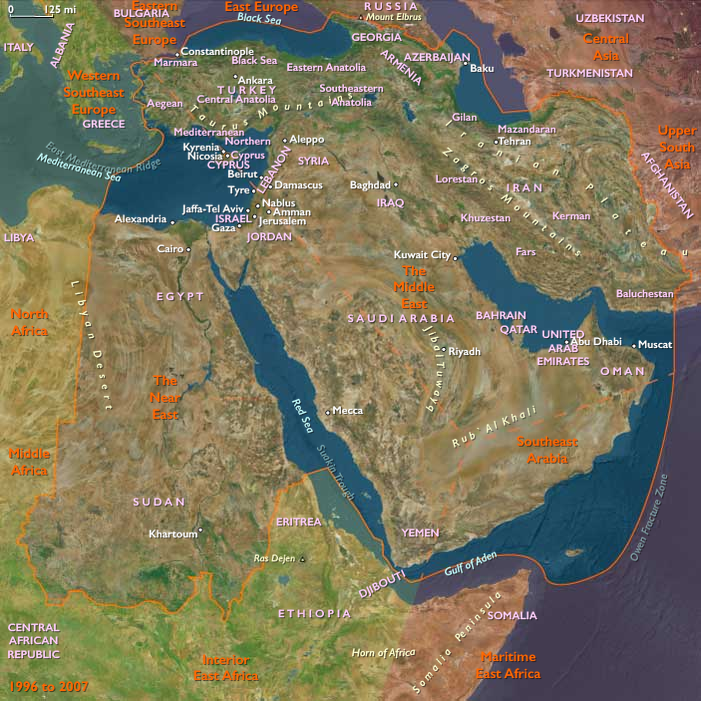
Subregions
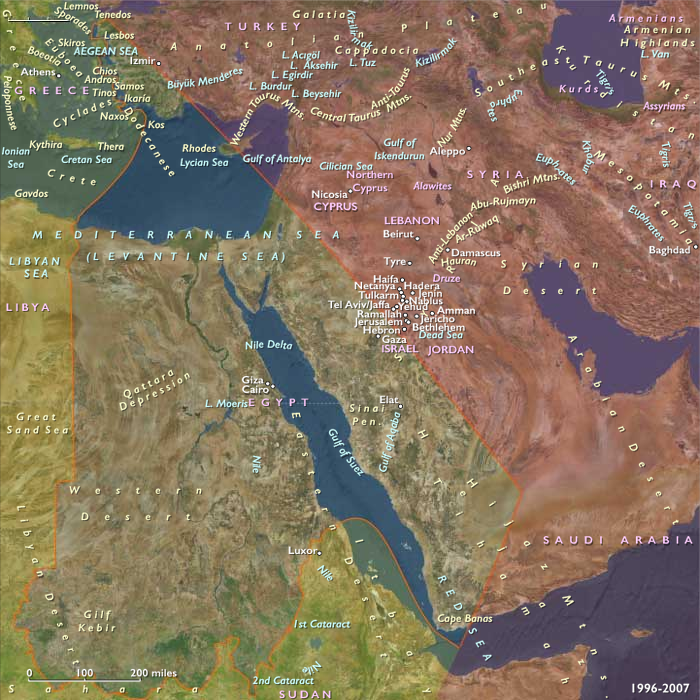
Related Events
Showing 10 events out of 764 total
Years: 1996 - 2007
People
- Abdel Rahman Suwar al-Dahab
- Ayman Nour
- Hassan al-Turabi
- Hosni Mubarak
- Omar al-Bashir
- Osama bin Laden
- Sadiq al-Mahdi
Groups
- Egyptians
- Arab people
- Jews
- Islam
- United States of America (US, USA) (Washington DC)
- Palestine, British Mandate of
- Britain (United Kingdom of Great Britain and Northern Ireland)
- United Nations, The (U.N.)
- IMF (International Monetary Fund)
- Israel
- Egypt, Arab Republic of
- Chad, Republic of
- Cyprus, Republic of
- PLO (Palestine Liberation Organization)
- Cyprus, Northern, Turkish Republic of
- Janjaweed
- AU (African Union)
Topics
- Sudanese Civil War, Second
- Israeli occupation of Southern Lebanon
- Wye River Memorandum
- Sudan: Famine of 1998
- Al-Aqsa Intifada
- Sudan-SPLM, SPLM faction, NDA, SAF
- Sudan-Chad
- Sudan-SLA, JEM
- Darfur, War in
- Darfur, Sudan: Food Crisis of 2003-
- Sudan-SLA, JEM
- Fath-Hamas conflict
- Battle of Gaza
Subjects
Regions
Subregions