
The Near East (1684–1827 CE): Provincial Revolts, …
Years: 1684 - 1827
The Near East (1684–1827 CE): Provincial Revolts, Pilgrimage Wars, and the Birth of Reform
Geography & Environmental Context
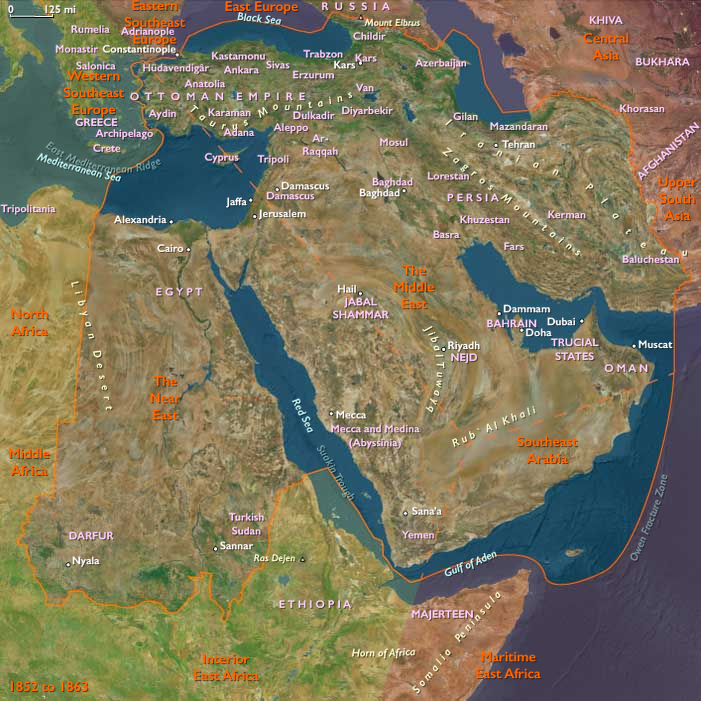
The Near East comprises Israel, Egypt, Sudan, western Saudi Arabia (the Hejaz), most of Jordan, southwestern Cyprus, southwestern Turkey, and—per our fixed scope—Yemen. Anchors include the Nile Valley and Delta, the Eastern Desert and Sinai, the Levantine coast (Gaza–Acre), the Jordan Valley/Dead Sea, the Hejaz Mountains with Mecca and Medina, southwestern Anatolia (Adana–Antalya arcs), southwestern Cyprus, and the Tihāmah–Yemeni highlands from Mocha to Sanaʽa. River corridors, oases, and pilgrimage routes bound these deserts and littorals to each other and to the wider Ottoman world.
Climate & Environmental Shifts
The waning Little Ice Age brought cooler winters and variable floods. In Egypt, low Nile years meant dearth and plague spikes; high floods burst dikes and washed fields. Hejaz and Jordan suffered drought pulses that stressed caravan wells. Yemen’s monsoon-dependent terraces endured irregular rains, while Red Sea coasts faced periodic storms. Earthquakes rattled Cyprus, the Levant, and Anatolia, disrupting urban fabric and ports.
Subsistence & Settlement
-
Egypt & Sudan: Nile grains (wheat, barley), flax, sugar, and garden crops sustained Cairo and Alexandria; in Sudan, millet–sorghum belts, date groves, and pastoral corridors linked Sennar and Nubian river towns. After 1820–1821, Muḥammad ʿAlī’s forces conquered Nubia–Sennar, integrating the Blue/White Nile into Egypt’s provisioning sphere.
-
Levant & Cyprus: Olives, vines, citrus, and wheat on terraces and plains; port towns (Acre, Jaffa, Larnaca) shipped oil, soap, and grain.
-
Hejaz: Oases (Taʾif, Yanbuʿ, Jidda) supplied pilgrims with dates, wheat, and livestock; urban Meccan economies revolved around hospitality and ritual markets.
-
Yemen: Terraced grain in the highlands; the coffee complex around Mocha peaked, then faced competition from new global plantings late in the period.
-
Southwestern Anatolia: Mixed cereals, cotton patches, and pastoralism around Adana and the Antalya littoral tied uplands to Mediterranean export lanes.
Technology & Material Culture
Irrigation canals, dikes, and water wheels (sāqiya) maximized Nile yields; stone terrace walls conserved Yemeni and Levantine hillsides. Caravanserais and cisterns dotted hajj and trade routes. Urban crafts flourished: Cairene textiles and brassware; Damascene and Gazan soap; Cypriot silks; Yemeni metalwork and coffee ware. After 1798, the French Expedition introduced printing, surveying, and military workshops in Egypt; by the 1820s, Muḥammad ʿAlī pushed ginning presses and irrigation works that foreshadowed the cotton boom.
Movement & Interaction Corridors
-
Pilgrimage highways: Annual hajj caravans from Cairo, Damascus, and Anatolia converged on Mecca. Warfare with the Wahhabi–Saʿūdī alliance (c. 1803–1812) disrupted these routes until Egyptian campaigns (1811–1818) under Tūsūn and Ibrāhīm Pasha restored the Hejaz to Ottoman control.
-
Red Sea–Indian Ocean: Suez–Jidda–Mocha trunk linked Egypt and Hejaz to Yemen, India, and East Africa; Mocha coffee and Jidda pilgrimage trade knit together merchants from the Maghreb to Gujarat.
-
Levantine–Mediterranean ports: Acre, Jaffa, Alexandria, Antalya, Larnaca funneled oil, grain, and cotton to European shippers; French and British consuls multiplied after 1750.
-
Nile & Sudanese corridors: River convoys carried grain and troops; post-1821 Egyptian garrisons tied Khartoum/Sennar to Cairo’s revenue system.
Cultural & Symbolic Expressions
Sunni Ottoman frameworks dominated, but pluralism remained deep: Coptic Egypt; Greek Orthodox and Armeniancommunities in Levantine ports; Jewish quarters from Cairo to Safed; Zaydi imamate culture in Yemen. The hajj was the region’s supreme ritual artery, sustained by waqf endowments and market networks; scholars, Sufi lineages, and artisans circulated with caravans. In Egypt, chronicles and mosque-university life (al-Azhar) debated governance as Mamluk beys contested Ottoman governors; after 1798, the new Arabic press and translation bureaus under Muḥammad ʿAlī seeded a reformist literary public.
Environmental Adaptation & Resilience
Granary provisioning and price controls in Egypt buffered low Nile years; terrace maintenance in Palestine, Cyprus, and Yemen conserved soil and water. Pilgrims and caravaneers relied on zakat-funded wells, cisterns, and rationing. Pastoral groups in Sudan and the Hejaz shifted herds along rain and pasture gradients. After 1811–1818, restored Hejazi security revived water/food provisioning for pilgrims; in Egypt the expansion of controllable irrigation (canals, barrages-in-planning) aimed to tame flood variability and expand cash crops.
Political & Military Shocks
-
Mamluk–Ottoman duopoly in Egypt: Factional warfare and tax farming culminated in the French occupation (1798–1801); British–Ottoman forces expelled the French.
-
Rise of Muḥammad ʿAlī (1805): Centralization, army reform, and monopolies; massacre of the Mamluks (1811); Hejazi campaigns (1811–1818) crushed the first Saudi state; Sudan conquest (1820–1821) extended Egyptian revenue and slave-soldier recruitment.
-
Levantine strongmen: Aḥmad Pasha al-Jazzār in Acre (late 18th c.) exemplified semi-autonomous Ottoman provincial power.
-
Yemen: Zaydi imams held the highlands; Mocha’s fortunes fluctuated with global coffee competition and Red Sea politics.
-
European pressure: Consular networks, naval visits, and commercial treaties deepened dependence on Mediterranean markets without formal colonization—yet.
Transition
Between 1684 and 1827, the Near East shifted from a stable Ottoman heartland—sustained by pilgrimage, terraces, and Nile irrigation—to a laboratory of coercive reform and imperial entanglement. Hajj wars and Egyptian campaigns bound the Hejaz back to Istanbul; French invasion jolted Egypt into an era of state-driven modernization; Sudan’s incorporation widened Cairo’s reach; Yemen’s coffee pole waned as global rivals rose. By 1827, caravans and canals still ordered life—yet Muḥammad ʿAlī’s armies, monopolies, and irrigation works signaled a new dispensation in which provincial power, not distant sultans, would set the rhythm of Near Eastern change.
People
Groups
- Jews
- Islam
- Muslims, Sunni
- Muslims, Shi'a
- Christians, Roman Catholic
- Christians, Eastern Orthodox
- Cyprus, Kingdom of
- Ottoman Empire
- Palestine, Ottoman
- Egypt, Ottoman eyalet of
- Holy League (Mediterranean)
- Darfur, Keira Sultanate of
- Wahhabism
- Saud, House of
- French First Republic
- Egypt, (Ottoman) Viceroyalty of
Topics
- French Revolutionary Wars, or “Great French War”
- French Revolutionary Wars: Campaigns of 1798
- French Revolutionary Wars: Campaigns of 1799
- French Revolutionary Wars: Campaigns of 1800
- French Revolutionary Wars: Campaigns of 1801
- Wahhabi War
- Greek War of Independence
- Auspicious Incident (or Event), aka Massacre of the Janissaries
Commodoties
Subjects
Regions
Subregions

Years: 1684 - 1827
People
Groups
- Jews
- Islam
- Muslims, Sunni
- Muslims, Shi'a
- Christians, Roman Catholic
- Christians, Eastern Orthodox
- Cyprus, Kingdom of
- Ottoman Empire
- Palestine, Ottoman
- Egypt, Ottoman eyalet of
- Holy League (Mediterranean)
- Darfur, Keira Sultanate of
- Wahhabism
- Saud, House of
- French First Republic
- Egypt, (Ottoman) Viceroyalty of
Topics
- French Revolutionary Wars, or “Great French War”
- French Revolutionary Wars: Campaigns of 1798
- French Revolutionary Wars: Campaigns of 1799
- French Revolutionary Wars: Campaigns of 1800
- French Revolutionary Wars: Campaigns of 1801
- Wahhabi War
- Greek War of Independence
- Auspicious Incident (or Event), aka Massacre of the Janissaries
Commodoties
Subjects
Regions
Subregions