
Filters:
Navarre’s Diplomatic Struggles and the Path to …
Years: 1512 - 1512
April
Navarre’s Diplomatic Struggles and the Path to Castilian Invasion (1507–1512)
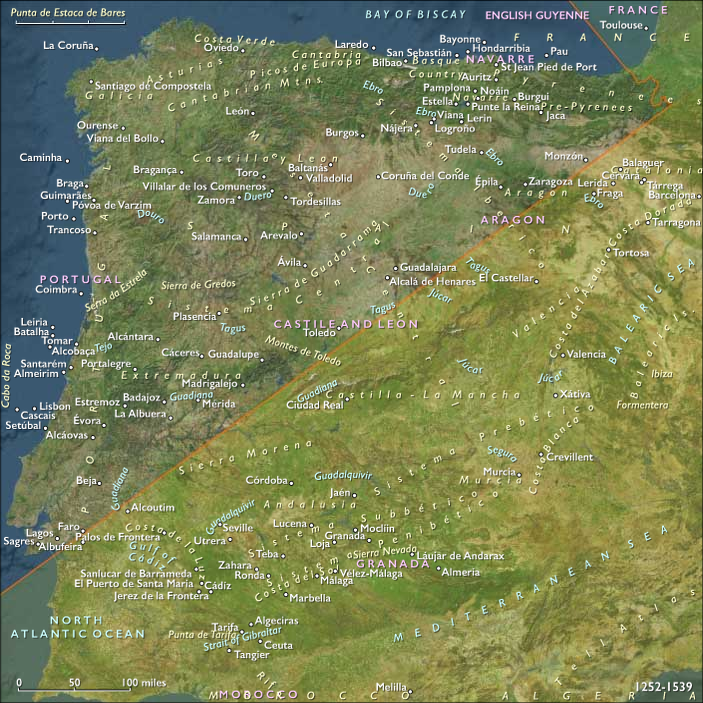
By the early 16th century, the Kingdom of Navarre was caught between two powerful neighbors—France and Castile-Aragon—and struggled to maintain its sovereignty and diplomatic balance. While Ferdinand II of Aragonand King Louis XII of France had initially cooperated after Ferdinand’s marriage to Germaine of Foix, tensions soon escalated over Navarre and Béarn, setting the stage for Navarre’s downfall and Castilian annexation in 1512.
Navarre’s Diplomatic Efforts and Rising Threats from France (1507–1510)
- In 1507, the Navarrese Parliament (Three States of Navarre) appointed a diplomatic delegation to France, led by John of Jaso (father of Saint Francis Xavier) and the Bishop of Lescar.
- However, these efforts were halfhearted and failed to secure strong commitments from France.
- King Louis XII of France, seeking to expand his control, pressured the House of Albret (rulers of Navarre) to relinquish their holdings outside Navarre—including Béarn, Bigorre, and Foix.
- The Albrets refused, and in response, Louis XII used the Parliament of Toulouse to issue a confiscation decree, laying claim to these territories.
Navarre Reacts: Military Mobilization and the Béarn-Navarre Confederation (1510)
- Facing the risk of a French takeover, the Three States of Navarre and the States-General of Béarn convened and passed a military mobilization decree.
- A Béarn-Navarre Confederation was created, establishing a permanent joint defense provision against external threats.
- However, Ferdinand II of Aragon was closely monitoring these events, seeing an opportunity to destabilize Navarre from within.
- He renewed contacts with his allies in the Navarrese Beaumont party, a pro-Castilian faction that opposed the ruling House of Albret.
The Italian Wars and Navarre’s Precarious Position (1510–1511)
- By 1510, the Italian Wars had shifted dramatically, impacting Navarre’s diplomatic options.
- Pope Julius II, one of the most ambitious popes of the era, initially formed the Holy League against Venice in 1508 but later turned against France.
- On August 4, 1511, Julius II declared a new Holy League against France, aligning himself with Ferdinand IIin the Spanish-French power struggle over Italy.
- Navarre refused to join the League, maintaining a neutral position, but its stance was increasingly precarious.
Ferdinand II Declares War on France and Prepares to Invade Navarre (1512)
- In March 1512, Ferdinand II of Aragon declared war on France, seizing the opportunity to expand his territorial ambitions.
- The death of Gaston de Foix (April 1512), the brilliant French general, left a power vacuum over the Pyrenean holdings of the House of Albret.
- With Gaston’s death, the full claim over the Pyrenean territories of the Albrets fell to Germaine of Foix, Ferdinand’s wife, giving him a legal pretext for intervention.
The Path to Castilian Annexation
- Ferdinand II now had both a military and legal justification to move against Navarre.
- With French forces weakened in Italy, Castile-Aragon prepared for the full-scale invasion of Navarre, which would occur in July 1512.
Conclusion: The Inevitable Fall of Navarre
- Caught between two powerful rivals, Navarre’s attempts at neutrality and military defense failed to prevent its eventual annexation by Castile.
- Ferdinand II’s long-term strategy—first using diplomacy, then military force—ensured that Navarre would fall under Castilian rule.
- By the end of 1512, Navarre’s independence was effectively lost, marking one of the final territorial conquests of Ferdinand’s reign.
Locations
People
- Catherine of Navarre
- Fadrique Álvarez de Toledo
- Ferdinand II of Aragon
- Gaston of Foix
- Germaine of Foix
- John III of Navarre
- Louis XII of France
- Pope Julius II
Groups
- Navarre, Kingdom of
- Béarn, Viscountcy of
- Aragón, Kingdom of
- Aragon, Crown of
- Castile, Crown of
- Foix, County of
- France, (Valois) Kingdom of
Topics
Commodoties
Subjects
Regions

Subregions
Years: 1512 - 1512
April
Locations
People
- Catherine of Navarre
- Fadrique Álvarez de Toledo
- Ferdinand II of Aragon
- Gaston of Foix
- Germaine of Foix
- John III of Navarre
- Louis XII of France
- Pope Julius II
Groups
- Navarre, Kingdom of
- Béarn, Viscountcy of
- Aragón, Kingdom of
- Aragon, Crown of
- Castile, Crown of
- Foix, County of
- France, (Valois) Kingdom of
Topics
Commodoties
Subjects
Regions
Subregions