
The naval war between the Ptolemaics and …
Years: 196BCE - 196BCE
The naval war between the Ptolemaics and the Antigonids has continued intermittently through the second half of the third century BCE, until Philip V of Macedon, the last Antigonid king to attempt to establish a Macedonian thalassocracy, is finally beaten by an alliance between Rhodes and Pergamon.
A monumental column is dedicated to him in front to the large stoa of the upper terrace by the Macedonians by 200 BCE.
It is very probably during one of these episodes that the monumental fountain containing a ship's prow of limestone and the famous Winged Victory were built.
This could actually be a dedication from Rhodes rather than Macedon, as analysis of the limestone used for the prow and the type of vessel indicated that it came from Rhodes.
The eight foot- (two point four meters-) tall marble figure known as the Nike of Samothrace (also called the Winged Victory) depicts the goddess of victory alighting on a ship's prow, with her wings spread and her clinging garments rippling in the wind.
Created by an unknown, presumably Rhodian, sculptor between 220 and 190, modern excavations suggest that the Victory occupied a niche in an open-air theater and also suggest it accompanied an altar that was within view of the ship monument of Demetrius I Poliorcetes (337–283 BCE).
Rendered in white Parian marble, the figure originally formed part of the Samothrace temple complex dedicated to the Great Gods, Megaloi Theoi.
Prominently displayed at the Louvre since 1884, it is one of the world’s most celebrated sculptures.
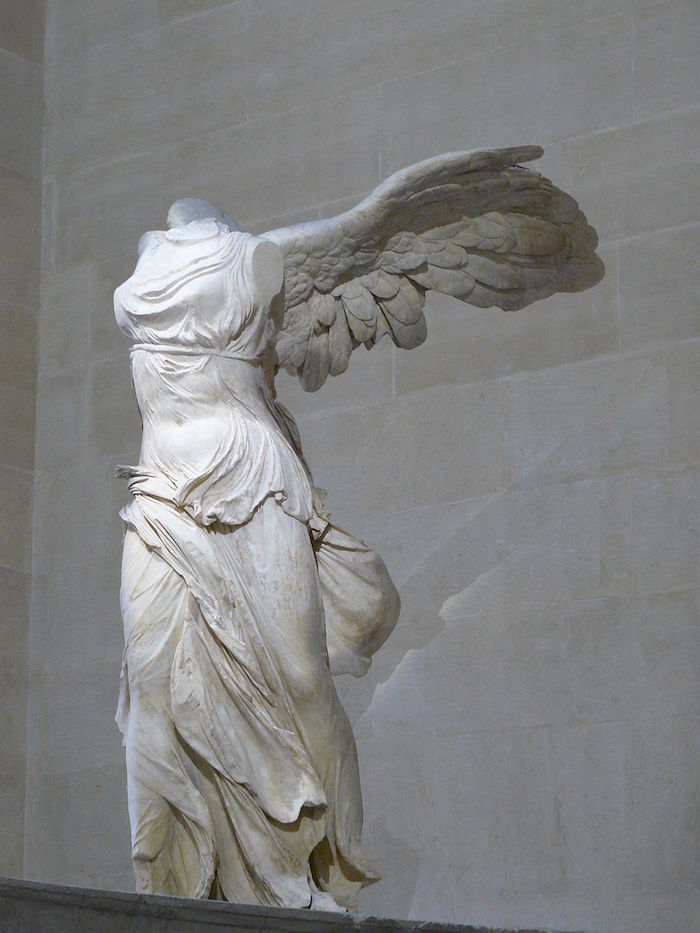
The Winged Victory of Samothrace or The Winged Nike c. 200–190 BCE, Parian marble; 244 cm (96 in); Louvre, Paris. (Photo taken 21 March 2015, 17:28:20 Lyokoï88
Locations
People
Groups
Topics
Commodoties
Subjects
Regions
Subregions
Related Events
Showing 10 events out of 63492 total
Years: 196BCE - 196BCE
The Winged Victory of Samothrace or The Winged Nike c. 200–190 BCE, Parian marble; 244 cm (96 in); Louvre, Paris. (Photo taken 21 March 2015, 17:28:20 Lyokoï88
Locations
People
Groups
Topics
Commodoties
Subjects
Regions
Subregions