
The nature of the Majapahit empire and …
Years: 1406 - 1406
The nature of the Majapahit empire and its extent is subject to debate.
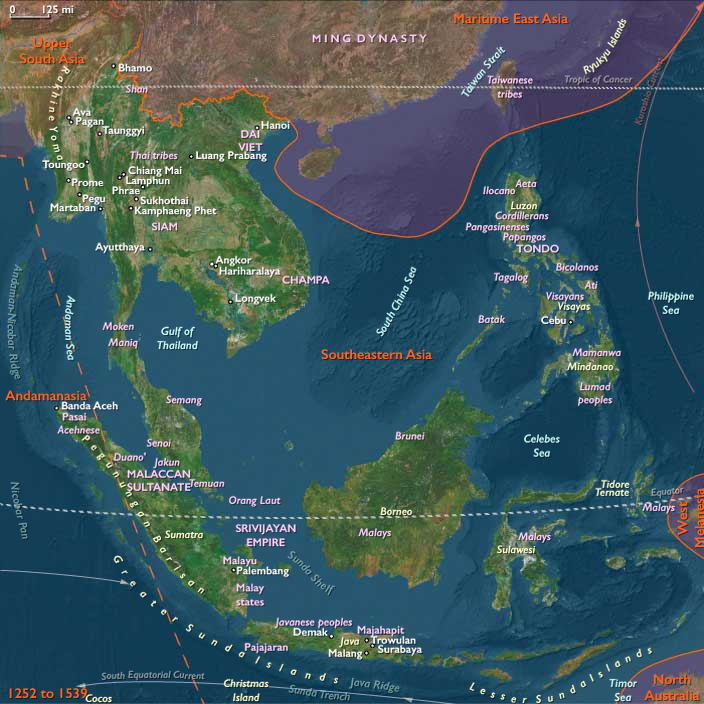
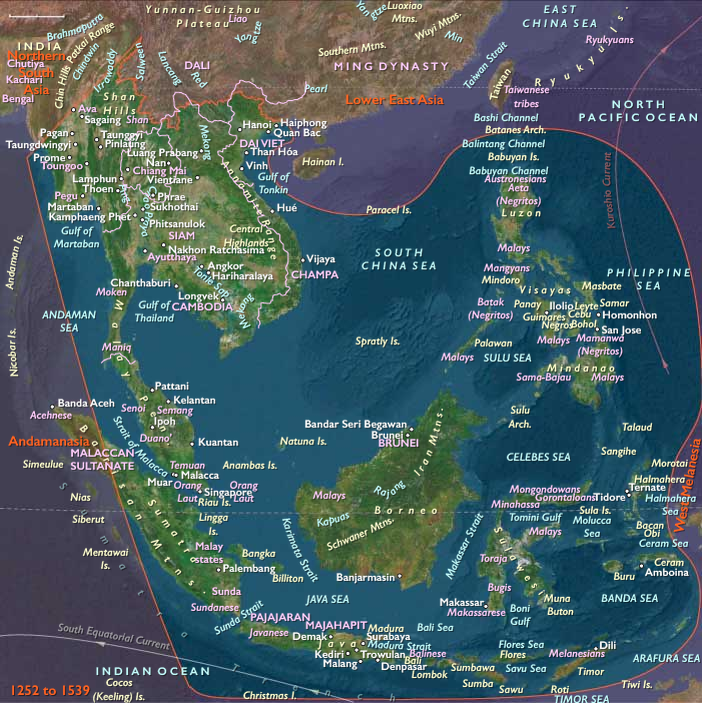
It may have had limited or entirely notional influence over some of the tributary states in included Sumatra, the Malay Peninsula, Kalimantan and eastern Indonesia over which of authority was claimed in the Nagarakertagama, written in 1365 and depicting a sophisticated court with refined taste in art and literature, and a complex system of religious rituals.
Geographical and economic constraints suggest that rather than a regular centralized authority, the outer states were most likely to have been connected mainly by trade connections, which was probably a royal monopoly.
It also claims relationships with Champa, Cambodia, Siam, southern Burma, and Vietnam, and even sent missions to China.
At the death of Hayam Wuruk in 1389, the Majapahit ruler had been succeeded by the crown princess Kusumawardhani, who had married a relative, Prince Wikramawardhana.
Hayam Wuruk also had a son from his previous marriage, crown prince Wirabhumi, who also claims the throne.
A civil war, called Paregreg, is thought to have occurred from 1405 to 1406, in which Wikramawardhana is victorious and Wirabhumi is caught and decapitated.
Locations
Groups
Commodoties
Subjects
Regions
Subregions
Related Events
Showing 10 events out of 42546 total
Years: 1406 - 1406
Locations
Groups
Commodoties
Subjects
Regions
Subregions