
The Muslim commander Utbah ibn Ghazwan, while …
Years: 639 - 639
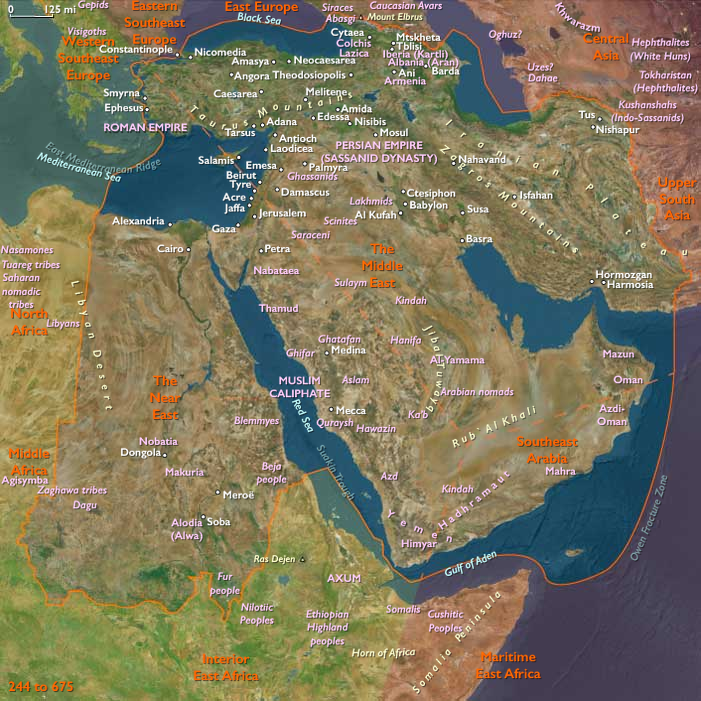
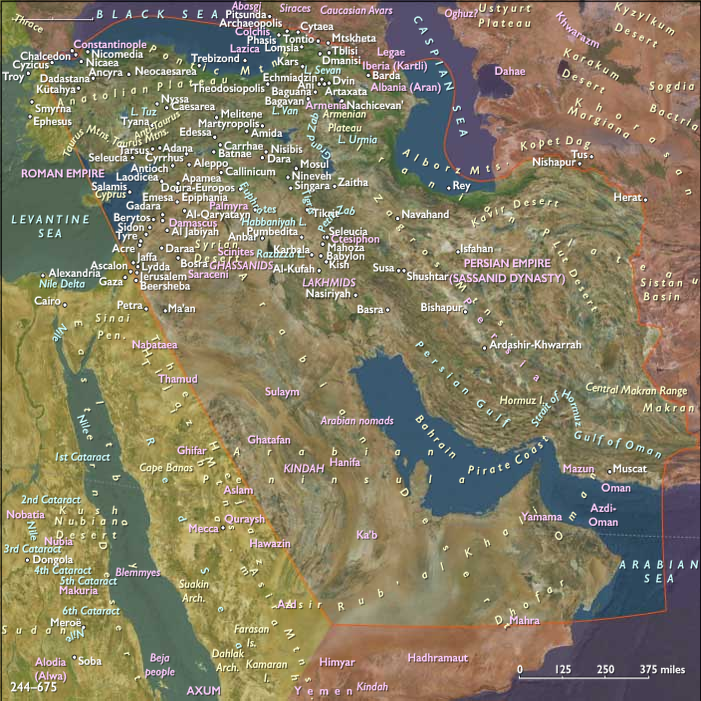
The Muslim commander Utbah ibn Ghazwan, while defeating the forces of the Sassanid Empire in the vicinity of present Basra, on the Shatt al-Arab at the head of the Persian Gulf, had erected his camp on the site of an old Persian settlement called Vahestabad Ardashir, which the Arabs had destroyed.
The name Al-Basrah, which in Arabic means "the over watching" or "the seeing everything", was given to it because of its role as a military base against the Sassanid Empire.
However, other sources claim the name originates from the Persian word Bas-rah or Bassorah, meaning "where many ways come together".
Umar establishes this encampment in 639 as a city with five districts, and appoints Abu Musa al-Ash'ari as its first governor.
The port will become a major trading center for commodities from Arabia, India, and Persia.
Locations
People
- 'Amr ibn al-'As
- Abu-Musa Ashaari
- Aishah
- Ali
- Heraclius
- Khālid ibn al-Walīd
- Muawiyah I
- Rostam Farrokhzād
- Theodore
- Theodore Trithyrius
- Umar
- Uthman ibn Affan
- Yazdegerd III
Groups
- Arab people
- Persian people
- Zoroastrians
- Jews
- Persian Empire, Sassanid, or Sasanid
- Christians, Armenian Apostolic Orthodox
- Christians, Eastern (Diophysite, or “Nestorian”) (Church of the East)
- Christians, Maronite
- Christians, Monophysite
- Christians, Miaphysite (Oriental Orthodox)
- Coptic Orthodox Church of Alexandria
- Christianity, Chalcedonian
- Greeks, Medieval (Byzantines)
- Roman Empire, Eastern: Heraclian dynasty
- Islam
- Rashidun Caliphate
- Christians, Monotheletist
Topics
Commodoties
Subjects
- Commerce
- Labor and Service
- Conflict
- Faith
- Government
- Custom and Law
- Technology
- Movements
- Theology
- Christology
Regions
Subregions
Related Events
Showing 10 events out of 56588 total
Years: 639 - 639
Locations
People
- 'Amr ibn al-'As
- Abu-Musa Ashaari
- Aishah
- Ali
- Heraclius
- Khālid ibn al-Walīd
- Muawiyah I
- Rostam Farrokhzād
- Theodore
- Theodore Trithyrius
- Umar
- Uthman ibn Affan
- Yazdegerd III
Groups
- Arab people
- Persian people
- Zoroastrians
- Jews
- Persian Empire, Sassanid, or Sasanid
- Christians, Armenian Apostolic Orthodox
- Christians, Eastern (Diophysite, or “Nestorian”) (Church of the East)
- Christians, Maronite
- Christians, Monophysite
- Christians, Miaphysite (Oriental Orthodox)
- Coptic Orthodox Church of Alexandria
- Christianity, Chalcedonian
- Greeks, Medieval (Byzantines)
- Roman Empire, Eastern: Heraclian dynasty
- Islam
- Rashidun Caliphate
- Christians, Monotheletist
Topics
Commodoties
Subjects
- Commerce
- Labor and Service
- Conflict
- Faith
- Government
- Custom and Law
- Technology
- Movements
- Theology
- Christology
Regions
Subregions