
The Muslim Arab army in Persia, supposedly …
Years: 642 - 642
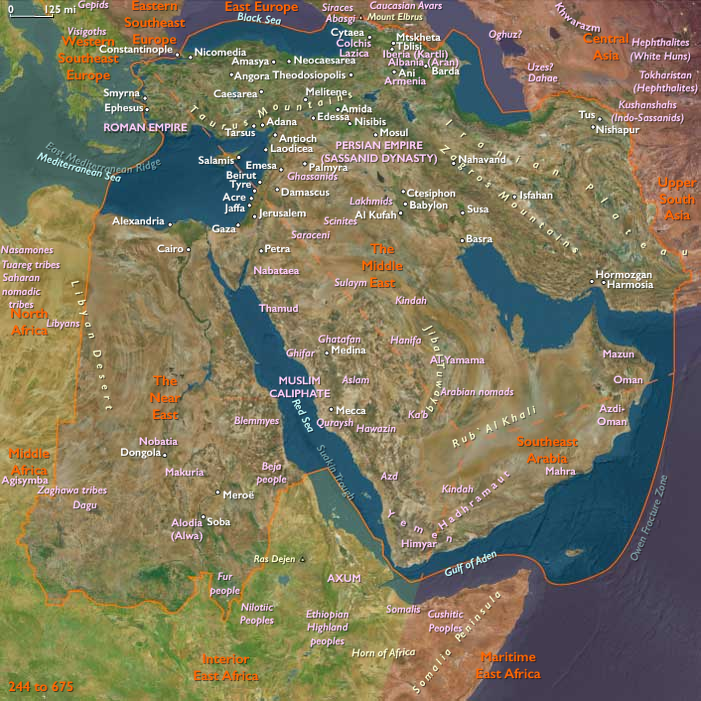
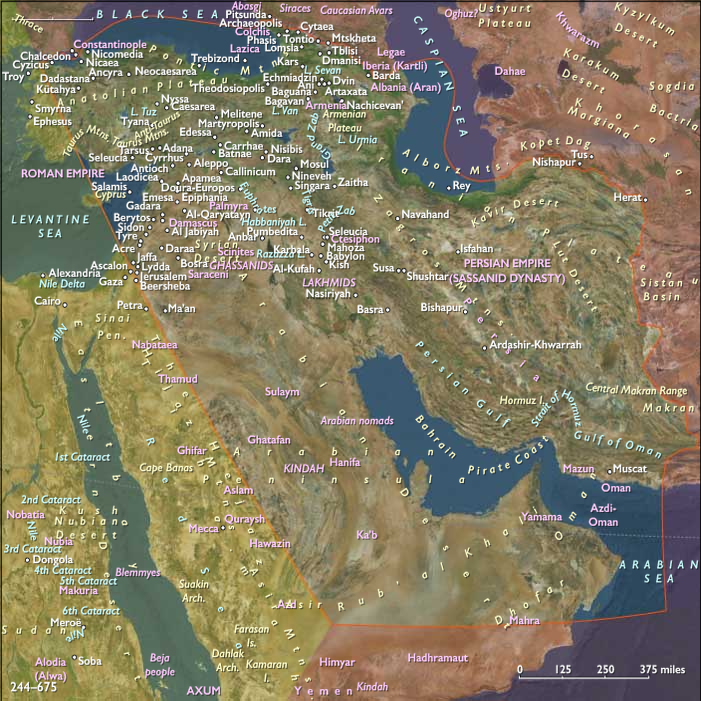
The Muslim Arab army in Persia, supposedly outnumbered five to one, feigns defeat on the battlefield, withdraws with the Persians in hot pursuit, surprises them amid two mountain passes, and decisively defeats them in 642 at the Battle of Nahavand, killing about one hundred thousand.
Various versions are told about Nahāvand and how the battle was ensued in the early stages.
Some note that the Muslim Arabs, under Sa`d ibn Abi Waqqas, managed to deceive the Persians through a ruse, that Caliph Umar had died.
The Persian cavalry, full of confidence, mounted an ill-prepared pursuit of the Bedouins who swiftly retreated to a safe area and eventually surrounded and trapped the Persian force before assailing it from all sides, and decisively defeating it.
As the historian Tabari mentions, the Persians were never again able to unite their men in such numbers and many were already talking of dissolving the Empire and going their separate ways when the battle was commencing.
Many of Yazdegerd's military and civilian officials have abandoned him.
Nahāvand marks the dissolution of the Sassanian Imperial army, with the fall of the last of the grand marshals of the army and the rise of warlordism among the Persians.
Yazdegerd attempts to raise troops by appealing to other neighboring areas, such as the princes of Tukharistan and Sogdia, and will eventually send his son Peroz III to the Tang court, but without any success.
Locations
People
Groups
- Arab people
- Persian people
- Zoroastrians
- Bedouin
- Persian Empire, Sassanid, or Sasanid
- Roman Empire, Eastern: Heraclian dynasty
- Chinese Empire, Tang Dynasty
- Rashidun Caliphate
Topics
- Migration Period
- Arab-Byzantine Wars
- Muslim Conquest of Persia
- Muslim Conquest of Egypt
- Muslim Conquest of Armenia
- Nahāvand, Battle of
Commodoties
Subjects
Regions
Subregions
Related Events
Showing 5 events out of 5 total
Years: 642 - 642
Locations
People
Groups
- Arab people
- Persian people
- Zoroastrians
- Bedouin
- Persian Empire, Sassanid, or Sasanid
- Roman Empire, Eastern: Heraclian dynasty
- Chinese Empire, Tang Dynasty
- Rashidun Caliphate
Topics
- Migration Period
- Arab-Byzantine Wars
- Muslim Conquest of Persia
- Muslim Conquest of Egypt
- Muslim Conquest of Armenia
- Nahāvand, Battle of
Commodoties
Subjects
Regions
Subregions