
The Muisca have two rulers. One, …
Years: 1538 - 1538
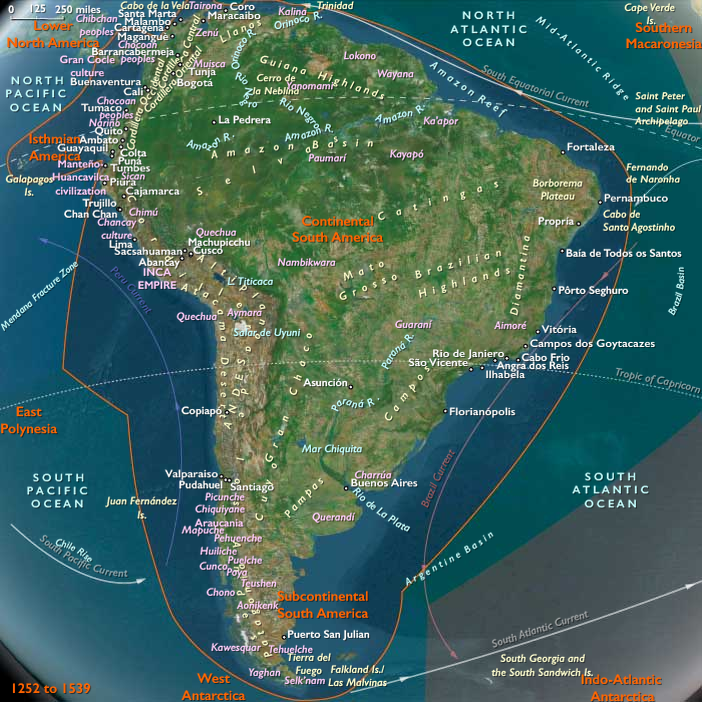
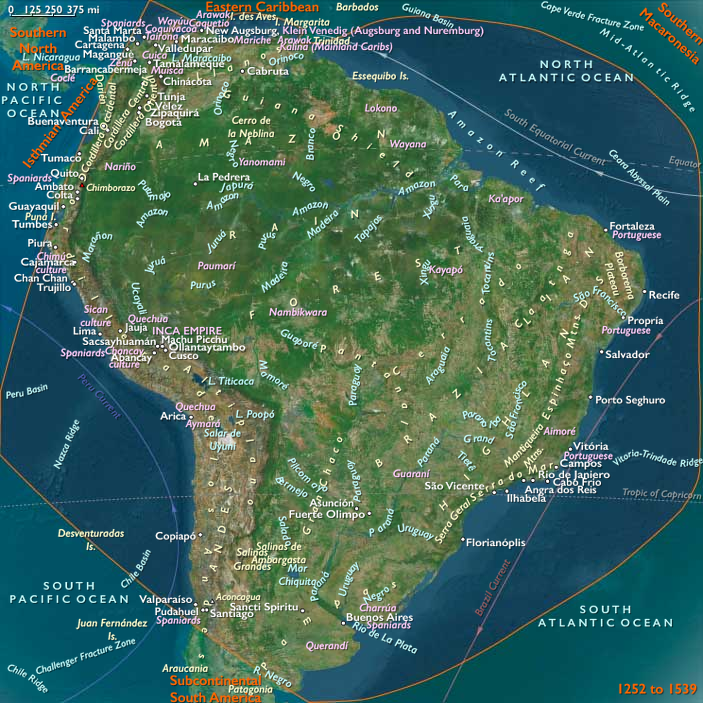
The Muisca have two rulers.
One, the Zipa Tisquesusa, rules in Bogotá; the other, the Zaque Nemequene, rules in Tunja.
Taking advantage of a war between the two chiefdoms, Quesada's force subdue Bogotá, then successfully attack Tunja.
At this point it is time to establish a colony so that the earth itself might properly belong to Quesada and his men, and to facilitate the further accumulation of gold and emeralds.
They choose a spot next to the towering peaks of the east, where the land is high and the rains will quickly run off, where the mountains will protect them from attackers and the jungles below.
Quesada places his right foot on the bare earth and says simply, “I take possession of this land in the name of the most sovereign emperor, Charles V.” The settlement is at first called New City of Granada, but later they change it to Santa Fé de Bogotá, now known simply as Bogotá, from the chibcha language word Bacatá, the name of one of the two cacicazgos of the Muisca Confederation.
The city lies more than eighty-five hundred feet (two thousand five hundred and ninety meters) above sea level at the eastern edge of the Basin of Cundinamarca.
Quesada remains in the region until the arrival of two expeditions at the end of 1538: Sebastián de Belalcázar from Quito, Ecuador, one of the captains of Pizarro who had mutinied against his leader; and Nikolaus Federmann, who has rebelled against his leader Georg von Speyer.
Locations
People
- Francisco Pizarro
- Georg von Speyer
- Gonzalo Jiménez de Quesada
- Nikolaus Federmann
- Sebastián de Belalcázar
Groups
- Muisca (Amerind tribe)
- Spain, Habsburg Kingdom of
- Canary Islands (Spanish colony)
- Tierra Firme, Province of
Topics
Commodoties
Subjects
Regions
Subregions
Years: 1538 - 1538
Locations
People
- Francisco Pizarro
- Georg von Speyer
- Gonzalo Jiménez de Quesada
- Nikolaus Federmann
- Sebastián de Belalcázar
Groups
- Muisca (Amerind tribe)
- Spain, Habsburg Kingdom of
- Canary Islands (Spanish colony)
- Tierra Firme, Province of
Topics
Commodoties
Subjects
Regions
Subregions