
Zvonimir's death from natural causes is the …
Years: 1089 - 1089
Zvonimir's death from natural causes is the most commonly accepted of the several versions of Demetrius Zvonimir's death, recorded by Thomas the Archdeacon.
Another account, from the Presbyter of Doclea, says that on April 20, 1089, Pope Urban II, desiring to heal the East-West Schism, asked Zvonimir, his strongest Balkan ally, to come to the military aid of Alexios I Komnenos against the Seljuqs.
Zvonimir convened the Sabor at Kosovo Polje near Knin that year to mobilize the army on behalf of the pope and the emperor, but the nobility refused him and a rebellion erupted, leading to Zvonimir's assassination at the hands of his own soldiers.
In any event, his death marks the collapse of Croatian royal power.
The myth of the "Curse of King Zvonimir" is based on the legend of his assassination.
He is most likely buried in the church of St. Mary in his capital Knin, while his remains are transferred to Solin some time after.
Zvonimir was married to his distant relative Jelena, the sister of Ladislaus I of Hungary.
Through Helen, he was connected to the royal families of not only Hungary, but also Poland, Denmark, Bulgaria, and Constantinople.
She had borne him a son, Radovan, who had predeceased him, and a daughter, Claudia, who, being married to the vojvoda of Lapcani Lika, is ineligible for the throne.
Stephen, the last of the House of Trpimirović, had been due to succeed Peter Kresimir IV, but had been sidelined by the people and clergy in 1075 who instead bestowed the title of king to Zvonimir, previously a ban in Slavonia, and a member of the junior Svetoslavić branch of the House of Trpimirović (descendants of Svetoslav Suronja).
By the time Zvonimir dies in 1089, Stephen is old and seriously affected by ill health.
Nevertheless, he assumes the throne after being persuaded by the aristocracy and clergy.
Locations
People
Groups
- Hungarian people
- Slavs, South
- Slavonia region
- Croats (South Slavs)
- Croatia, Kingdom of
- Hungary, Kingdom of
- Christians, Eastern Orthodox
- Christians, Roman Catholic
- Dalmatia region
- Roman Empire, Eastern: Komnenos dynasty, restored
Topics
Subjects
Regions
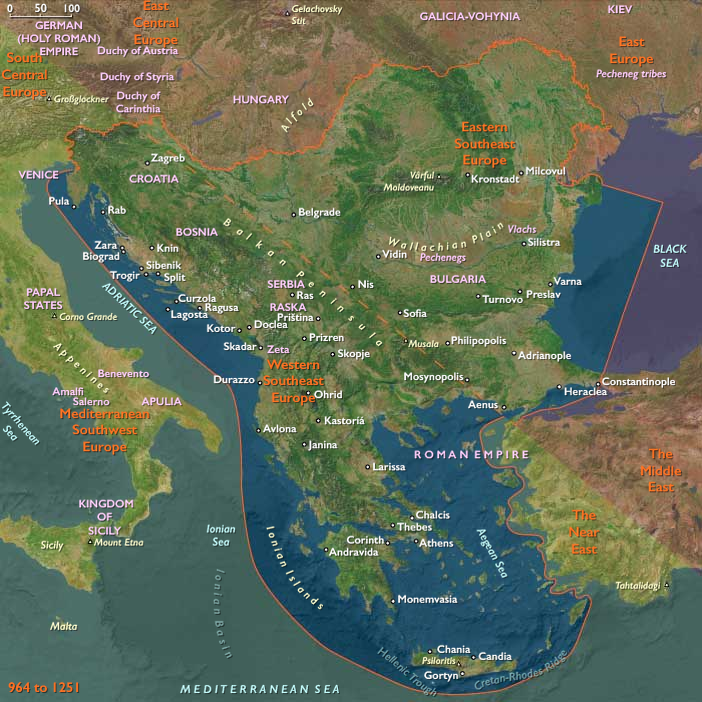
Subregions
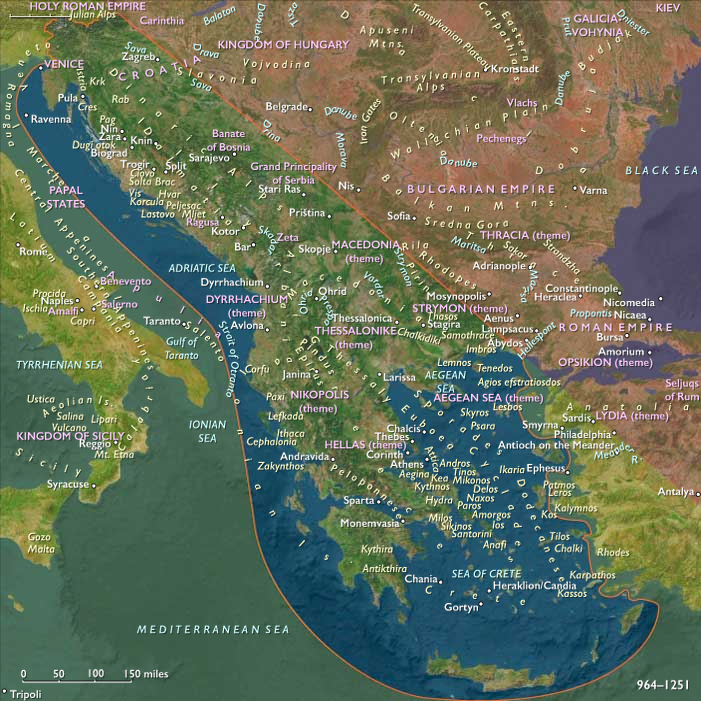
Years: 1089 - 1089
Locations
People
Groups
- Hungarian people
- Slavs, South
- Slavonia region
- Croats (South Slavs)
- Croatia, Kingdom of
- Hungary, Kingdom of
- Christians, Eastern Orthodox
- Christians, Roman Catholic
- Dalmatia region
- Roman Empire, Eastern: Komnenos dynasty, restored
Topics
Subjects
Regions
Subregions