
The Battle of Tours (732): Charles Martel …
Years: 732 - 732
The Battle of Tours (732): Charles Martel Halts the Moorish Advance
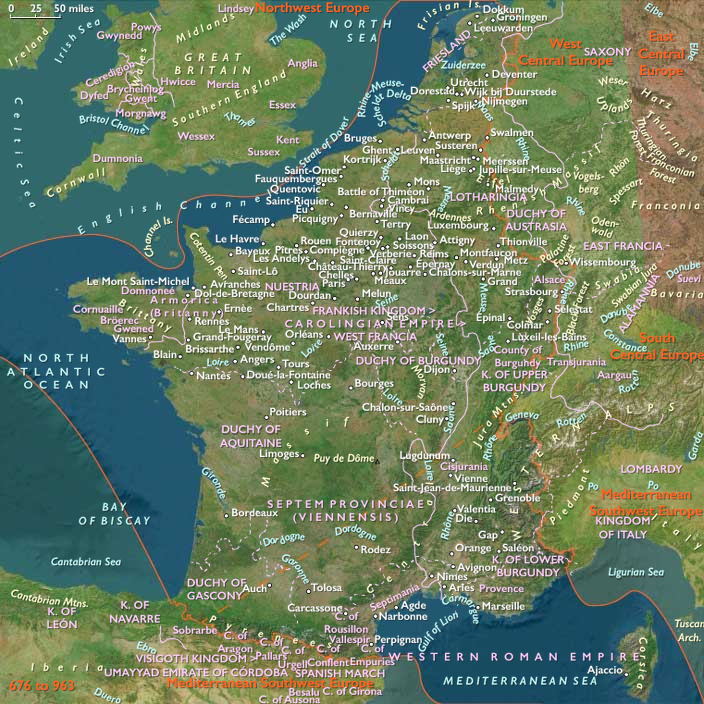
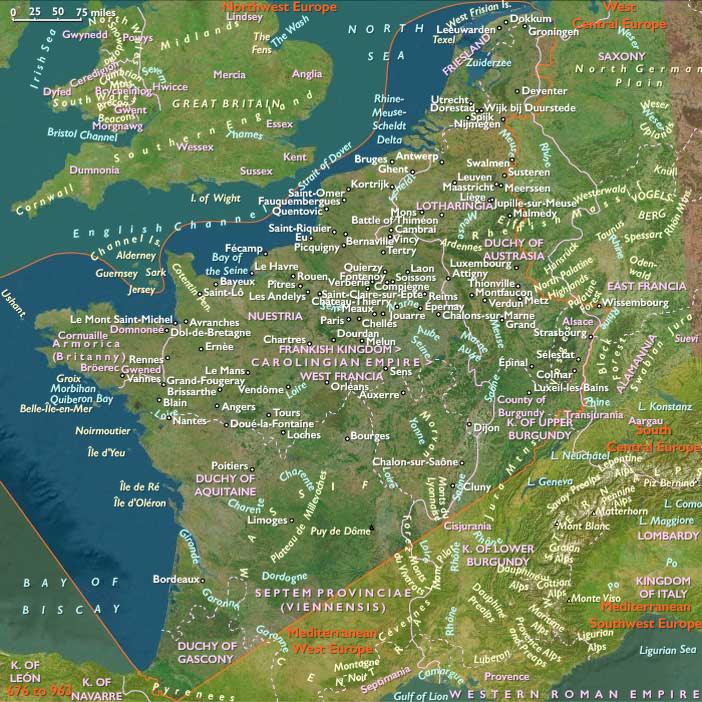
Following their devastation of Aquitaine, the Moors, under the skilled Abdul Rahman Al Ghafiqi, push north of Poitiers, threatening Frankish lands. Unable to stop their advance, Duke Odo of Aquitaine turns to his overlord, Charles Martel, for aid. At the time, Charles is stationed near Orléans with his army, but upon receiving Odo’s urgent plea, he swiftly marches south to intercept the invading force.
The Battle Between Tours and Poitiers
In early October 732, Charles positions his forces at a strategic location between Tours and Poitiers, blocking the Moorish advance. He arranges his Frankish infantry into tight, disciplined squares, a formation designed to withstand the relentless cavalry charges of the Umayyad horsemen. Armed with swords, axes, and heavy shields, his soldiers endure repeated attacks, their discipline and cohesion proving decisive against the more mobile but fragmented Moorish forces.
The battle lasts between two days (according to Muslim sources) and seven days (according to Christian accounts). The turning point comes when Abdul Rahman Al Ghafiqi is slain in combat, throwing the Moorish army into disarray. With their leader dead, the invaders break and flee south toward Spain, but Charles, choosing caution over pursuit, holds his ground to secure the victory rather than risk an overextended counteroffensive.
The Consequences of Victory
With this decisive triumph, Charles Martel earns the honorific surname "Martel" ("The Hammer"), reinforcing his status as the most formidable military leader of his age. While the battle itself may have been a series of engagements rather than a single pitched confrontation, its impact is profound:
- Islamic expansion into Western Europe is permanently halted—there are no further major Moorish invasions of Frankish lands.
- A new balance of power emerges between Western Europe, the Islamic world, and the Byzantine Empire, shaping the geopolitical landscape of the medieval world.
- Charles Martel consolidates his authority over the Franks, strengthening his control and laying the foundation for Carolingian rule.
- Duke Odo of Aquitaine, now recognizing Charles’s supremacy, swears allegiance to him, formally bringing Aquitaine under Frankish control and further expanding Charles’s influence.
The Battle of Tours-Poitiers thus stands as a pivotal moment in European history, cementing Charles Martel’s dominance over Francia and marking a crucial step in the rise of the Carolingian dynasty.
Locations
People
Groups
- Jews
- Franks
- Moors
- Christianity, Chalcedonian
- Septimania
- Aquitaine, (Frankish) Duchy of
- Muslims, Sunni
- Umayyad Caliphate (Damascus)
- Francia (mayors of the palaces of Austrasia and Neustria)
- al-Andalus (Andalusia), Muslim-ruled
- Roman Empire, Eastern: Isaurian dynasty
Topics
Commodoties
Subjects
Regions
Subregions
Related Events
Showing 8 events out of 8 total
Years: 732 - 732
Locations
People
Groups
- Jews
- Franks
- Moors
- Christianity, Chalcedonian
- Septimania
- Aquitaine, (Frankish) Duchy of
- Muslims, Sunni
- Umayyad Caliphate (Damascus)
- Francia (mayors of the palaces of Austrasia and Neustria)
- al-Andalus (Andalusia), Muslim-ruled
- Roman Empire, Eastern: Isaurian dynasty
Topics
Commodoties
Subjects
Regions
Subregions