The miniscule Slav state of the Ranians …
Years: 1048 - 1059
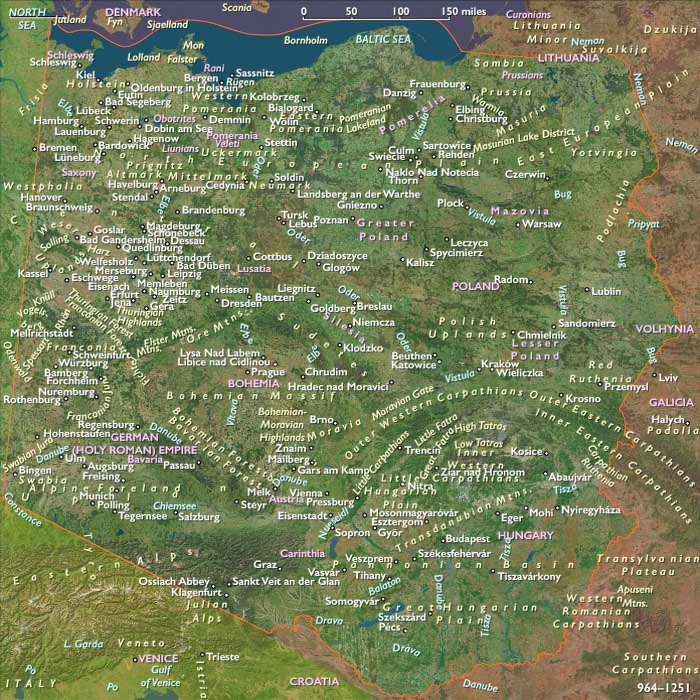
The miniscule Slav state of the Ranians dominates the Baltic Sea trade from their center of Arkona on the island of Rügen.
Related Events
Filter results
Showing 10 events out of 51252 total
A supernova occurs on July 4, 1054, in the constellation Taurus, a stellar event so bright that it is visible for three weeks in the daytime and for almost two years at night.
The remnant of the explosion forms a gaseous nebula whose supposed resemblance to a crab gives the formation its name: the Crab Nebula.
The explosion, recorded by Chinese astronomers, is also depicted by other peoples in various forms.
Modern archaeoastronomers interpret the symbol of the crescent Moon with an adjacent starlike object, found painted or pecked onto rock surfaces throughout the southwestern United States and northern Mexico, as a depiction of the exploding star.
The supernova is first visible in North America as a brilliant new star in the eastern morning sky, near the crescent Moon.
King Anawratha of Pagan merges into his realm most of Burma proper, including northern Arakan and Lower Burma, home of the Mon people, whose culture thereafter predominates at the court of Pagan.
Anawratha's conquest of the Mon gives Burma control of the Irrawaddy delta and an outlet to the sea.
Anawratha obtains copies of the Pali canon, with its Theravada Buddhist ethics, from the conquered Mon capital of Thaton.
Therevada Buddhism will hereafter attain a prominent position to become a powerful unifying force in Burmese national life.
The Zenkunen War, also known in English as the Former Nine Years War or the Early Nine Years War, is fought from 1051 to 1063, in Japan's Mutsu Province, at the far north of the main island of Honshu.
Like the other major conflicts of the Heian period, such as the Gosannen War and the Genpei War, the Zenkunen war is a struggle for power within the samurai clans.
There is no consensus on when Uralic languages and Indo-European languages were first spoken in the area of contemporary Finland.
The Bronze Age (1500–500 BCE) and Iron Age (500 BCE–1200 CE) in Finland were characterized by extensive contacts with other cultures in the Fennoscandian and Baltic regions.
Contact between Sweden and what is now Finland was considerable even during pre-Christian times—the Vikings were known to Finns both due to their participation in commerce and plundering.
There is commonly accepted evidence of Viking settlement in the Finnish mainland.
The Åland Islands probably had Swedish settlement during the Viking Period.
However, some scholars claim that the archipelago was deserted during the eleventh century.
Christianity, according to the archaeological finds, during the eleventh century gains a foothold in Finland.
East Central Europe (1048–1059 CE): Polish Restoration under Casimir I, Hungarian Stability under Andrew I, and Bohemia’s Growing Influence under Bretislav I
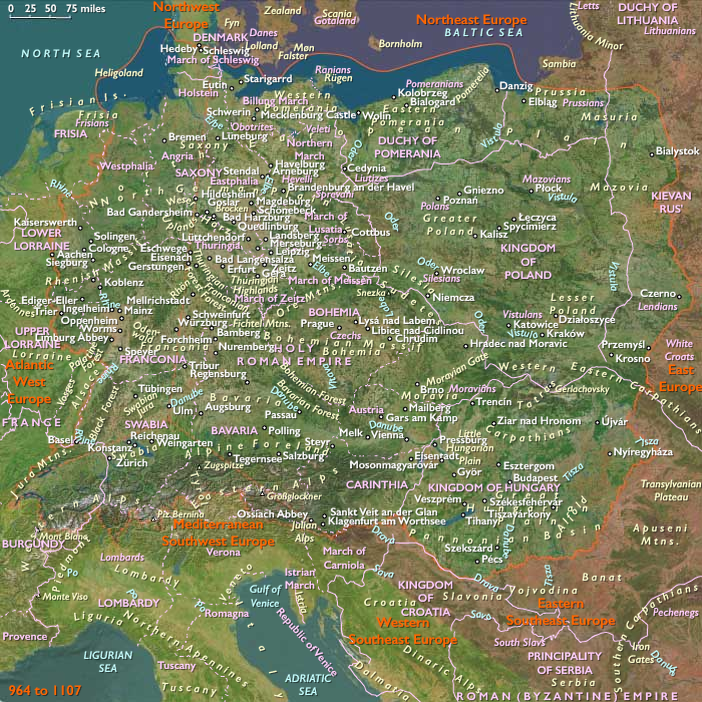
Between 1048 and 1059 CE, East Central Europe—comprising modern-day Poland, Czechia, Slovakia, Hungary, and the eastern parts of Germany and Austria east of 10°E and north of the defined southeastern boundary—experienced significant political restoration, stabilization, and regional realignment. Casimir I "the Restorer"revitalized and reunified Poland following decades of turmoil, King Andrew I brought renewed stability to Hungary, and the Přemyslid ruler Bretislav I firmly consolidated Bohemian power. These developments reshaped regional political structures, strengthened cultural identities, and restored economic stability, laying critical foundations for future medieval growth.
Political and Military Developments
Polish Restoration under Casimir I
-
Casimir I "the Restorer" (r. 1039–1058) restored Polish political unity and royal authority after decades of instability. Through successful diplomatic and military efforts, including crucial alliances with Hungary and the Holy Roman Empire, Casimir regained lost territories, restored the Polish Church’s authority, and reestablished effective governance throughout Poland.
Hungarian Stability under Andrew I
-
Following succession crises, King Andrew I (r. 1046–1060) stabilized Hungary by reinforcing royal authority, reestablishing internal peace, and strengthening Hungary’s military capabilities. His reign solidified Hungary’s internal structures and external diplomatic relations, notably with Poland and neighboring German states.
Bohemian Expansion under Bretislav I
-
Duke Bretislav I of Bohemia (r. 1034–1055) expanded and consolidated Přemyslid control, extending his influence into Silesia and Moravia, significantly enhancing Bohemia’s regional political and economic standing.
Imperial Influence under Henry III
-
Holy Roman Emperor Henry III (r. 1039–1056) maintained active involvement in East Central Europe, intervening diplomatically and militarily, influencing succession issues in Hungary and Bohemia, and shaping the regional political landscape through strategic alliances and assertive imperial policy.
Economic and Technological Developments
Restoration of Polish Economic Networks
-
Casimir’s reunification efforts revitalized Polish economic life, restoring trade routes and commerce, notably through rebuilding urban centers, reestablishing regional marketplaces, and renewing Poland’s economic integration into broader European networks.
Continued Urban Growth and Fortification
-
Bohemian and Hungarian towns, notably Prague, Esztergom, Székesfehérvár, and Veszprém, experienced continued urban expansion, robust fortification, and administrative improvements, reflecting renewed political stability and economic prosperity.
Cultural and Artistic Developments
Polish Ecclesiastical Renewal
-
Casimir I actively supported the renewal and rebuilding of ecclesiastical institutions, monasteries, and religious centers, significantly enhancing Polish Christian cultural and religious identity after a period of instability.
Hungarian Royal and Ecclesiastical Culture under Andrew I
-
King Andrew I promoted cultural renewal by supporting monasteries, churches, and ecclesiastical institutions, reinforcing Hungary’s Christian royal traditions and deepening the kingdom’s integration into broader European culture.
Bohemian Cultural Patronage under Bretislav I
-
Bretislav I’s rule witnessed extensive cultural patronage, including monastic foundations, church construction, and artistic patronage, significantly strengthening Prague’s role as a major cultural and ecclesiastical center.
Settlement and Urban Development
Polish Urban Reconstruction
-
Casimir I prioritized reconstruction of key Polish urban centers such as Kraków, Gniezno, and Poznań, reestablishing their roles as vibrant political, ecclesiastical, and economic hubs.
Hungarian Administrative Expansion
-
Andrew I continued urban and administrative expansions, especially in Esztergom and Székesfehérvár, strengthening royal authority, ecclesiastical organization, and economic vitality.
Bohemian Urban and Administrative Consolidation
-
Under Bretislav I, Prague and other Bohemian cities further expanded, fortifications improved significantly, and urban infrastructure advanced, solidifying Bohemia’s administrative coherence and economic growth.
Social and Religious Developments
Strengthening of Christian Identity
-
Throughout Poland, Hungary, and Bohemia, renewed stability reinforced Christian identity and institutional influence. Churches and monasteries were key centers of governance, education, and cultural life, deepening Christianity’s role in society.
Dynastic Consolidation and Aristocratic Power
-
Dynastic and aristocratic structures strengthened considerably in Poland, Hungary, and Bohemia, defining clear social hierarchies and governance models, stabilizing societal structures, and reinforcing royal authority.
Long-Term Consequences and Historical Significance
The era 1048–1059 CE marked a significant phase of restoration and stabilization across East Central Europe. Casimir’s Polish restoration, Andrew’s stabilization of Hungary, and Bretislav’s expansion and consolidation in Bohemia significantly reshaped regional political, cultural, and economic dynamics. These developments laid essential foundations for enduring medieval states and institutions, decisively influencing the future historical trajectory of East Central Europe.
The Slavic union headed by the Obrodites is centered in Starigarrd (modern Oldenburg in Holstein) and …
…their active trading port of Reric/Veligrad (modern Mecklenburg).
Under the reign of their western duke Gottschalk, the Obrodites control the area east of Saxony and west of the Lutici.
The Slavic groups inhabiting the lands between the Elbe and Oder Rivers are often described by Germanic sources as Wends.
The Veletians had in the late tenth century been continued in part by the Lutici.
By the mid-eleventh century, the Lutici have successfully united several local Slavic peoples and now dominate the area north of Lusatia to the Black Sea.
Eastern Southeast Europe (1048–1059 CE): The East–West Schism and Ecclesiastical Divisions
Settlement and Migration Patterns
Stability Amidst Ecclesiastical Tensions
Between 1048 and 1059 CE, demographic stability persisted in Eastern Southeast Europe, despite significant ecclesiastical divisions that sharply defined regional religious and political identities.
Political and Military Developments
Increasing Ecclesiastical Tensions
Relations between Eastern and Western Christendom, already strained by longstanding theological and ecclesiastical disputes, significantly deteriorated during this era. Disagreements over theological issues, such as the filioque controversy (the source of the Holy Spirit), liturgical practices (use of leavened versus unleavened bread), and jurisdictional claims by the Papacy, intensified mutual antagonism.
Prelude to the East–West Schism
In 1053, the Patriarch of Constantinople, Michael Cerularius, took the decisive step of closing all Latin churches in Constantinople. This marked the beginning of a formalized division that would culminate in the historic East–West Schism.
Papal Legation of 1054
In 1054, a Papal legation led by Cardinal Humbert traveled to Constantinople. Their mission included rejecting Cerularius’s claim to the title "Ecumenical Patriarch" and asserting Rome's primacy over all Christian churches. The delegation also aimed to secure Byzantine military assistance against the Norman conquest of southern Italy and respond to attacks by Leo of Ohrid on Western ecclesiastical practices, which were supported by Cerularius.
Mutual Excommunications
Upon Cerularius’s refusal to comply with the Papal demands, Cardinal Humbert excommunicated him. Cerularius reciprocated by excommunicating Humbert and the other legates. These actions initiated the formal separation between the Eastern (Greek) and Western (Latin) branches of Chalcedonian Christianity, marking a pivotal moment in Christian history.
Economic and Technological Developments
Economic Continuity Amidst Ecclesiastical Conflict
Despite the ecclesiastical conflicts, regional economic stability remained generally intact, supported by local commerce and agricultural productivity, though trade relations between East and West may have been indirectly affected by growing hostilities.
Fortifications and Military Preparedness
Imperial authorities continued to address fortification needs and defensive measures, albeit hampered by internal religious conflicts and diverted attention due to ecclesiastical politics.
Cultural and Artistic Developments
Cultural Stability and Intellectual Output
Cultural and intellectual activities continued robustly, although the schism influenced intellectual discourse, prompting vigorous theological and philosophical debates within ecclesiastical and scholarly communities.
Social and Religious Developments
Formalization of the East–West Schism
This era witnessed significant religious realignment, as the East–West Schism formally divided Christianity into the Eastern Orthodox and Roman Catholic traditions. These divisions profoundly influenced regional religious identities and ecclesiastical structures.
Continued Influence of Alternative Religious Movements
The Bogomil movement persisted during this period, influencing rural religious life and presenting an alternative religious perspective amidst broader ecclesiastical disputes.
Long-Term Consequences and Historical Significance
The period from 1048 to 1059 CE was pivotal, marking the formal inception of the East–West Schism, which significantly reshaped ecclesiastical structures and regional identities. The mutual excommunications and theological disputes entrenched lasting divisions between Eastern and Western Christianity, profoundly impacting subsequent religious, political, and cultural developments in Eastern Southeast Europe and beyond.
Relations between East and West have long been embittered by ecclesiastical differences and theological disputes.
Prominent among these are the issues of the source of the Holy Spirit (filioque), whether leavened or unleavened bread should be used in the Eucharist, the Pope's claim to universal jurisdiction, and the place of Constantinople in relation to the Pentarchy.
The East–West Schism—one of the two schisms to which the term "Great Schism" is applied (the other being the Western Schism)—is the medieval division of Chalcedonian Christianity into Eastern (Greek) and Western (Latin) branches, which will later become commonly known as the Eastern Orthodox Church and the Roman Catholic Church, respectively.
The first step is taken in the process that leads to formal schism in 1053 when Patriarch of Constantinople Michael Cerularius orders the closure of all Latin churches in Constantinople.
The Papal legate travels to Constantinople in 1054 for purposes that include refusing to Cerularius the title of "Ecumenical Patriarch" and insisting that he recognize Rome's claim to be the head and mother of the churches.
The main purpose of the papal legation is twofold: firstly, to seek help from the Eastern Emperor in view of the Norman conquest of southern Italy; secondly, to deal with recent attacks by Leo of Ohrid against the use of unleavened bread and other Western customs, attacks that have the support of Cerularius (Michael Caerularius).
Historian Axel Bayer says the legation was sent in response to two letters, one from the Emperor seeking assistance in arranging a common military campaign by the eastern and western empires against the Normans, and the other from Cerularius.
On the refusal of Cerularius to accept the demand, the leader of the legation, Cardinal Humbert, excommunicates him, and in return Cerularius excommunicates Cardinal Humbert and the other legates.
This is only the first act in a centuries-long process that eventually becomes a complete schism between the two discrete and often antagonistic confessions.
Malwa, under Paramaran king Bhoja, has grown to comprise substantial territories in central India.
Years: 1048 - 1059
Locations
Groups
- Rani (Slavic tribe)
- Polabian Slavs (West Slavs)
- Wends, or Sorbs (West Slavs)
- Obotrites (Slavic tribal confederation)
- Lutici (West Slavic Polabian tribe)
Subjects
Regions
Subregions