
The millennia-long eastward migration of the oceanic …
Years: 1300 - 1311
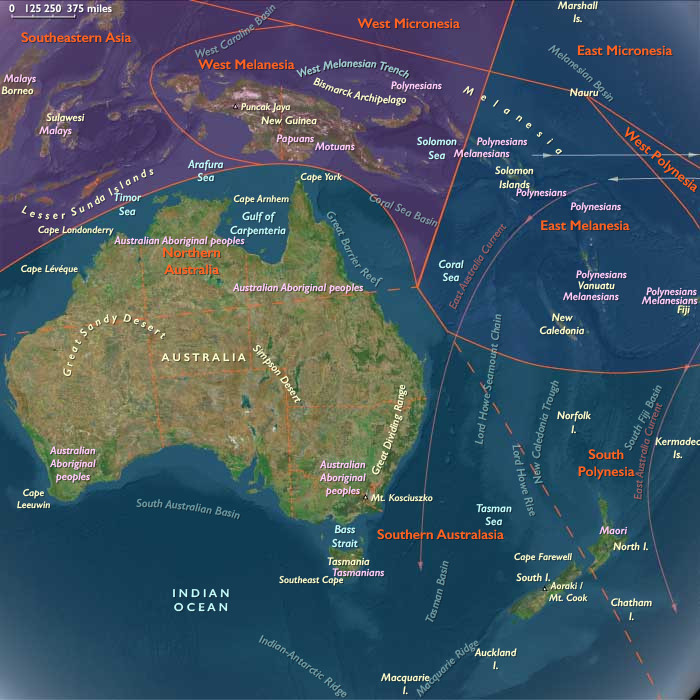
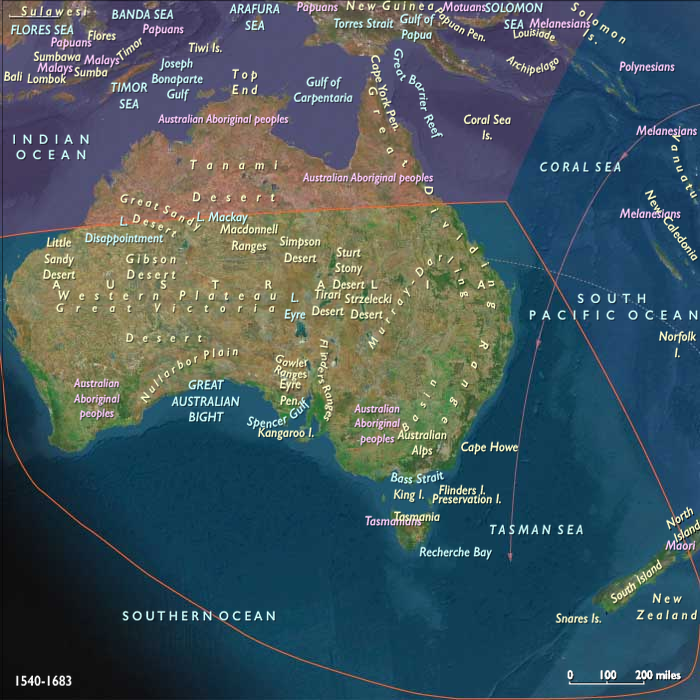
The millennia-long eastward migration of the oceanic Austronesian speakers ends in about 1300 with the arrival of the Maoris in New Zealand.
Archaeological and linguistic evidence (Sutton 1994) suggests that several waves of migration have come from Eastern Polynesia to New Zealand between 800 and 1300.
Māori oral history describes the arrival of ancestors from Hawaiki (a mythical homeland in tropical Polynesia) in large oceangoing canoes.
Migration accounts vary among tribes (iwi), whose members may identify with several waka in their genealogies or whakapapa.
No credible evidence exists of human settlement in New Zealand prior to the Polynesian voyagers; on the other hand, compelling evidence from archaeology, linguistics, and physical anthropology indicates that the first settlers came from East Polynesia and became the Māori.
The Māori have come to New Zealand as Eastern Polynesians voyaging, most likely, from the area of the Cook Islands or from the Society Islands, in seagoing canoes—possibly double-hulled and probably sail-rigged.
These Polynesian settlers probably arrive no later than about 1300.
The fierce, belligerent Tangata Whenua, “people of the land” (the so-called Classic Maori) establish fortified villages, engage in internecine warfare and practice cannibalism.
Locations
Groups
Commodoties
Subjects
Regions
Subregions
Years: 1300 - 1311
Locations
Groups
Commodoties
Subjects
Regions
Subregions