
Atlantic West Europe (1108–1119): Consolidation, Expansion, and …
Years: 1108 - 1119
Atlantic West Europe (1108–1119): Consolidation, Expansion, and Cultural Renewal
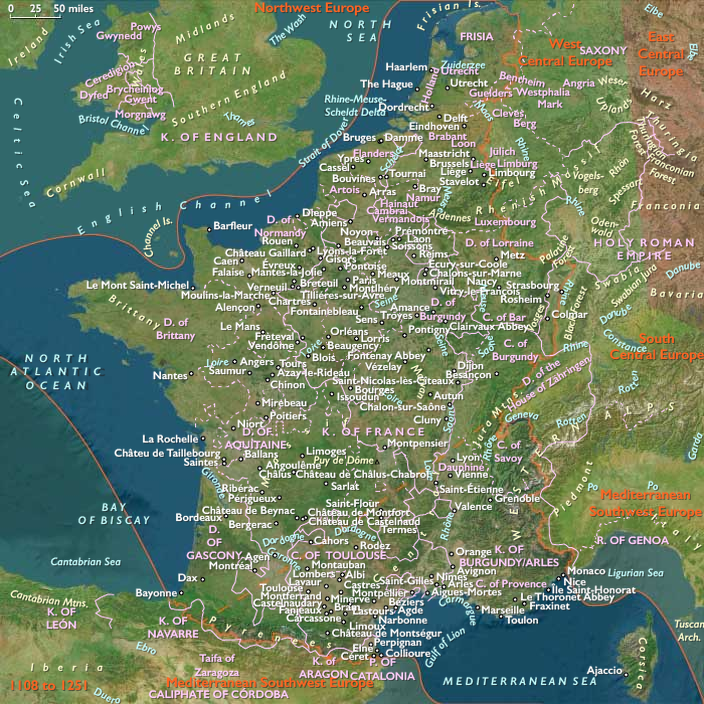
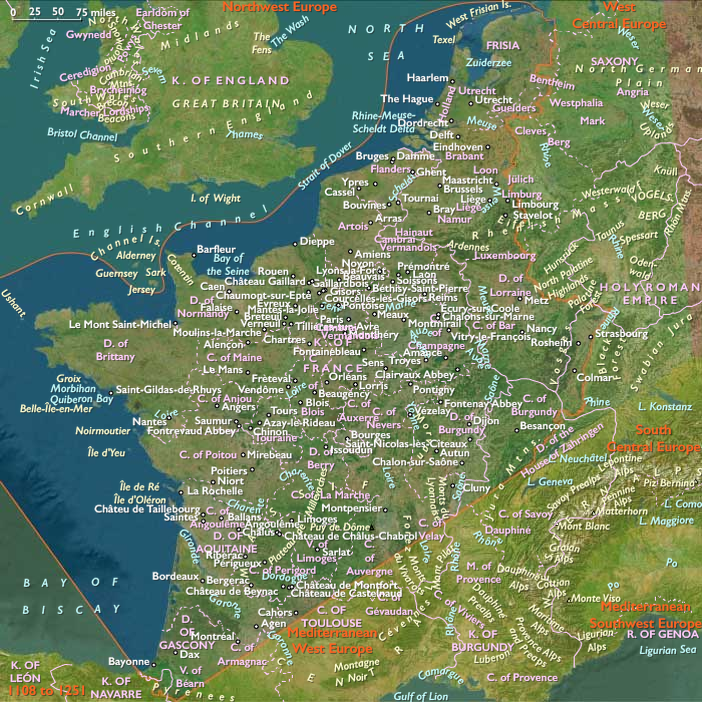
Between 1108 and 1119, Atlantic West Europe—which includes the Low Countries, Brittany, Normandy, Aquitaine, Burgundy, central France, Alsace, and Franche-Comté—underwent significant political stabilization, territorial consolidation, and early cultural renaissance. This era marked the strengthening of feudal structures, the expansion of royal and ducal authority, and flourishing monastic and intellectual activity.
Political and Military Developments
-
France: Royal Consolidation under Louis VI
-
King Louis VI "the Fat" (r. 1108–1137) significantly expanded Capetian royal authority, subduing rebellious nobles in the Île-de-France and strengthening royal influence over central France.
-
Louis VI utilized diplomacy and military action to consolidate power, particularly asserting dominance over rebellious barons and castellans.
-
-
Normandy: English and French Rivalries
-
Henry I of England (r. 1100–1135), also Duke of Normandy, secured control over the duchy following internal struggles, reinforcing the Anglo-Norman connection and stabilizing the region through administrative reforms.
-
-
Aquitaine and Poitou: Ducal Power
-
William IX, Duke of Aquitaine (r. 1086–1127), one of the first troubadours, maintained strong regional control, navigating between asserting ducal autonomy and managing feudal obligations to the French crown.
-
-
Brittany and the Loire Valley: Regional Autonomy
-
Brittany remained largely independent, with Duke Alan IV (r. 1084–1112) and Conan III (r. 1112–1148) solidifying local governance and defending against external pressures.
-
-
Low Countries: Emerging Urban Autonomy
-
Cities in Flanders, such as Bruges and Ghent, experienced economic prosperity, enhancing their political influence and autonomy from feudal lords.
-
-
Burgundy and Alsace: Feudal Stability
-
The Duchy of Burgundy maintained semi-autonomous stability under Duke Hugh II (r. 1103–1143), balancing regional power dynamics through alliances and feudal management.
-
Economic and Social Developments
-
Agricultural Expansion and Economic Growth
-
Improved agricultural methods and the expansion of arable land led to demographic growth and economic stability, supporting the rise of regional trade networks.
-
Increased production sustained burgeoning urban markets and long-distance trade routes, especially in wine, wool, and textiles.
-
-
Urbanization and Trade Networks
-
The rise of trade fairs and market towns, particularly in Champagne, facilitated extensive trade across Atlantic West Europe, enhancing urban economic power and integration.
-
Cultural and Intellectual Developments
-
Monastic Reform and Intellectual Revival
-
The spread of Cluniac and Cistercian monastic reform movements revitalized spiritual life, boosted agricultural productivity, and encouraged intellectual activity.
-
Notable monasteries such as Cluny and Cîteaux gained prominence, influencing religious practice, culture, and politics.
-
-
The Rise of Troubadour Culture
-
The court of William IX of Aquitaine became a hub for troubadour poetry, significantly influencing European literary culture and courtly tradition.
-
Religious Developments
-
Church Reform and Centralization
-
Continued efforts toward church reform and papal authority, initiated in the previous century, gained momentum, shaping ecclesiastical governance and relations with secular powers.
-
Tensions between church authority and local secular rulers occasionally arose, shaping the broader social and political landscape.
-
Legacy and Significance
The period 1108–1119 established crucial foundations in Atlantic West Europe, reinforcing royal authority, regional stability, and economic prosperity. Cultural and intellectual advancements, driven by monastic reforms and the troubadour tradition, laid the groundwork for the vibrant intellectual and cultural life that characterized the high medieval period.
People
Groups
- Flanders, County of
- Normandy, Duchy of
- Brittanny, Duchy of
- Aquitaine, (Angevin) Duchy of
- France, (Capetian) Kingdom of
- Burgundy, Duchy of
- Christians, Roman Catholic
- England, (Norman) Kingdom of
- Cistercians, Order of the (White Friars)
Topics
Commodoties
Subjects
Regions
Subregions
Years: 1108 - 1119
People
Groups
- Flanders, County of
- Normandy, Duchy of
- Brittanny, Duchy of
- Aquitaine, (Angevin) Duchy of
- France, (Capetian) Kingdom of
- Burgundy, Duchy of
- Christians, Roman Catholic
- England, (Norman) Kingdom of
- Cistercians, Order of the (White Friars)
Topics
Commodoties
Subjects
Regions
Subregions