
The Middle East: 909–766 BCE Assyrian …
Years: 909BCE - 766BCE
The Middle East: 909–766 BCE
Assyrian Imperial Surge and Expansion
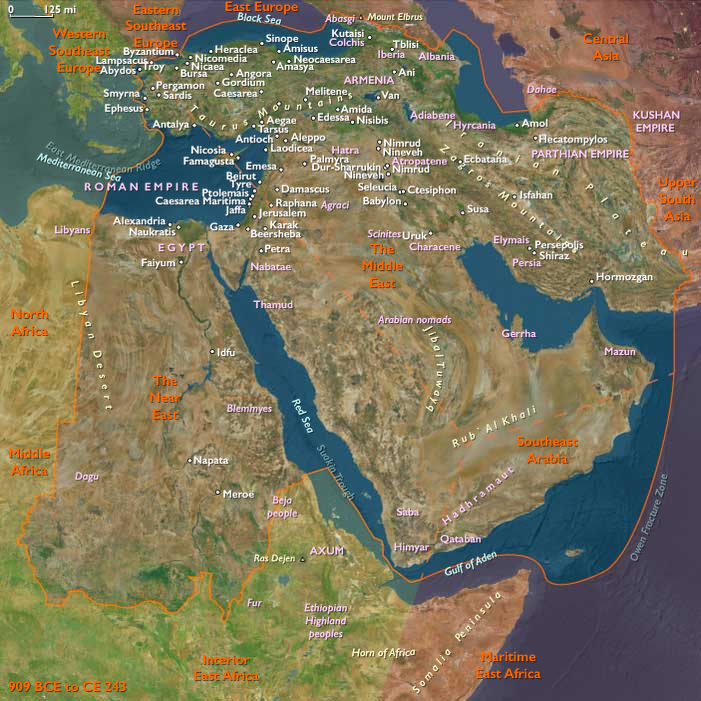
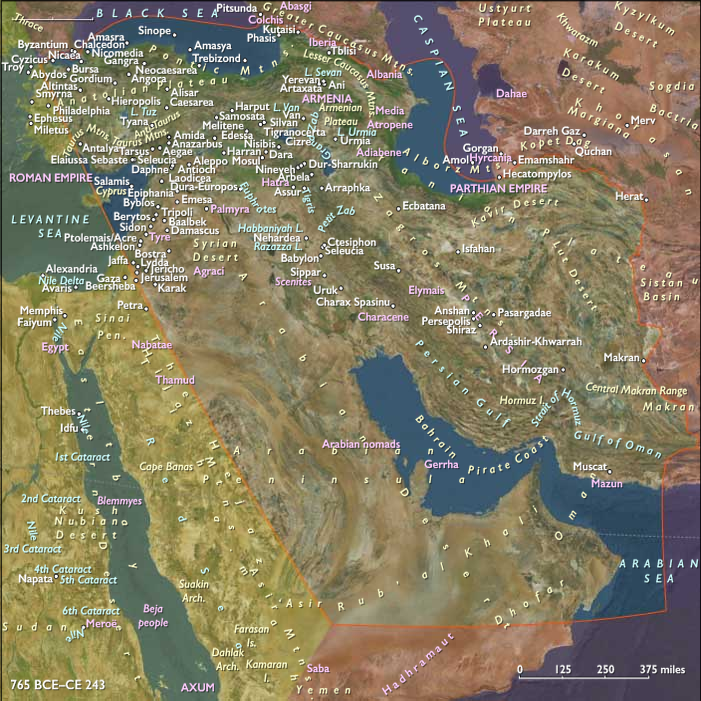
Beginning with Adad-nirari II (911–891 BCE), the Neo-Assyrian Empire rapidly expands, firmly establishing itself as a dominant regional power. By 904 BCE, Babylonia is subdued and reduced to vassalage, and strategic control is secured along the Khabur River. Adad-nirari's military successes lay a robust foundation for Assyria's extensive territorial ambitions.
Consolidation and Brutality under Ashurnasirpal II
Ashurnasirpal II (883–859 BCE) aggressively expands Assyria westward, reaching the Mediterranean by 859 BCE and incorporating influential Phoenician cities. Ashurnasirpal II's administration is marked by brutal reprisals against rebels, including mass executions and mutilations, instilling fear to suppress dissent. His lavish new capital at Kalhu (Nimrud), featuring monumental palaces and relief sculptures, symbolically projects Assyrian power and authority.
Continued Expansion and Conflict under Shalmaneser III
Shalmaneser III (859–824 BCE) extends Assyria's dominance further, notably conquering the powerful Aramaean state of Bit-Adini and engaging a regional coalition led by Damascus. Despite temporary resistance, Shalmaneser III successfully enforces tribute from Phoenician cities, Israel, and Damascus. His reign also witnesses increasing military confrontations with the emerging northern kingdom of Urartu, a significant competitor based near Lake Van.
Internal Turmoil and Territorial Instability
Internal strife emerges toward the end of Shalmaneser III’s rule, culminating in a civil war (828–826 BCE) against his rebellious son, Ashurdaninpal. This turmoil weakens central authority, leading to territorial losses. His successor, Shamsi-Adad V (824–811 BCE), gradually stabilizes the empire, incorporating the strategically vital region of Chaldea. Under Adad-nirari III (811–783 BCE), aided initially by Queen Sammuramat (legendary Semiramis), Assyria reasserts dominance, notably reclaiming Damascus by 804 BCE.
Cultural and Linguistic Influences of the Aramaeans and Phoenicians
The Aramaeans, influential traders settled in Greater Syria, significantly shape regional commerce and culture. They simplify the Phoenician alphabet, spreading Aramaic as the dominant lingua franca across the Middle East, even becoming the official language of the later Persian Empire. Meanwhile, the Phoenicians, despite Assyrian dominance, maintain extensive trade networks and cultural resilience. Artifacts such as the sarcophagus of King Ahiram from Byblos illustrate a vibrant exchange of Assyrian, Egyptian, and Phoenician artistic styles.
Anatolian and Iranian Regional Powers
In Anatolia, the Phrygians, heirs to Hittite cultural traditions, revitalize regional prosperity from their capital at Gordium. They excel in metalworking, woodcarving, and textiles, significantly influencing regional trade and cultural exchange. Concurrently, the Mannaean state emerges around 850 BCE in northwestern Iran, characterized by fortified cities, advanced irrigation, and horse breeding, representing an important regional power.
Emergence and Rivalries of Urartu
In the north, the kingdom of Urartu solidifies under King Aramu (circa 860–843 BCE), becoming a persistent and formidable rival to Assyria. Urartu's strategic fortifications and sustained resistance mark significant geopolitical shifts, frequently clashing with Assyrian ambitions.
Innovations in Assyrian Military and Artistic Expression
Assyrian military advancements, particularly in cavalry tactics, significantly enhance their imperial capabilities. Artistic and architectural achievements, notably the iconic man-headed winged bulls and elaborate palace reliefs, symbolize imperial power and divine sanction, emphasizing the Neo-Assyrian Empire’s cultural sophistication.
Cyprus: Political Consolidation and Urbanization
Cyprus experiences considerable urban growth and political consolidation during this period, with significant centers like the kingdom of Salamis flourishing through extensive trade networks. Monumental "Royal" tombs underscore the island’s rising wealth and social complexity.
Decline and Instability under Shalmaneser IV
Shalmaneser IV (782–772 BCE) faces severe setbacks, culminating in his defeat and death in 772 BCE, triggering internal chaos and territorial losses. This period of instability underscores the challenges Assyria faces in maintaining its extensive empire amidst ongoing regional conflicts.
Thus, the era from 909 to 766 BCE encapsulates a profound and transformative phase in Middle Eastern history, marked by dynamic imperial expansion, significant cultural exchanges, geopolitical rivalries, and internal political struggles that shape the region for centuries.
People
Groups
- Cyprus, Archaic
- Phoenicia
- Aramaeans
- Tyre, Kingdom of (Phoenicia)
- Phrygia, Kingdom of
- Arab people
- Syro-Hittite states
- Aram-Damascus (Syria), Kingdom of
- Elam, (New) Kingdom of
- Assyria, (New) Kingdom of (Neo-Assyrian Empire)
- Urartu, Kingdom of
- Urartu, Kingdom of
- Mannaeans
Topics
Commodoties
Subjects
- Commerce
- Language
- Writing
- Architecture
- Decorative arts
- Conflict
- Government
- Custom and Law
- Metallurgy
Regions
Subregions
Years: 909BCE - 766BCE
People
Groups
- Cyprus, Archaic
- Phoenicia
- Aramaeans
- Tyre, Kingdom of (Phoenicia)
- Phrygia, Kingdom of
- Arab people
- Syro-Hittite states
- Aram-Damascus (Syria), Kingdom of
- Elam, (New) Kingdom of
- Assyria, (New) Kingdom of (Neo-Assyrian Empire)
- Urartu, Kingdom of
- Urartu, Kingdom of
- Mannaeans
Topics
Commodoties
Subjects
- Commerce
- Language
- Writing
- Architecture
- Decorative arts
- Conflict
- Government
- Custom and Law
- Metallurgy
Regions
Subregions