
The Middle East, 897 to 886 BCE: …
Years: 897BCE - 886BCE
The Middle East, 897 to 886 BCE: Consolidation Under Tukulti-Ninurta II
Following the transformative reign of Adad-nirari II, the Neo-Assyrian Empire enters a brief yet significant period of consolidation under his successor, Tukulti-Ninurta II, who ascends to the Assyrian throne in 891 BCE. Inheriting an empire greatly expanded by his predecessor, Tukulti-Ninurta II focuses on solidifying Assyrian control and maintaining its established territories rather than undertaking extensive new conquests.
Strategic Military Actions and Regional Stability
Tukulti-Ninurta II undertakes carefully targeted military campaigns aimed at reinforcing Assyrian supremacy. His reign sees successful operations against the Syro-Hittite, Babylonian, and Aramean city-states and regions. These campaigns serve to reaffirm and stabilize Assyrian dominance over previously conquered territories, discouraging rebellion and fostering administrative cohesion across the empire.
Eastern Frontiers: Zagros Campaigns
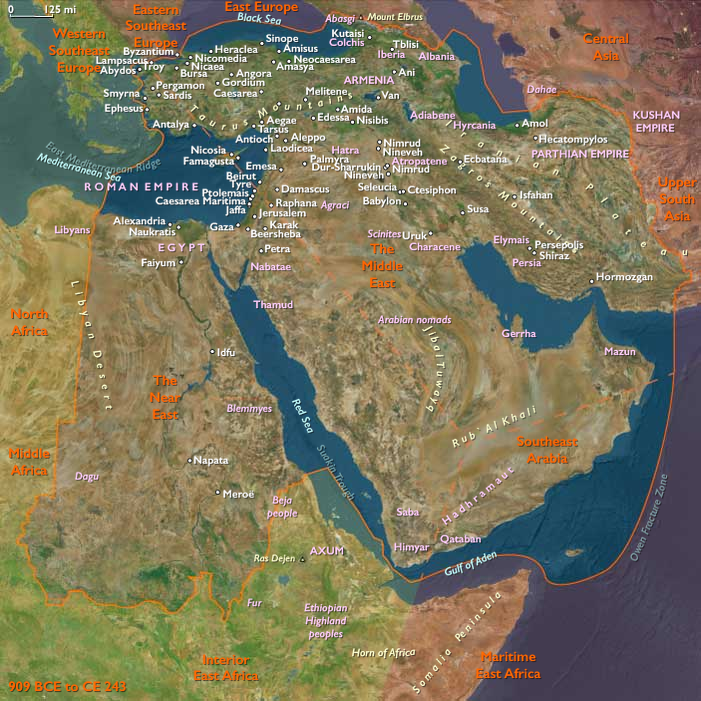
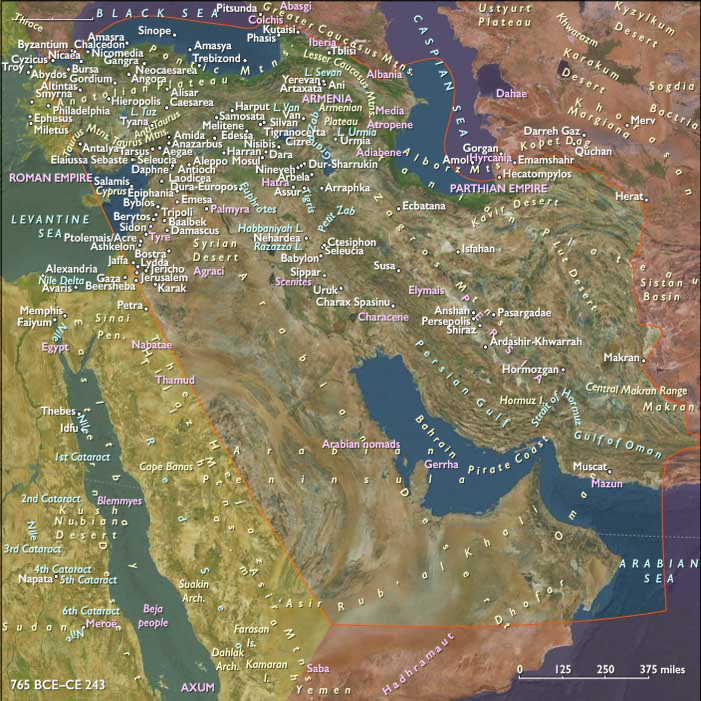
Notably, Tukulti-Ninurta II directs his military attention eastward, toward the rugged terrain of the Zagros Mountains. These campaigns effectively subjugate newly arrived groups of Iranic peoples, potentially including the early Medes. By securing these eastern frontier regions, Tukulti-Ninurta II ensures a stable buffer zone, protecting the empire from incursions and establishing a solid foundation for future expansions in this direction.
Administrative Continuity
Building upon the linguistic and administrative reforms established earlier, Aramaic continues to serve alongside Akkadian as an official administrative language. This linguistic policy facilitates efficient governance over the empire's culturally diverse and geographically extensive territories.
Preparing for Further Expansion
Though Tukulti-Ninurta II's reign is brief, his strategic actions significantly bolster Assyrian stability and regional control, laying critical groundwork for subsequent imperial expansion. By the end of his rule, the Assyrian Empire stands securely positioned, its power firmly established in the Middle Eastern political landscape, ready for the ambitious campaigns of future rulers.
People
Groups
- Aramaeans
- Medes
- Syro-Hittite states
- Aram-Damascus (Syria), Kingdom of
- Babylon, Kingdom of
- Assyria, (New) Kingdom of (Neo-Assyrian Empire)
Topics
Subjects
Regions
Subregions
Years: 897BCE - 886BCE
People
Groups
- Aramaeans
- Medes
- Syro-Hittite states
- Aram-Damascus (Syria), Kingdom of
- Babylon, Kingdom of
- Assyria, (New) Kingdom of (Neo-Assyrian Empire)
Topics
Subjects
Regions
Subregions