
The Middle East: 916–927 CE Abbasid …
Years: 916 - 927
The Middle East: 916–927 CE
Abbasid Decline and Regional Assertion
From 916 to 927 CE, the fragmentation of the Abbasid Caliphate deepens as central authority wanes further, giving rise to increasingly independent regional dynasties and power centers.
Consolidation of Independent Dynasties
In eastern Iran, the Samanids strengthen their rule and influence, promoting Persian culture and language and marking a significant shift away from Abbasid political and cultural dominance. Their capital, Bukhara, flourishes as a major intellectual and cultural center.
Continued Influence of the Qarmatians
The Qarmatians, maintaining their stronghold in Bahrain under the leadership of Abu Sa'id al-Hasan al-Jannabi, continue to challenge Abbasid control. Their radical, egalitarian beliefs remain influential, and their raids increasingly threaten trade routes and pilgrimage paths, posing a significant threat to the weakened Abbasid administration.
Cultural and Scientific Advances
Despite political instability, the intellectual and scientific climate remains vibrant. Agha Bakr Muhammad ibn Zakariya al-Razi (al-Razi) continues his groundbreaking medical and pharmaceutical research in Baghdad, contributing significantly to Islamic medicine and influencing medical practice throughout the medieval world.
Theological and philosophical discourse thrives with figures like Saadia Gaon, who continues his influential leadership at the Talmudic academy of Sura, engaging vigorously in religious scholarship and debate.
Kurdish Socio-Political Evolution
The identity of the Kurds continues to evolve, with their presence increasingly recognized across northern Mesopotamia and adjacent mountainous regions. Though still primarily identified by their pastoral nomadism, Kurdish groups begin to emerge more distinctly within the complex mosaic of Middle Eastern societies.
Linguistic Evolution
The transition from Middle Iranian to Modern Iranian languages progresses, reflecting broader cultural and social shifts within Persian-speaking communities, and laying the groundwork for the linguistic identities that will dominate the region for centuries.
This period, therefore, marks a critical juncture where decentralized power structures solidify, shaping the cultural and political landscapes of the Middle East well beyond the weakening grasp of the Abbasid Caliphate.
People
- Abu-Sa'id Jannabi
- Ahmad ibn Rustah
- Khumarawayh ibn Ahmad ibn Tulun
- Muhammad ibn Zakariya al-Razi
- Saadia Gaon
Groups
- Jews
- Kurdish people
- Bahrain, Province of
- Muslims, Kharijite
- Samanid dynasty
- Qarmatians
- Abbasid Caliphate (Baghdad)
Topics
Subjects
Regions
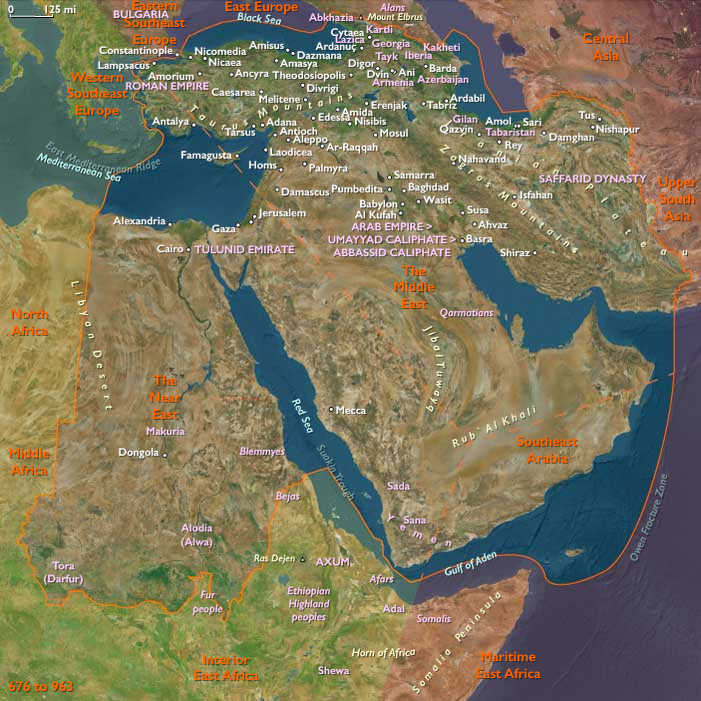
Subregions
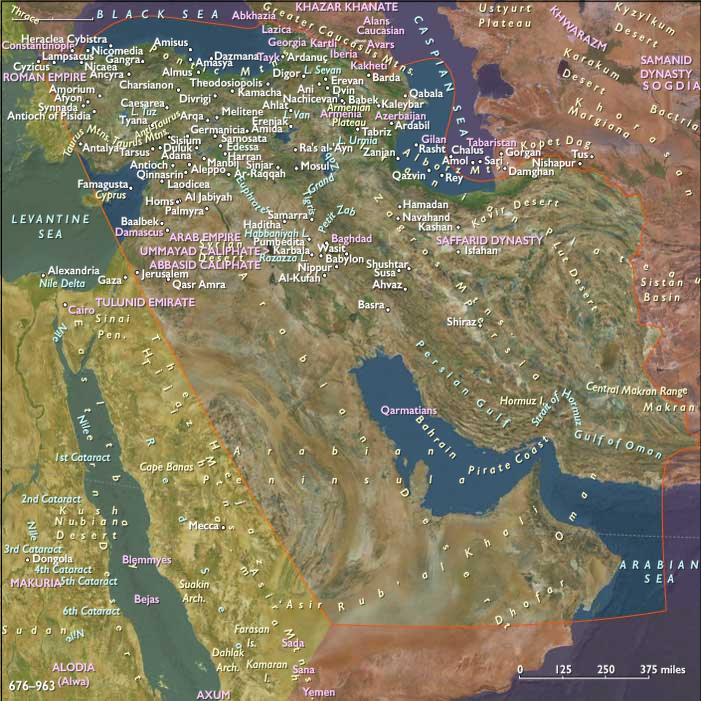
Years: 916 - 927
People
- Abu-Sa'id Jannabi
- Ahmad ibn Rustah
- Khumarawayh ibn Ahmad ibn Tulun
- Muhammad ibn Zakariya al-Razi
- Saadia Gaon
Groups
- Jews
- Kurdish people
- Bahrain, Province of
- Muslims, Kharijite
- Samanid dynasty
- Qarmatians
- Abbasid Caliphate (Baghdad)
Topics
Subjects
Regions
Subregions