
The Middle East, 825 to 814 BCE: …
Years: 825BCE - 814BCE
The Middle East, 825 to 814 BCE: The Reconsolidation Under Shamsi-Adad V
The era 825 to 814 BCE marks a significant phase of reconsolidation and expansion for the Assyrian Empire under the rule of Shamsi-Adad V, who ascends the throne in 824 BCE following a turbulent period of civil unrest. Shamsi-Adad V embarks on determined efforts to restore stability, unity, and imperial prestige that had been severely compromised during the preceding civil war between his father, Shalmaneser III, and his rebellious brother, Ashur-danin-pal.
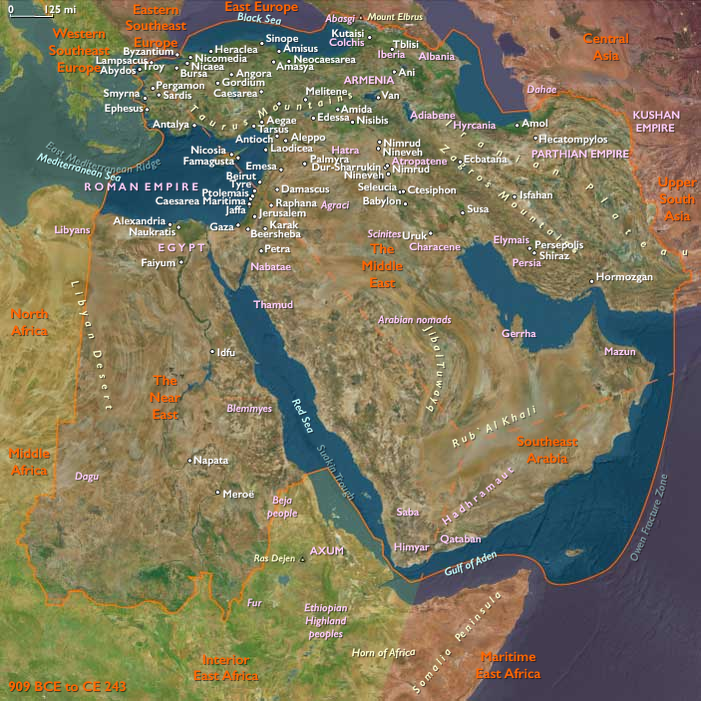
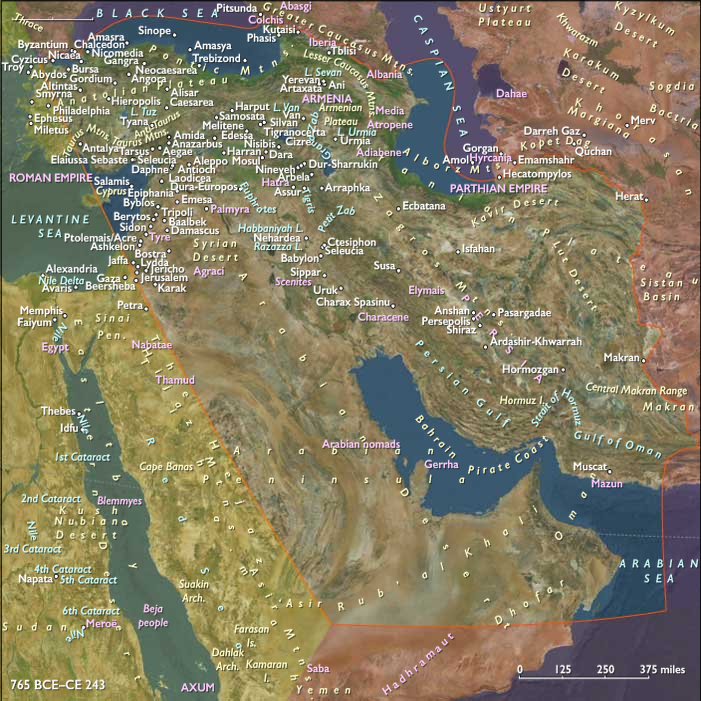
Shamsi-Adad V proves to be a vigorous leader who strategically directs Assyrian resources towards reasserting imperial authority over previously contested territories. A pivotal achievement during this era is the successful integration of Chaldea into the Assyrian Empire, a region strategically situated at the southernmost part of Mesopotamia. This conquest not only solidifies Assyria’s dominance in the region but also significantly enhances its economic prosperity and geopolitical influence.
The integration of Chaldea underscores Assyria's revitalized military prowess and Shamsi-Adad V’s adeptness at overcoming internal political turmoil to pursue expansionist policies effectively. His decisive actions in Chaldea demonstrate the empire’s robust capability for recovery and adaptation, ensuring that Assyria remains a formidable force within the Middle East.
Culturally, Assyria during this period continues to be characterized by the elaborate attire and ceremonial traditions that had developed during earlier reigns. The fashion remains highly sophisticated, reflecting influences from neighboring Babylonian customs, with intricate embroidered garments and detailed grooming practices signifying social and political status.
Thus, the era from 825 to 814 BCE under Shamsi-Adad V represents an important chapter of restoration and renewed expansion for the Assyrian Empire. It is a testament to the empire's resilience, its enduring capacity for recovery, and its sustained ability to exert significant regional influence, shaping the historical trajectory of the Middle East.
People
Groups
- Iranian peoples
- Phoenicians
- Medes
- Aram-Damascus (Syria), Kingdom of
- Israel (Northern Kingdom of)
- Assyria, (New) Kingdom of (Neo-Assyrian Empire)
Topics
Subjects
Regions
Subregions
Years: 825BCE - 814BCE
People
Groups
- Iranian peoples
- Phoenicians
- Medes
- Aram-Damascus (Syria), Kingdom of
- Israel (Northern Kingdom of)
- Assyria, (New) Kingdom of (Neo-Assyrian Empire)
Topics
Subjects
Regions
Subregions