
The Middle East: 844–855 CE Abbasid …
Years: 844 - 855
The Middle East: 844–855 CE
Abbasid Instability and the Rise of Regional Autonomy
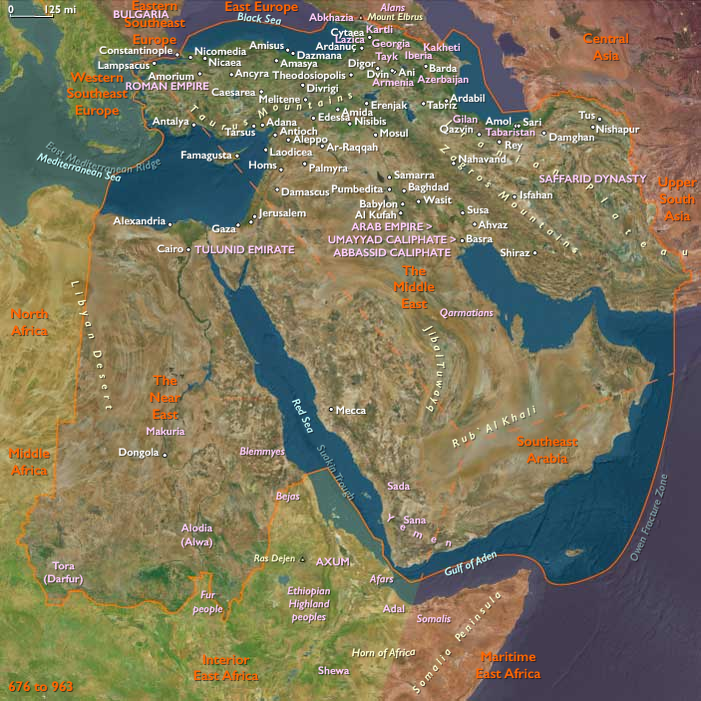
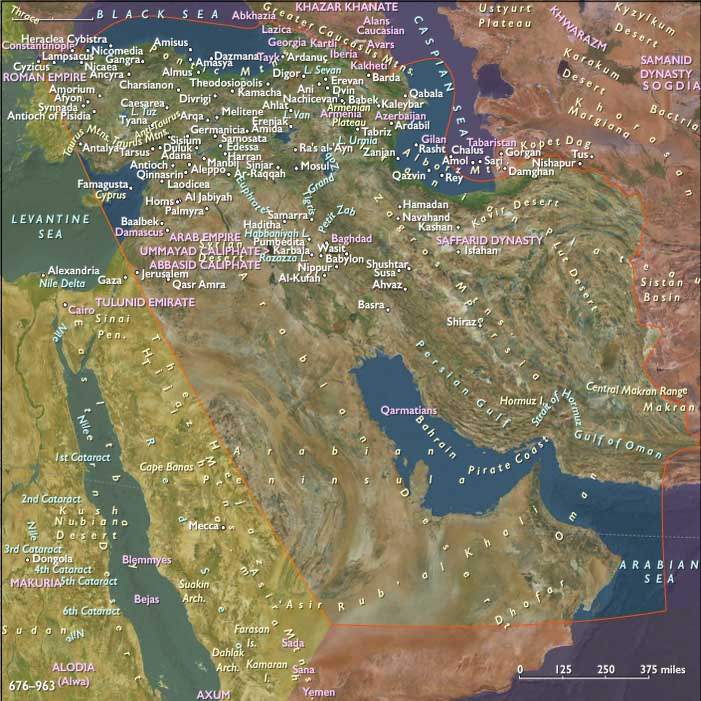
This era witnesses growing instability within the Abbasid Caliphate as the caliphs struggle to assert effective control over their vast empire. The relocation of the capital to Samarra, initially intended to ease tensions between Arab populations and the increasingly dominant Turkish guards, ultimately exacerbates factionalism and military interference in political affairs.
Under Caliph al-Wathiq (842–847), the influence of Turkic generals continues to intensify, with these powerful mercenary commanders exerting considerable pressure on the caliphate. Their growing influence sets the stage for increased internal division, undermining central authority.
The reign of Caliph al-Mutawakkil (847–861) marks a decisive turn as he attempts to curb Turkish dominance and restore traditional Islamic values by ending the mihna, the inquisition regarding the created nature of the Qur'an, which had deeply divided the Islamic community. Al-Mutawakkil champions Sunni orthodoxy, promoting the Hanbali school of jurisprudence and marginalizing the rationalist Mu'tazilites favored by previous caliphs.
While al-Mutawakkil’s reign brings a revival of conservative Sunni orthodoxy, his efforts to reduce Turkish influence provoke violent backlash from military factions. His reign thus symbolizes both a return to traditionalism and the continued fragmentation of Abbasid political authority.
During this period, provinces on the periphery of the empire increasingly assert their autonomy, setting the stage for regional dynasties and political fragmentation. Although the Abbasid court remains culturally vibrant, especially in Samarra, the seeds of decentralization sown in these years will significantly alter the political landscape of the Islamic Middle East in the ensuing decades.
People
Groups
Topics
Commodoties
Subjects
- Commerce
- Labor and Service
- Faith
- Government
- Scholarship
- Custom and Law
- Medicine
- Mathematics
- Astronomy
- Philosophy and logic
Regions
Subregions
Years: 844 - 855
People
Groups
Topics
Commodoties
Subjects
- Commerce
- Labor and Service
- Faith
- Government
- Scholarship
- Custom and Law
- Medicine
- Mathematics
- Astronomy
- Philosophy and logic
Regions
Subregions