
The Middle East: 69–58 BCE Roman …
Years: 69BCE - 58BCE
The Middle East: 69–58 BCE
Roman Expansion and the Subjugation of the Caucasus
Between 69 and 58 BCE, Rome continues its assertive expansion into the Near East, notably through General Pompey the Great, who significantly reshapes the region's political landscape following the prolonged Third Mithridatic War (73–63 BCE).
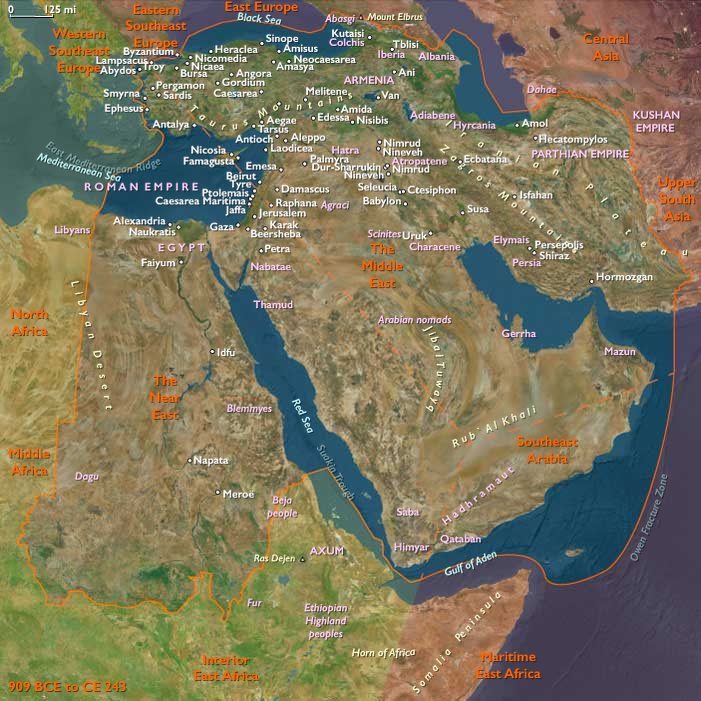
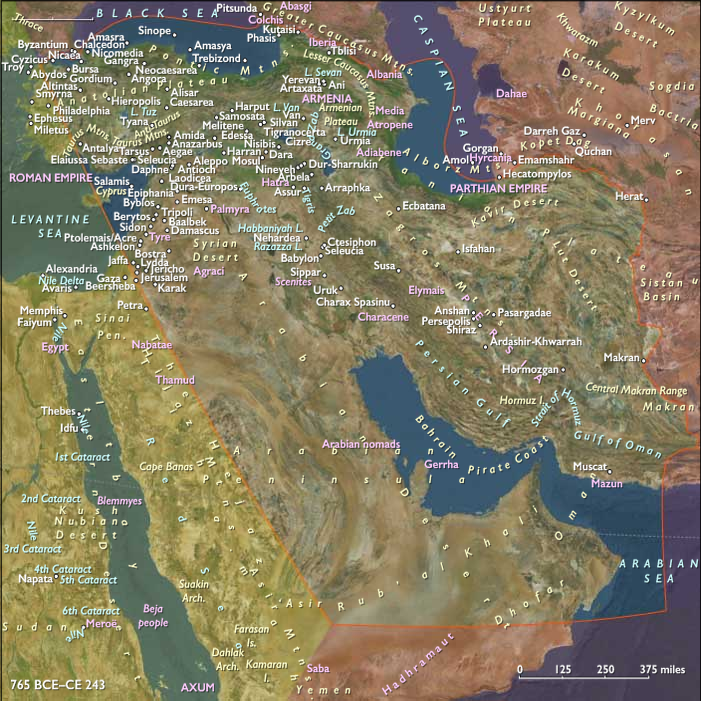
In 65 BCE, Pompey undertakes the Georgian campaign as a direct consequence of Rome's victory in the Mithridatic Wars. Having successfully subdued the Kingdom of Pontus and significantly weakened the Kingdom of Armenia, Pompey directs Roman ambitions toward the strategic kingdoms of the Caucasus. Rome's interests lie particularly in the Caucasian Iberian Kingdom, ruled by King Artag (Artoces), who had supported Pontus against Rome. Pompey's predecessor, Lucius Licinius Lucullus, had conducted earlier military campaigns from 74 to 66 BCE, laying critical groundwork for Pompey's subsequent success.
Pompey's decisive victory against the Armenians and Pontians in 66 BCE forces the resilient Mithridates VI into exile in Colchis. Following this, Roman attention intensifies toward Iberia (Caucasian Iberia) and neighboring Albania. After initial resistance, King Artag eventually capitulates, submitting to Rome by delivering his children as hostages and agreeing to a treaty that reduces Iberia to a vassal status, henceforth becoming a "friend and ally" of Rome.
Pompey next advances towards Colchis, systematically subduing key fortresses and local tribes through a combination of tactical diplomacy and military might. Upon reaching the port of Phasis, Pompey coordinates with the Roman fleet, instructing them to pursue and capture Mithridates VI, effectively neutralizing the threat from this persistent adversary. With the subjugation of these strategic territories completed, Pompey prepares to return triumphantly to Rome, having significantly solidified Roman influence throughout the Near East and the Caucasus region.
This period, therefore, from 69 to 58 BCE, marks a critical phase in the expansion and consolidation of Roman power in the Middle East, dramatically altering the regional balance of power and laying the foundations for sustained Roman hegemony.
People
Groups
- Roman Republic
- Pontus, Kingdom of
- Iberia, Caucasian (Kartli, Kingdom of)
- Albania (Aghbania), Caucasian Kingdom of
- Parthian Empire
- Armenia, Empire of
- Armenia, Kingdom of Greater
Topics
Subjects
Regions
Subregions
Years: 69BCE - 58BCE
People
Groups
- Roman Republic
- Pontus, Kingdom of
- Iberia, Caucasian (Kartli, Kingdom of)
- Albania (Aghbania), Caucasian Kingdom of
- Parthian Empire
- Armenia, Empire of
- Armenia, Kingdom of Greater
Topics
Subjects
Regions
Subregions