
The Middle East: 808–819 CE Abbasid …
Years: 808 - 819
The Middle East: 808–819 CE
Abbasid Stability and Cultural Flourishing
Prosperity and Intellectual Activity in Baghdad
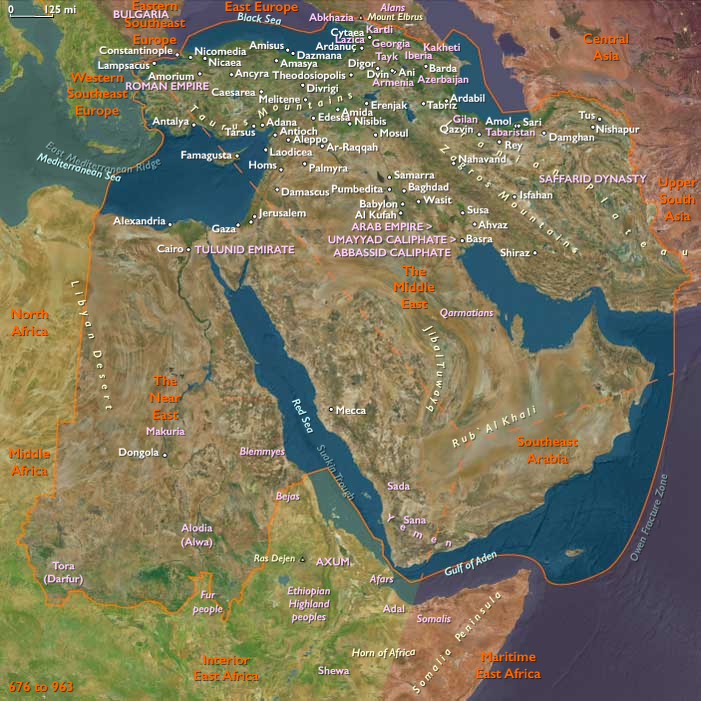
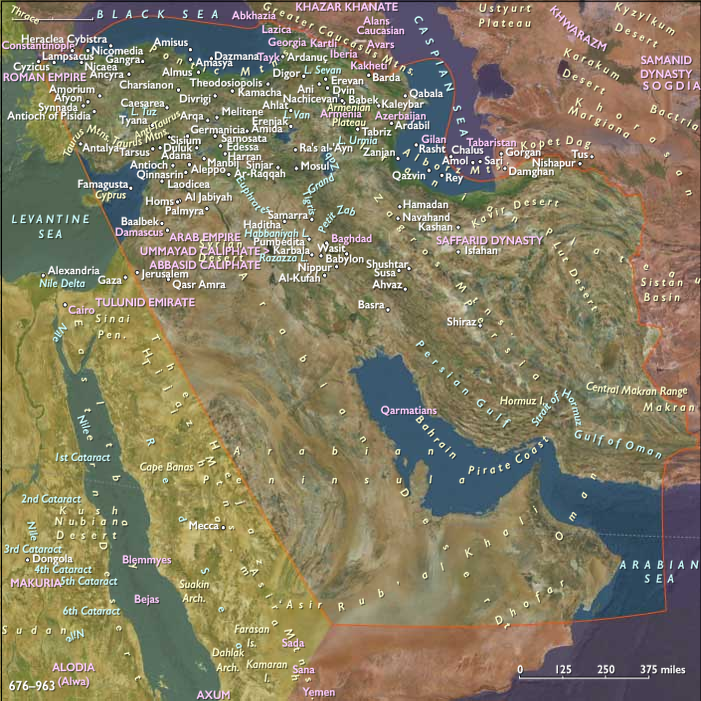
Under the rule of Caliph Harun al-Rashid (786–809) and his son Al-Ma'mun (813–833), the Abbasid Empire continues to thrive culturally, intellectually, and economically. Following Harun's death in 809, the empire briefly faces internal struggles over succession but quickly stabilizes under Al-Ma'mun's leadership. Baghdad, the Abbasid capital, remains the cultural heart of the Islamic Golden Age, drawing scholars, philosophers, and scientists from across the known world.
The Translation Movement and Cultural Synthesis
During this era, Al-Ma'mun energetically supports the expansion of the Bayt al-Hikma ("House of Wisdom"), established in Baghdad, significantly advancing the translation of Greek, Persian, and Indian scientific, medical, and philosophical texts into Arabic. This great intellectual enterprise lays the foundations for major developments in science, mathematics, medicine, astronomy, and philosophy throughout the Islamic world and eventually influences medieval Europe.
Regional Stability and Urban Development
This period sees the continued growth of cities across the Abbasid territories, with urban infrastructure improving significantly due to the Caliphate's wealth. Enhanced trade networks, bolstered by stable governance, facilitate cultural exchanges and economic prosperity, ensuring that the Middle East remains central to global commerce and cultural dialogue.
Thus, the years from 808 to 819 underscore a significant chapter of intellectual growth, cultural openness, and regional stability within the Abbasid Empire.
People
Groups
Topics
Commodoties
Subjects
- Commerce
- Faith
- Government
- Scholarship
- Custom and Law
- Medicine
- Mathematics
- Astronomy
- Philosophy and logic
Regions
Subregions
Years: 808 - 819
People
Groups
Topics
Commodoties
Subjects
- Commerce
- Faith
- Government
- Scholarship
- Custom and Law
- Medicine
- Mathematics
- Astronomy
- Philosophy and logic
Regions
Subregions