
The Middle East, 777 to 766 BCE: …
Years: 777BCE - 766BCE
The Middle East, 777 to 766 BCE: Turbulence and Transition in Assyria
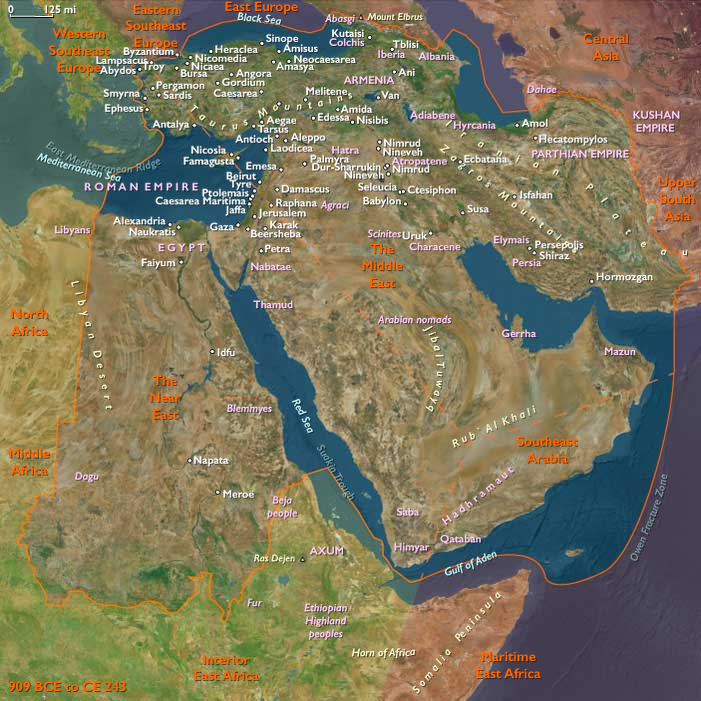
During the era of 777 to 766 BCE, the Assyrian Empire faces significant internal and external challenges, which profoundly impact its territorial integrity and political stability. Following Shalmaneser IV's aggressive military campaigns, particularly against Damascus, Assyria endures a critical setback when Shalmaneser IV is defeated and killed in 772 BCE. This loss results in substantial territorial reversals, notably the loss of most of Syria, which had been painstakingly secured by his predecessors.
The defeat and death of Shalmaneser IV trigger a tumultuous succession crisis that further destabilizes the empire. The ensuing internal strife weakens Assyrian central authority, creating vulnerabilities that neighboring powers, particularly Urartu and various Aramean states, are quick to exploit. This era sees Assyria struggling to maintain its hold over peripheral regions, as regional governors and local leaders increasingly assert independence in the wake of weakened imperial oversight.
Despite these challenges, the Assyrian core territories remain relatively intact, enabling the empire to gradually reorganize and reconsolidate its power in subsequent years. However, the geopolitical landscape of the Middle East during this period is notably marked by increased fragmentation and competition among regional states, reflecting a broader period of turbulence and transition.
Thus, the era from 777 to 766 BCE illustrates a pivotal moment in Assyrian history, characterized by significant territorial losses, internal strife, and the eventual necessity of rebuilding imperial strength and governance structures to reassert Assyrian dominance in the region.
People
Groups
Topics
Subjects
Regions
Subregions

Years: 777BCE - 766BCE
People
Groups
Topics
Subjects
Regions
Subregions