
The Middle East: 772–783 CE Baghdad: …
Years: 772 - 783
The Middle East: 772–783 CE
Baghdad: Center of the Abbasid World
Ascendance of Baghdad
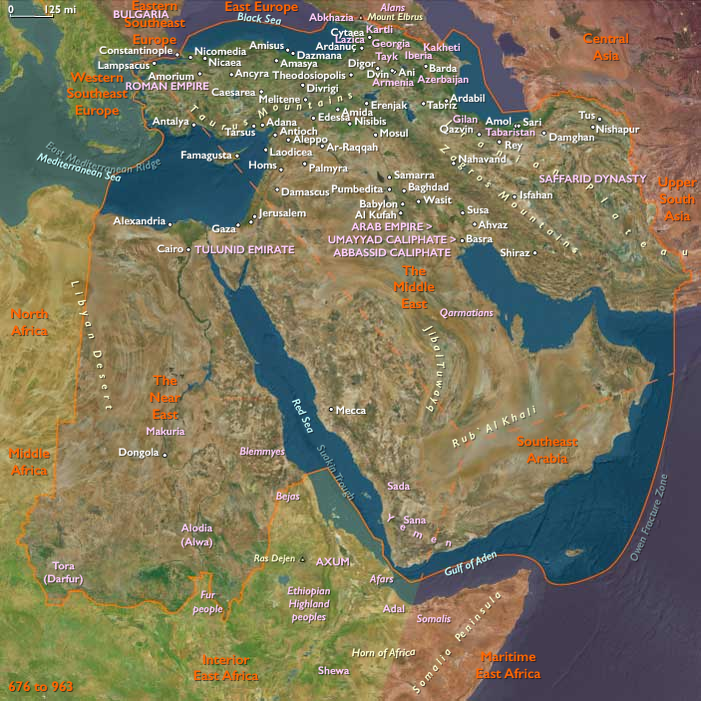
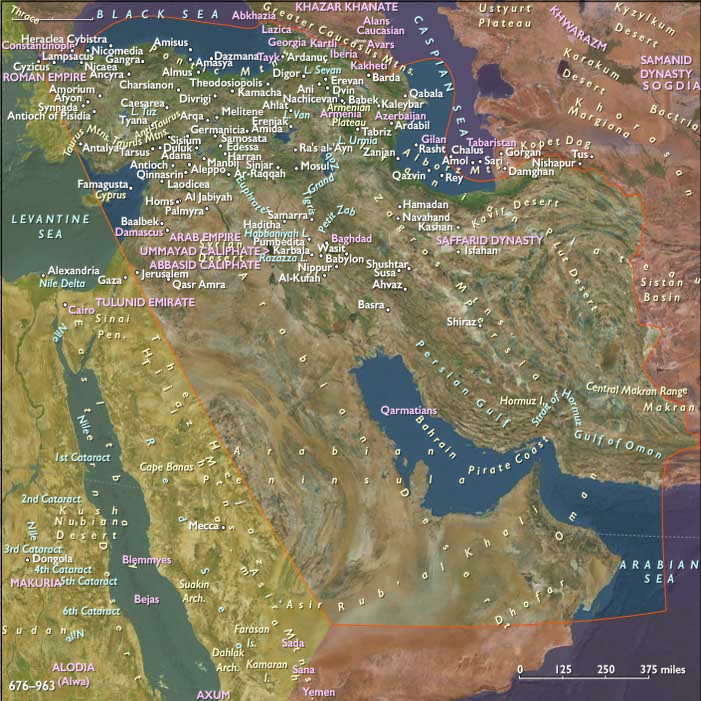
During this era, Baghdad, the thriving capital of the Abbasid Caliphate, reaches unprecedented prominence, becoming the largest city in the world. Overtaking Chang'an, the capital of Tang China, Baghdad stands as the undisputed heart of a vast empire stretching from North Africa to Central Asia. Its remarkable growth symbolizes the Abbasids' flourishing intellectual, cultural, and economic dominance, positioning it as the leading metropolis of its age.
Groups
Topics
Subjects
Regions
Subregions
Related Events
Filter results
Showing 10 events out of 55098 total
A 1.2% growth of carbon-14 concentration recorded in tree rings suggests that a very strong radiation burst may have hit the earth in either 774 or 775.
East Central Europe (772–783 CE): Carolingian Expansion, Saxon Resistance, and Slavic State Consolidation
Between 772 and 783 CE, East Central Europe—encompassing Poland, Czechia, Slovakia, Hungary, and those portions of Germany and Austria lying east of 10°E and north of a line stretching from roughly 48.2°N at 10°E southeastward to the Austro-Slovenian border near 46.7°N, 15.4°E—entered a pivotal period marked by the rise of Carolingian influence under Charlemagne, intensified Saxon resistance to Frankish expansion, and continued political maturation of Slavic principalities. The Avar Khaganate remained internally stable yet increasingly wary of Carolingian power, while Thuringia maintained its practical autonomy, though increasingly under pressure from the west.
Political and Military Developments
Carolingian Conquests and Saxon Resistance
-
Beginning in 772 CE, Charlemagne initiated campaigns to subdue the Saxons east of the Rhine and Elbe rivers, triggering fierce resistance and ongoing military conflicts that dramatically reshaped regional political dynamics in eastern Germany and western Poland.
Continued Bavarian Influence over Slavic Territories
-
Bavaria maintained its established protectorate over Carantania, continuing to wield significant political influence and integrating the region economically and culturally, despite the increasing pressures of Carolingian expansion.
Consolidation of Slavic States
-
Slavic principalities, particularly in Bohemia and Moravia, further solidified governance structures, clearly defining territorial boundaries and developing effective defensive strategies against external threats, preparing for future encounters with Frankish and Carolingian influence.
Thuringian Autonomy under Carolingian Pressure
-
Thuringian rulers preserved autonomy yet faced increasing diplomatic and military pressure from the expanding Carolingian Empire, signaling an imminent change in their independent status.
Avar Diplomatic Caution
-
The Avar Khaganate maintained internal stability but increasingly adopted cautious diplomatic relations, recognizing the rising Carolingian threat and potential regional instability resulting from Frankish–Saxon conflicts.
Economic and Technological Developments
Economic Prosperity Amid Conflict
-
Despite military conflicts, regional economic networks remained active, sustaining trade exchanges among Saxon, Slavic, Bavarian, Thuringian, Avar, and Frankish communities, including agricultural goods, iron, precious metals, textiles, and luxury items.
Expansion of Fortifications and Military Infrastructure
-
Ongoing conflicts prompted significant investment in defensive fortifications and military infrastructure by Saxon, Slavic, Bavarian, and Avar communities, enhancing regional security and technological sophistication.
Cultural and Artistic Developments
Increased Frankish–Germanic Influence
-
Carolingian and Saxon military interactions introduced new Germanic cultural influences across eastern Germany, Poland, and western Slavic territories, reflected archaeologically through evolving burial customs, weaponry, and metalworking styles.
Slavic Cultural Distinction
-
Bohemian and Moravian Slavic communities reinforced their distinct cultural identities, evident through differentiated archaeological finds, artistic styles, ceramics, jewelry, and settlement patterns.
Avar Artistic Continuity
-
The Avars maintained their distinct cultural traditions, prominently influencing regional decorative arts, jewelry, metalworking techniques, and equestrian equipment.
Settlement and Urban Development
Urban Expansion under Saxon and Frankish Influence
-
Saxon settlements, despite ongoing conflicts, continued their growth, reinforcing existing fortified towns and forming the basis of later medieval urban centers within eastern Germany and adjacent areas.
Slavic Administrative and Urban Growth
-
Bohemian and Moravian urban centers expanded in response to growing political stability and economic activity, laying important groundwork for the medieval era.
Stability in Bavarian and Thuringian Settlements
-
Bavarian-influenced Carantania and autonomous Thuringian territories continued enjoying relative economic stability, though increasingly influenced by Carolingian expansion and Saxon–Frankish conflicts.
Social and Religious Developments
Heightened Military Aristocracies
-
Ongoing Saxon–Carolingian conflicts emphasized the role of warrior aristocracies among Saxon, Bavarian, and Frankish societies, reinforcing hierarchical social structures and military prowess.
Strengthened Slavic Leadership
-
Slavic principalities in Bohemia and Moravia continued centralizing leadership, improving governance, administrative efficiency, and defensive capabilities amid growing external pressures.
Continued Stability of Avar Society
-
The Avars retained stable societal structures, maintaining internal cohesion through effective elite governance and careful diplomacy.
Long-Term Consequences and Historical Significance
The era 772–783 CE marked a transformative phase for East Central Europe, characterized by Charlemagne's aggressive eastward expansion, persistent Saxon resistance, and reinforced Slavic state formation. These events significantly reshaped regional power dynamics, preparing the ground for subsequent Carolingian dominion and dramatically influencing the medieval political, cultural, and economic trajectory of the region.
The Saxon Wars are the campaigns and insurrections of the more than thirty years from 772, when Charlemagne first enters Saxony with the intent to conquer, to 804, when the last rebellion of disaffected tribesmen is crushed.
Emperor Constantine V, whose military achievements make him enormously popular despite his persecution of monks who oppose his iconoclastic position, consolidates imperial power. (In later centuries, the folk of Constantinople will stand by his tomb, seeking his aid against whatever enemy imperils the city's defenses.)
Eastern Southeast Europe (772–783 CE): Imperial Consolidation and Cultural Legacy
Settlement and Migration Patterns
Continued Stability and Consolidation
From 772 to 783 CE, Eastern Southeast Europe experienced continued stability and demographic consolidation. The region benefited from maintained peace and the strengthened settlement of diverse communities, enhancing regional cohesion and security.
Political and Military Developments
Emperor Constantine V’s Consolidation of Power
Emperor Constantine V achieved considerable success in consolidating imperial authority, largely due to his military accomplishments. Despite his harsh persecution of monks who opposed his iconoclastic policies, his popularity among the broader population remained notably high, demonstrating his effective governance and military prowess.
Legacy and Cultural Impact
Constantine V's military successes significantly reinforced imperial security and strengthened Constantinople’s defenses. His lasting popularity became legendary, with future generations seeking spiritual aid at his tomb during times of crisis, reflecting his enduring impact on Byzantine cultural memory and identity.
Economic and Technological Developments
Economic Prosperity
The continued peace and effective imperial administration promoted sustained economic prosperity, supporting growth in trade and agricultural productivity. Secure trade routes further enhanced regional economic resilience and stability.
Advancements in Defense Infrastructure
Strategic investments in defensive infrastructure, especially in Constantinople and frontier regions, remained a priority. These enhancements ensured the empire’s preparedness against potential threats and further solidified imperial stability.
Cultural and Artistic Developments
Flourishing Cultural Activities
Cultural and artistic endeavors thrived, benefiting from the stability and imperial support of Constantine V’s reign. The era witnessed continued investment in religious and cultural institutions, significantly enriching regional artistic expression and identity.
Intellectual and Educational Resilience
Educational institutions and scholarly communities continued actively preserving and developing classical and theological knowledge. The peaceful conditions facilitated intellectual growth, reinforcing cultural resilience and continuity.
Social and Religious Developments
Dominance of Eastern Orthodoxy
Eastern Orthodox Christianity continued strengthening its influence in societal structures, providing spiritual guidance and reinforcing communal cohesion despite ongoing religious controversies. The religious institutions’ central role contributed significantly to regional stability.
Continued Iconoclast Controversy
Despite Constantine V’s broad popularity, his iconoclast stance persisted as a source of significant religious and social tension. The persecution of monks and the ongoing theological debate shaped social dynamics and religious discourse profoundly during this period.
Long-Term Consequences and Historical Significance
The period from 772 to 783 CE was marked by Emperor Constantine V’s robust consolidation of power, military success, and complex religious legacy. His reign’s impact on imperial stability, cultural identity, and religious tensions profoundly influenced Eastern Southeast Europe's historical trajectory and enduring cultural memory.
Baghdad, capital of the Abbasid Empire, becomes the largest city of the world, taking the lead from Chang'an, capital of China.
Mediterranean Southwest Europe (772–783 CE): Charlemagne's Conquest and the End of Lombard Rule
The era 772–783 CE in Mediterranean Southwest Europe is dominated by Charlemagne’s decisive conquest of the Lombard Kingdom, fundamentally altering Italy's political landscape and setting the stage for a new imperial epoch under Frankish rule.
Charlemagne's Lombard Campaign
In 774 CE, Charlemagne, King of the Franks, successfully completes his campaign against the Lombards by capturing their capital, Pavia. His victory results in the deposition of Lombard King Desiderius and marks the definitive end of independent Lombard power in Italy. Charlemagne assumes the title King of the Lombards, integrating the Lombard territories into his expanding Frankish empire.
End of Lombard Autonomy and Regional Realignment
With Charlemagne’s conquest, the political autonomy the Lombards had enjoyed for over two centuries effectively ceases. The integration of the Lombard kingdom into Charlemagne’s dominion reshapes Italy’s political structure, reducing the influence of local Lombard elites and enhancing Frankish administrative control.
Strengthened Papal-Frankish Alliance
The conquest further consolidates the historic alliance between the papacy and the Frankish monarchy, initiated by Pepin the Short. Charlemagne reaffirms papal territorial claims, reinforcing the temporal authority of the Papal States and solidifying a powerful political and religious partnership central to medieval European politics.
Continued Mozarab Cultural Evolution in Iberia
In Iberia, Mozarab communities persist under stable Islamic governance, particularly in cultural hubs like Córdoba, Seville, and Toledo. These communities continue adapting culturally, blending their Latin-Christian traditions with the Arabic and Islamic influences of their Moorish rulers, further enriching the Iberian cultural landscape.
Technological and Economic Development
Technological advancements, particularly in metallurgy following the introduction of the Catalan forge, continue to enhance regional economic productivity. Increased iron production supports broader economic prosperity, facilitating improvements in agriculture, military technology, and craftsmanship throughout the region.
Legacy of the Era
The era 772–783 CE marks a transformative moment in Mediterranean Southwest Europe. Charlemagne’s conquest ends Lombard rule, reshapes Italy’s political map, and fortifies the papal-Frankish alliance. These developments lay the groundwork for the emergence of the Carolingian Empire, profoundly influencing the region’s medieval trajectory.
Charlemagne destroys Lombard power in Italy to become King of the Franks and the Lombards.
North Africa (772–783 CE)
Muhallabid Prosperity, Berber State Flourishing, and Regional Autonomy
Between 772 and 783 CE, North Africa experiences a period marked by continued Muhallabid administration in Ifriqiya, the consolidation of indigenous Berber states, and economic vibrancy driven by flourishing trade networks. This era showcases both Arab administrative achievements and the expanding independence of Berber political entities across the Maghreb.
From their base in Kairouan (Al Qayrawan), the Muhallabid dynasty, governors appointed by the Abbasid caliphs in Baghdad, maintain a largely autonomous but effective rule over Ifriqiya. Under Muhallabid stewardship, notably from Umar ibn Hafs al-Muhallabi (appointed governor in 771 CE), the region witnesses significant agricultural and economic growth, fostered by major expansions in irrigation and infrastructure projects. This economic revitalization secures relative prosperity and stability in Ifriqiya, despite persistent Berber discontent and sporadic uprisings along the periphery.
Concurrently, the Rustamid Dynasty, firmly established in the central Maghreb at Tahert (Tiaret) under Ibadi Kharijite principles, continues to mature into a prominent center of scholarship, religious learning, and trade. Its position as an elective imamate promoting justice and intellectual exchange significantly enhances its reputation, attracting merchants, scholars, and settlers across the region. Rustamid governance, recognized for its integrity and fairness, provides a stable alternative to direct Abbasid or Muhallabid control, further strengthening Berber regional autonomy.
Further west, in what is now Morocco, the Barghawata confederation consolidates its independent political and religious identity, combining indigenous Berber traditions with a unique interpretation of Islam. The city-state of Sijilmasa, strategically located on lucrative trans-Saharan trade routes controlled primarily by influential Tuareg tribes, similarly continues to thrive as a prosperous and autonomous economic hub, bolstered by flourishing trade connections with sub-Saharan Africa.
Despite their local successes, the Muhallabids in Ifriqiya find their regional authority constrained. They maintain stable governance within their immediate jurisdiction, but their ability to project power westward is limited. They remain unable to impede the solidification of independent states like the Rustamids, Barghawata, or the emergent Arab-led Idrisid Dynasty, founded by Idris I in 788 CE, whose early formation and influence begin to take shape toward the end of this era.
By the close of 783 CE, North Africa stands defined by a diverse political and economic mosaic. Muhallabid prosperity in Ifriqiya contrasts with—and exists alongside—the robust independence of increasingly influential Berber-led states. This dynamic blend of central stability and peripheral autonomy sets the stage for subsequent periods of vibrant regional interplay and cultural synthesis.
Atlantic Southwest Europe (772–783 CE): Asturian Territorial Stability and Internal Consolidation
Between 772 and 783 CE, Atlantic Southwest Europe—encompassing Galicia, northern and central Portugal, Asturias, Cantabria, and northern Spain south of the Franco-Spanish border (43.05548° N, 1.22924° W)—entered a period marked by internal consolidation and relative political stability under the Asturian monarchy. The reigns of King Aurelius (768–774 CE) and his successor, King Silo (774–783 CE), reinforced regional governance, economic resilience, and ecclesiastical authority, firmly embedding the Asturian kingdom’s political and cultural identity within the broader context of ongoing Christian resistance against Islamic al-Andalus.
Political and Military Developments
Aurelius and Diplomatic Consolidation
King Aurelius’s reign (768–774 CE) emphasized diplomatic stability, effectively easing internal tensions following Fruela I’s tumultuous rule. He prioritized internal harmony through strategic alliances and cautious diplomacy, solidifying cooperative relationships with regional aristocrats, tribal leaders, and influential bishops. This diplomatic approach ensured stable governance and continued support for central Asturian authority.
Silo’s Reign and Political Stability
Following Aurelius’s death, King Silo (774–783 CE) maintained this strategy of internal consolidation. His marriage to Adosinda, daughter of King Alfonso I, strengthened royal legitimacy and reinforced dynastic continuity. Silo concentrated primarily on internal governance rather than aggressive territorial expansion, ensuring regional unity, securing Asturian borders, and maintaining stable diplomatic relations with neighboring Vascones and Galician nobility.
Economic Developments
Economic Stability and Moderate Growth
The relative internal stability of Aurelius’s and Silo’s reigns enabled steady economic progress. Regional villa-based agriculture continued prospering, particularly in grain production, vineyards, olive cultivation, and livestock husbandry. Mining activities—especially gold and silver extraction in Galicia and Asturias—remained economically significant, bolstering regional prosperity.
Sustained Maritime and Regional Commerce
Coastal towns such as Bracara Augusta (Braga) and smaller ports along Galicia and northern Portugal maintained modest but consistent maritime trade networks. These trade connections linked Atlantic Southwest Europe with broader North Atlantic and Mediterranean markets, supporting sustained economic continuity.
Cultural and Religious Developments
Strengthening of Ecclesiastical Institutions
Influential bishoprics—especially Braga, Lugo, Iria Flavia, and Asturica Augusta—continued reinforcing their roles as central civic and administrative authorities. Bishops provided critical social leadership, fostering education, administering local justice, and deeply embedding orthodox Christian practices into community life.
Monastic Expansion and Cultural Preservation
Monastic communities expanded steadily, serving as key cultural and educational centers. Monasteries actively preserved manuscripts, promoted literacy and scholarship, fostered agricultural innovation, and provided crucial social welfare. Their influence significantly shaped regional cultural identity and resilience.
Continued Cultural Syncretism
The persistent blending of orthodox Christianity with indigenous Celtic and Iberian traditions continued robustly, particularly in rural and mountainous regions like Galicia, Asturias, and northern Portugal. This enduring cultural synthesis reinforced local identities, ensuring cultural continuity and regional cohesion.
Civic Identity and Governance
Increasing Centralization with Continued Regional Autonomy
Under Aurelius and Silo, Asturian governance became gradually more centralized, yet still respected considerable local autonomy. Civic identities increasingly coalesced around Asturian royal authority and ecclesiastical leadership, clearly establishing the kingdom as the nucleus of Iberian Christian resistance and cultural unity.
Notable Tribal Groups and Settlements
-
Astures and Cantabri: Provided critical political and military stability, reinforcing Asturian governance structures and regional cohesion.
-
Galicians and Lusitanians: Maintained effective local governance, economic stability, and cultural autonomy, cooperating pragmatically with Asturian authority.
-
Vascones: Continued their longstanding political neutrality, territorial independence, and cultural distinctiveness, largely insulated from broader Iberian conflicts, though maintaining diplomatic relations with Asturias.
Long-Term Significance and Legacy
Between 772 and 783 CE, Atlantic Southwest Europe:
-
Experienced internal consolidation and diplomatic stability under Asturian royal authority, reinforcing regional cohesion and political unity.
-
Sustained resilient economies, ecclesiastical institutions, and strong local governance structures, shaping the medieval social and political fabric.
-
Preserved distinctive regional cultural identities, laying lasting foundations for the development of enduring medieval Iberian societies.
This era solidified the internal structures and cultural identity of the Asturian kingdom, decisively influencing Atlantic Southwest Europe’s medieval historical trajectory.
Years: 772 - 783
Groups
Topics
Subjects
Regions
Subregions