
The Middle East (7389–7246 BCE): Neolithic Advancements …
Years: 7389BCE - 7246BCE
The Middle East (7389–7246 BCE): Neolithic Advancements and Expansion
Continued Development of Çatalhöyük
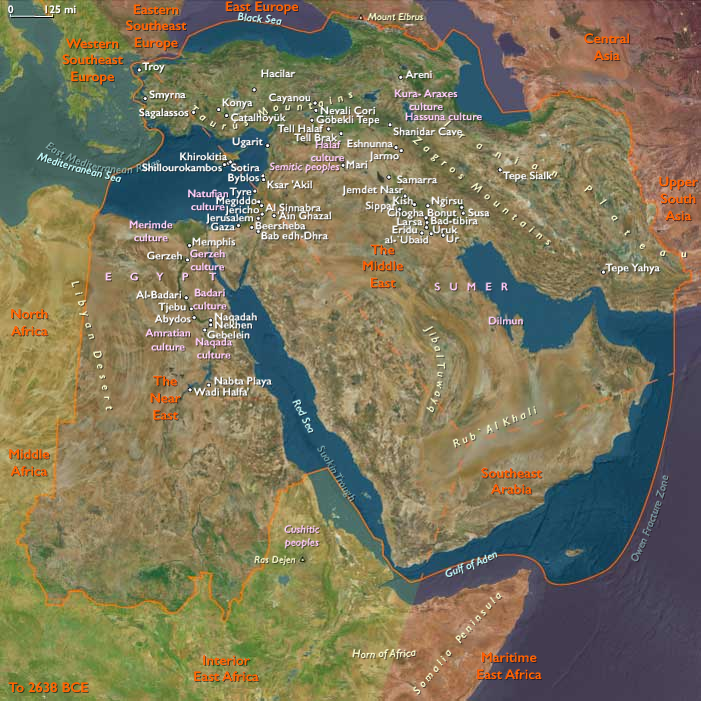
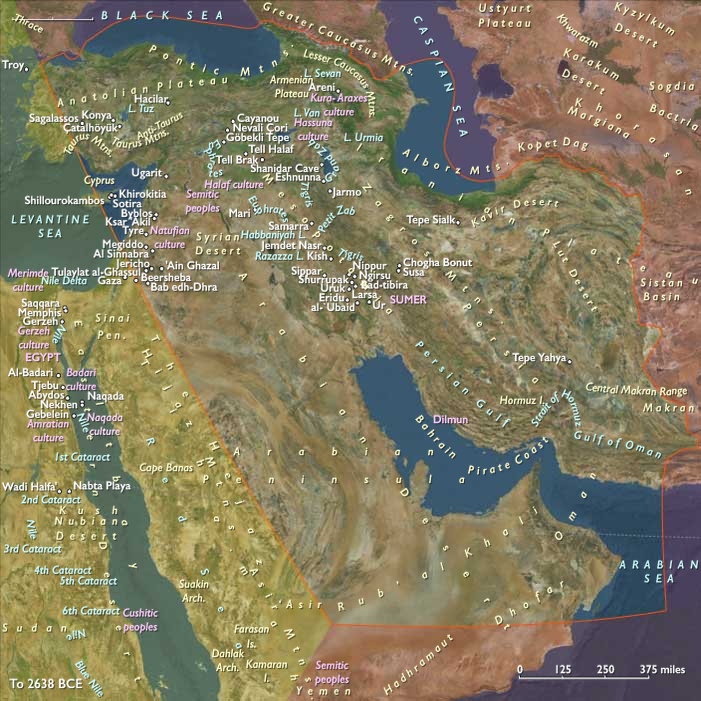
During 7389 to 7246 BCE, the settlement of Çatalhöyük in southern Anatolia continued to flourish, solidifying its role as a pivotal center for Neolithic life. Throughout this period, the settlement expanded further, maintaining its unique characteristic of densely packed domestic structures without discernible public buildings, reflecting a distinctive social organization emphasizing communal life.
Agricultural Intensification
Agricultural practices during this period advanced significantly. Communities across the Middle East deepened their reliance on farming, improving techniques in the cultivation of cereals such as wheat and barley. Enhanced agricultural productivity supported larger populations and facilitated the expansion of permanent settlements, laying critical foundations for future social complexity.
Technological Innovations
Technological developments in lithic tools also marked this era. Improved stone implements, including refined scrapers, blades, and arrowheads, became more widespread, underscoring advancements in hunting, crafting, and general daily utility. The increased sophistication of these tools is evident in archaeological sites throughout the region.
Cultural and Social Developments
In parallel with technological innovations, cultural expressions such as pottery making, figurative artwork, and ritual practices continued to evolve, becoming more diverse and widespread. These artifacts and practices highlight a rich cultural tapestry reflecting spiritual beliefs, social identities, and community cohesion.
This age represents a pivotal period of growth, technological advancement, and increasing social complexity within early Neolithic societies in the Middle East.
Topics
Commodoties
Subjects
Regions
Subregions
Years: 7389BCE - 7246BCE
Topics
Commodoties
Subjects
Regions
Subregions