
The Middle East (7533–7390 BCE): Rise of …
Years: 7533BCE - 7390BCE
The Middle East (7533–7390 BCE): Rise of the Settlement at Çatalhöyük
Foundation of Çatalhöyük
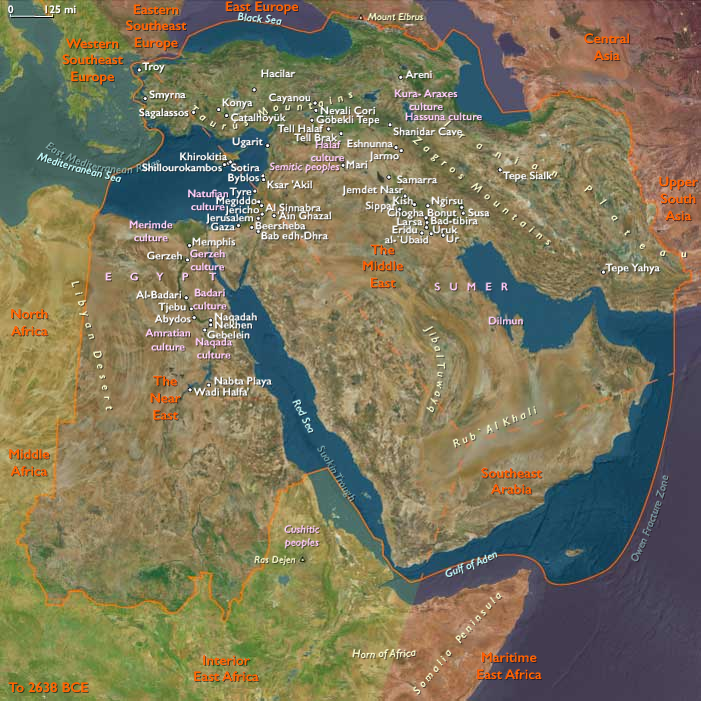
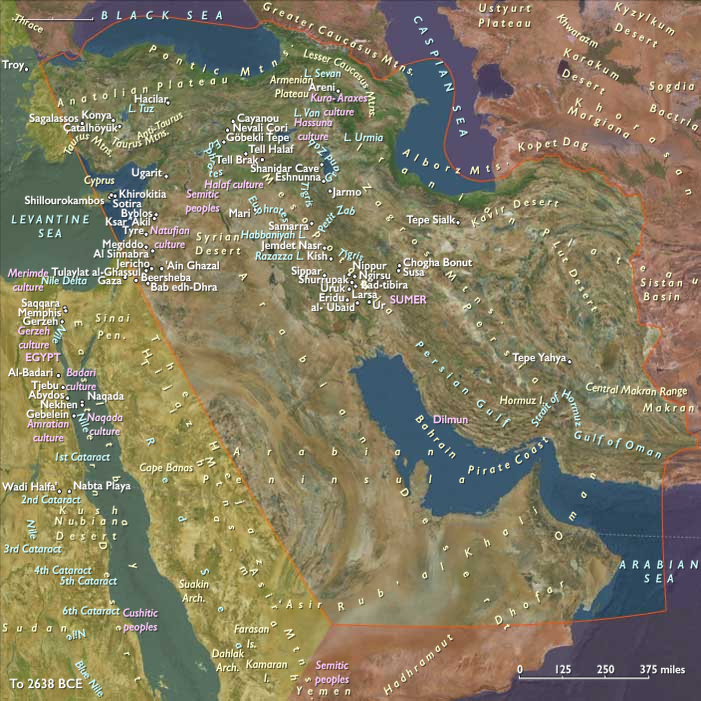
Between 7533 and 7390 BCE, a significant development occurred with the founding of Çatalhöyük, a vast Neolithic settlement located in southern Anatolia, roughly fifty kilometers (thirty-one miles) southeast of Konya. Established around 7500 BCE, Çatalhöyük rapidly expanded into one of the largest settlements of its time, continuing to thrive for approximately eighteen centuries, transitioning eventually into the Chalcolithic period.
Characteristics and Structure
Çatalhöyük is remarkable not only for its extensive size but also for its state of preservation. It is currently recognized as the largest and most intact Neolithic site discovered. The settlement primarily consists of densely packed domestic buildings, notably lacking any structures identifiable as public or ceremonial centers, which is highly unusual for settlements of its scale and complexity.
Significance in Neolithic Studies
The structure and organization of Çatalhöyük provide invaluable insights into early human social structures, daily life, and community organization during the Neolithic era. The exclusively domestic nature of the buildings suggests a highly integrated and communal form of living, with extensive social interactions happening within homes rather than in separate public spaces.
This period illustrates a critical stage in human development, showcasing a distinctive form of societal organization that significantly advanced understanding of early human communities in the Middle East.
Topics
- The Upper Paleolithic
- Allerød Oscillation
- Late Glacial Maximum
- Younger Dryas
- Neolithic Revolution
- Preboreal Period
Commodoties
Subjects
Regions
Subregions
Years: 7533BCE - 7390BCE
Topics
- The Upper Paleolithic
- Allerød Oscillation
- Late Glacial Maximum
- Younger Dryas
- Neolithic Revolution
- Preboreal Period
Commodoties
Subjects
Regions
Subregions