
The Middle East (7101–6958 BCE): Early Metallurgy …
Years: 7101BCE - 6958BCE
The Middle East (7101–6958 BCE): Early Metallurgy and Agricultural Communities
Settlement at Hacilar
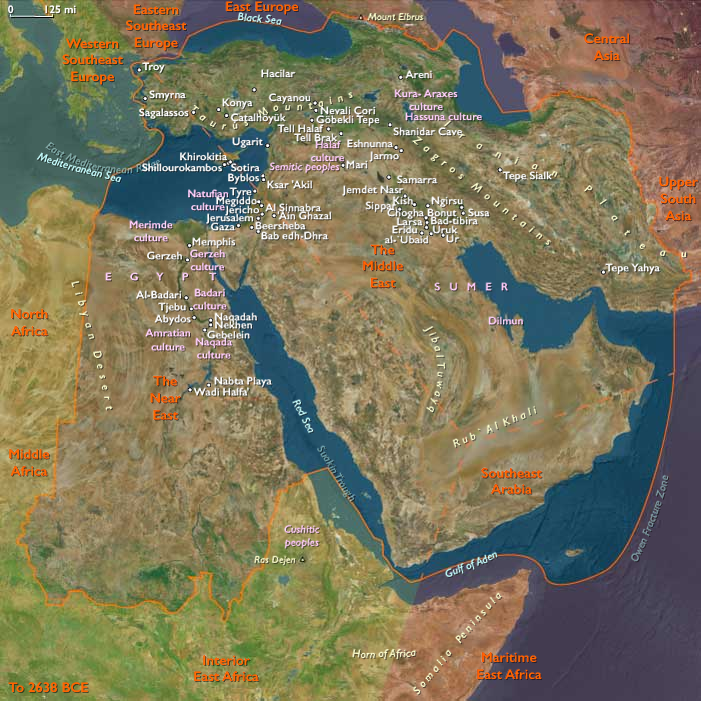
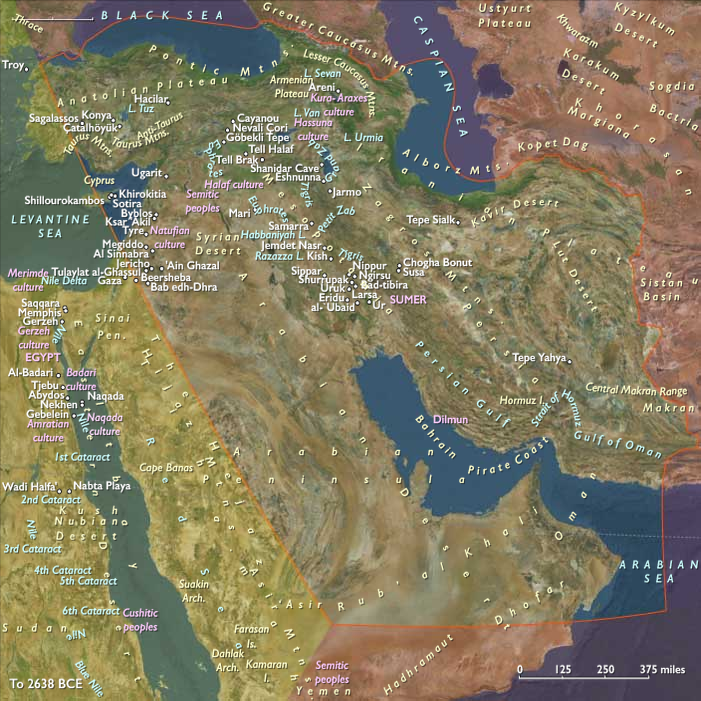
Between 7101 and 6958 BCE, the archaeological site of Hacilar in southwestern Anatolia emerged prominently. Radiocarbon dating, uncalibrated, indicates that the earliest stages of Hacilar’s development date to approximately 7040 BCE. Structures at the site were constructed from mud brick, wood, and stone, showcasing the sophistication of architectural practices in these early farming communities.
Early Metallurgy and Agricultural Practices
Around 7000 BCE, small rural farming communities across the ancient Near East began practicing simple forms of metallurgy. Evidence from Çayönü, a Neolithic ceremonial site in southern Turkey inhabited approximately from 7200 to 6600 BCE, includes crude examples of cold-hammered copper dating as early as 7000 BCE, representing some of the earliest known metallurgy.
Domestication and Environmental Context at Çayönü
The settlement at Çayönü holds particular significance due to its possible role in the initial domestication of pigs (Sus scrofa). The site's diverse wild fauna included wild boar, wild sheep, wild goats, and cervids. Its environment featured marshes and swamps near the Bogazcay River, open woodland, patches of steppe, and almond-pistachio forest-steppe to the south.
Notably, research by the Max Planck Institute for Breeding Research in Cologne has identified Mount Karaca (Karaca Dag), located near Çayönü, as home to the genetically common ancestor of sixty-eight contemporary cereal varieties. This ancestor still grows wild on the mountain slopes, underscoring the site's crucial role in early agricultural developments.
This period illustrates significant technological advancements, particularly in metallurgy, alongside essential agricultural innovations that collectively supported the growing complexity and stability of Neolithic societies in the Middle East.
Topics
Commodoties
Subjects
Regions
Subregions
Years: 7101BCE - 6958BCE
Topics
Commodoties
Subjects
Regions
Subregions