
The Middle East: 688–689 CE Kharijite …
Years: 688 - 699
The Middle East: 688–689 CE
Kharijite Rebellions and the Rise of Islamic Qatar
Kharijite Ideology and Rebellion
In the late seventh century, Kharijite ideology becomes increasingly influential as a radical opposition movement against the Sunni establishment of the Umayyad Caliphate. Originating from ideological schisms dating back to earlier caliphal disputes, the Kharijites advocate extreme religious purity, rejecting both Sunni and Shia claims to authority.
In 685, the most radical faction, known as the Azraqi Kharijites, had separated from the more moderate Ibadi sect near Basra. By 688–689, their movement continues to gain momentum, particularly around Basra, where their ideology fuels repeated rebellions. Their zealotry will remain a potent force in various rebellions and breakaway states across the Maghreb and other regions for decades.
Qatar’s Emergence in Early Islamic History
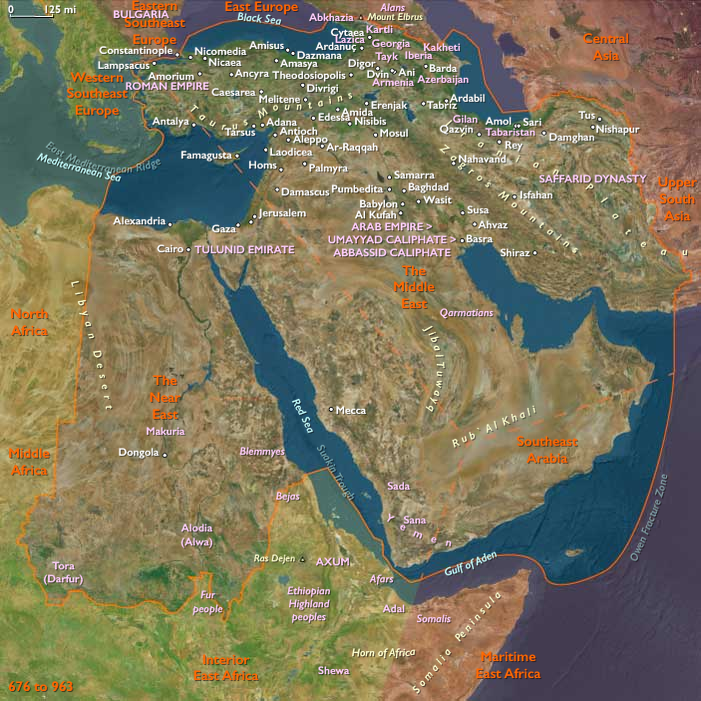
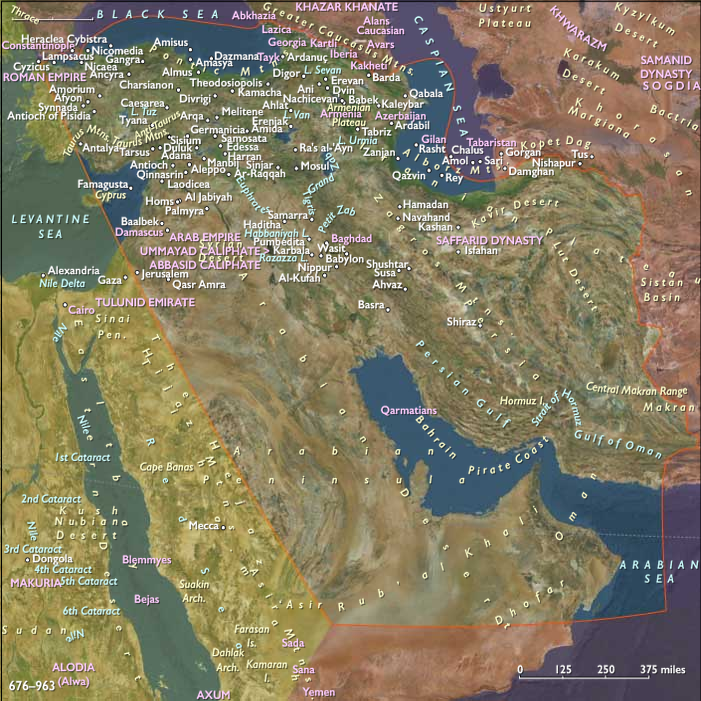
The Arabian Peninsula, including the region known today as Qatar, experiences a notable transformation following the widespread embrace of Islam by the close of the seventh century. Although historically characterized by short-term settlements of nomadic tribes, the introduction of Islam fosters significant social and economic stability in the peninsula.
The conversion process in the region dates back to around 628, when the Prophet Muhammad’s envoy, Al-Ala Al-Hadrami, successfully invited Al-Mundhir Ibn Sawa Al-Tamimi, the ruler of Bahrain (which then included present-day Qatar), to adopt Islam. While initial conversion likely varied among different groups, by the late seventh century, Qatar appears more regularly in contemporary Arab accounts as a prosperous village, famed for camel and horse breeding.
The Qatari settlements gain particular renown during this era for crafting distinctive striped woven cloaks—known as Qatari cloaks—and for producing high-quality spears. This burgeoning trade and craftsmanship indicate Qatar’s growing integration into broader Islamic economic and cultural networks.
Thus, the era 688–689 CE highlights the continuing religious and political tensions within the Islamic world, marked by Kharijite revolts, alongside the ongoing economic and cultural integration of the Arabian Peninsula into the expanding Islamic empire.
Groups
Topics
Commodoties
Subjects
Regions
Subregions
Years: 688 - 699
Groups
Topics
Commodoties
Subjects
Regions
Subregions