
The Middle East: 657–646 BCE Ashurbanipal's …
Years: 657BCE - 646BCE
The Middle East: 657–646 BCE
Ashurbanipal's Dominance and Babylonian Revolt
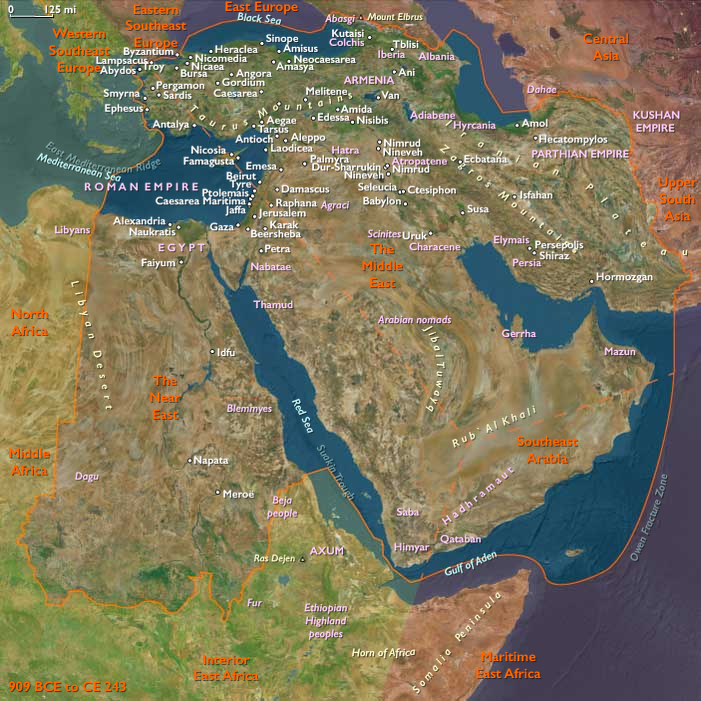
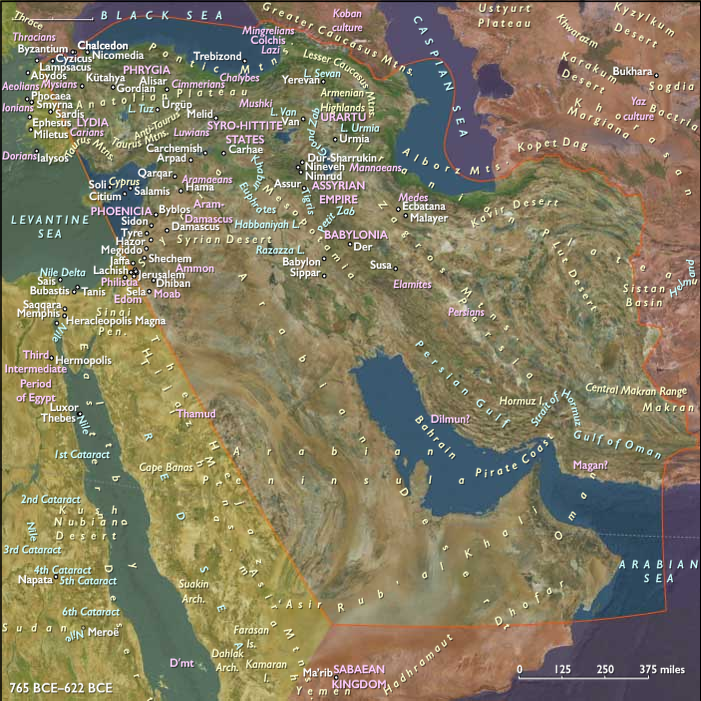
During this period, Ashurbanipal firmly consolidates Assyrian dominance, securing his empire through forceful diplomacy and relentless military campaigns. His reign sees the Assyrian Empire at its greatest territorial extent, stretching from Persia to Egypt and encompassing key regions of Anatolia and the Levant. However, underlying tensions within the empire, particularly in Babylonia, threaten stability.
The Revolt of Shamash-shum-ukin
In 652 BCE, Ashurbanipal’s brother Shamash-shum-ukin, king of Babylon, openly revolts, seeking autonomy and rallying a coalition of Elamites, Arameans, Arabs, and several Babylonian cities against Assyrian rule. Ashurbanipal responds decisively, launching a prolonged siege of Babylon that lasts until 648 BCE. The siege devastates the city, leading to severe famine and suffering. In desperation, Shamash-shum-ukin reportedly perishes in a fire as Babylon falls back under direct Assyrian control. Ashurbanipal then installs a puppet ruler, Kandalanu, to govern Babylon, ensuring its compliance with Assyrian dominance.
Assyrian Campaigns against Elam
Ashurbanipal next turns his attention to Elam, which had supported the Babylonian revolt. In a series of brutal campaigns between 647 and 646 BCE, Ashurbanipal devastates Elam, capturing its cities and razing its capital, Susa, in 646 BCE. Elamite temples and royal tombs are looted, and the statues of Elamite deities are taken to Nineveh. These acts decisively weaken Elam, effectively ending its status as a significant power.
Cultural and Artistic Achievements
Despite the ongoing military conflicts, Ashurbanipal fosters considerable cultural and intellectual achievements in Assyria. He expands the renowned Library of Ashurbanipal in Nineveh, meticulously collecting thousands of clay tablets covering literature, history, science, medicine, and divination. This vast library becomes an invaluable cultural repository, preserving significant Mesopotamian literature, including the Epic of Gilgamesh.
Internal Stability and External Influence
Ashurbanipal’s decisive actions against Babylon and Elam restore internal stability and reinforce Assyrian supremacy. Meanwhile, his continued diplomatic and military successes ensure external dominance, with kingdoms across Anatolia, the Levant, and even as far west as Lydia recognizing Assyrian influence. The empire's advanced military techniques—particularly its cavalry—continue to evolve, solidifying Assyria’s reputation as the region’s paramount military power.
Thus, between 657 and 646 BCE, Ashurbanipal’s reign is characterized by the aggressive suppression of rebellion, significant territorial consolidation, cultural flourishing, and relentless expansion of Assyrian influence, reaffirming the empire's place at the apex of ancient Near Eastern power.
People
Groups
- Aramaeans
- Arab people
- Babylon, Kingdom of
- Elam, (New) Kingdom of
- Assyria, (New) Kingdom of (Neo-Assyrian Empire)
Topics
Subjects
Regions
Subregions
Years: 657BCE - 646BCE
People
Groups
- Aramaeans
- Arab people
- Babylon, Kingdom of
- Elam, (New) Kingdom of
- Assyria, (New) Kingdom of (Neo-Assyrian Empire)
Topics
Subjects
Regions
Subregions