
The Middle East: 633–622 BCE Succession …
Years: 633BCE - 622BCE
The Middle East: 633–622 BCE
Succession Crisis and Assyrian Instability
Following Ashurbanipal's death, the Assyrian Empire quickly descends into chaos amid fierce succession disputes. Contenders for the throne include his sons Ashur-etil-ilani and Sinsharishkun, as well as prominent general Sin-shumu-lishir. The power struggle severely weakens Assyrian authority, leading to widespread internal strife and fragmentation of the central administration.
Rise of Nabopolassar and Babylonian Independence
Capitalizing on Assyria’s internal turmoil, the Chaldean leader Nabopolassar successfully revolts in 629 BCE, reasserting Babylonian independence from Assyrian domination. Nabopolassar captures Babylon, establishing himself as the new king and beginning a dynasty that will eventually challenge and overthrow Assyrian hegemony in the region.
Median Revival and Threat to Assyria
In the east, the Medes—under the leadership of the ambitious Cyaxares—capitalize on Assyria’s vulnerability. Cyaxares had earlier succeeded in freeing Media from Scythian control and now asserts his rule over the Persians in southwestern Iran. By the mid-620s BCE, the Medes actively prepare for war against the declining Assyrian Empire, establishing the foundations for a powerful alliance with Babylonia that will eventually lead to the empire’s downfall.
People
Groups
- Medes
- Babylon, Kingdom of
- Assyria, (New) Kingdom of (Neo-Assyrian Empire)
- Persian people
- Scythians, or Sakas
- Neo-Babylonian, or Chaldean, Empire
- Medes, Kingdom of the
Topics
Subjects
Regions
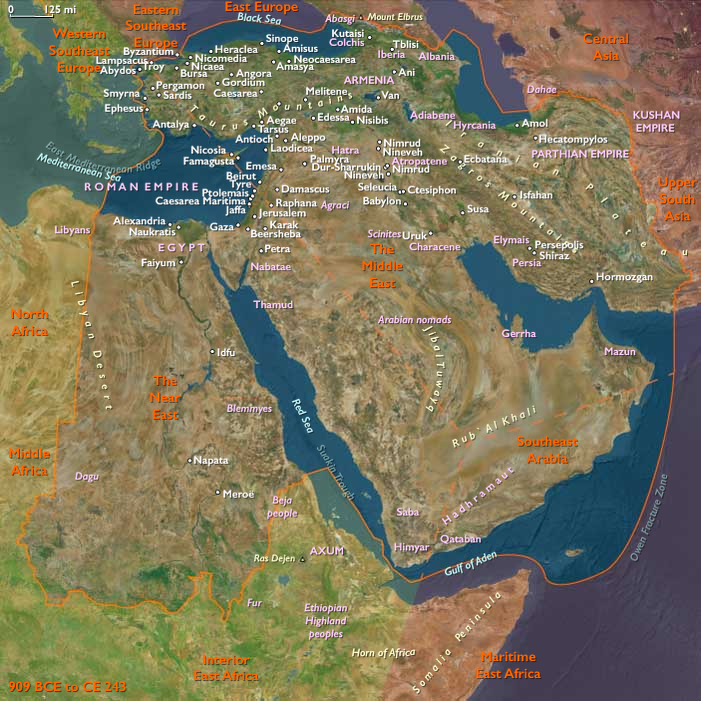
Subregions
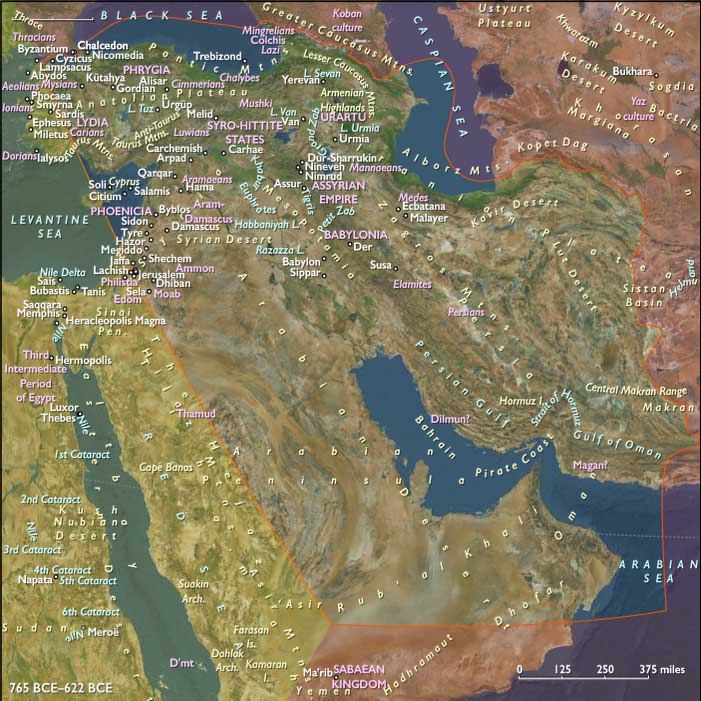
Years: 633BCE - 622BCE
People
Groups
- Medes
- Babylon, Kingdom of
- Assyria, (New) Kingdom of (Neo-Assyrian Empire)
- Persian people
- Scythians, or Sakas
- Neo-Babylonian, or Chaldean, Empire
- Medes, Kingdom of the
Topics
Subjects
Regions
Subregions