
The Middle East: 652–663 CE Consolidation …
Years: 652 - 663
The Middle East: 652–663 CE
Consolidation of Islamic Rule and Cultural Transformations
Stabilization of the Islamic Caliphate
Between 652 and 663 CE, the Islamic Caliphate, now firmly established across Persia and Mesopotamia, moves towards stabilizing its administrative control over newly conquered regions. The caliphs, particularly Uthman ibn Affan (644–656 CE) and Ali ibn Abi Talib (656–661 CE), strive to centralize authority and standardize governance practices across vast territories. Administrative structures from the former Sassanian and Byzantine empires are adapted and refined, incorporating Persian bureaucratic expertise to enhance the efficiency of the burgeoning Islamic state.
Emergence of Internal Conflicts
This period, however, also sees significant internal strife within the Caliphate. Following the assassination of Caliph Uthman in 656 CE, political instability escalates into the first major internal conflict in Islamic history, known as the First Fitna (656–661 CE). Caliph Ali faces substantial opposition, particularly from prominent figures such as Muawiya ibn Abi Sufyan, governor of Syria, leading to intense civil discord and several notable battles, including the inconclusive Battle of Siffin (657 CE).
Establishment of the Umayyad Dynasty
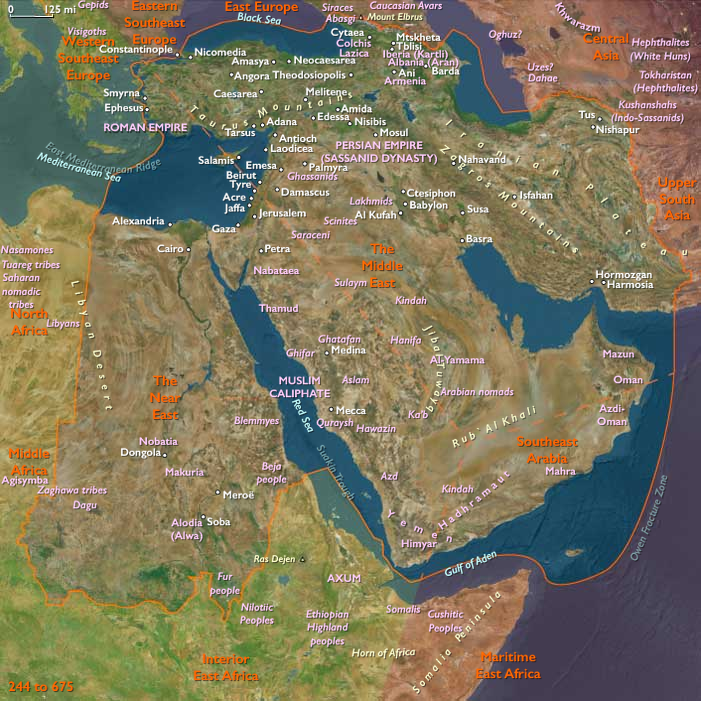
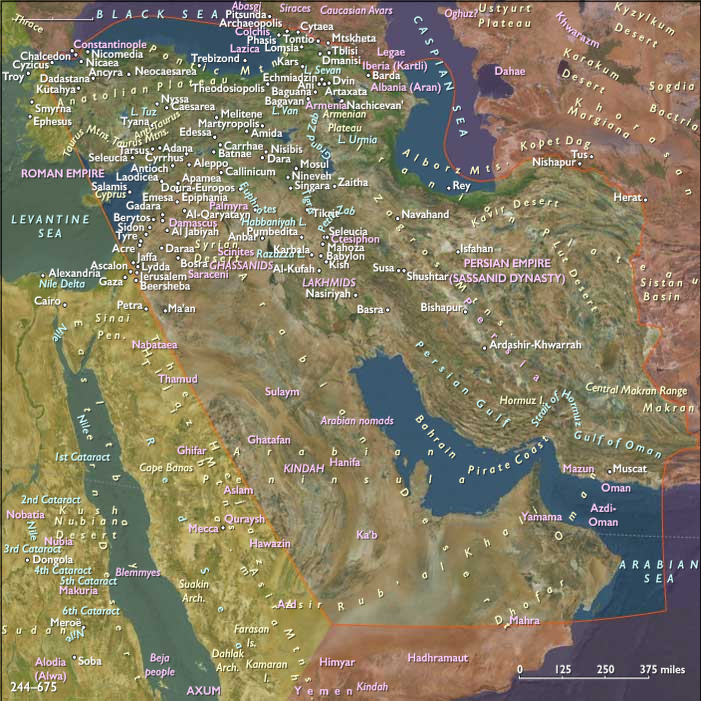
The internal divisions culminate in the establishment of the Umayyad Dynasty under Muawiya in 661 CE, marking the end of the Rashidun Caliphate. Muawiya shifts the capital from Medina to Damascus, reflecting the growing influence and strategic importance of Syria. This transition signals the beginning of a hereditary monarchy, significantly transforming the political landscape of the Islamic world.
Cultural Integration and Continuity
Despite internal conflicts, the era witnesses continuing cultural synthesis, as Persian intellectuals and administrators profoundly influence the development of Islamic governance and culture. Persian scholars and officials contribute significantly to literature, philosophy, science, and administrative reforms, laying foundational structures that enrich Islamic civilization.
By the close of this era, the Middle East experiences both consolidation and dramatic political restructuring under Islamic rule, with the Umayyad Dynasty setting the stage for an expansive and influential epoch in regional and global history.
People
Groups
- Arab people
- Roman Empire, Eastern: Heraclian dynasty
- Islam
- Rashidun Caliphate
- Umayyad Caliphate (Damascus)
Topics
- Arab-Byzantine Wars
- Byzantine-Muslim War of 645-56
- Fitna, First, or First Islamic Civil War
- Siffin, Battle of The
Subjects
Regions
Subregions
Years: 652 - 663
People
Groups
- Arab people
- Roman Empire, Eastern: Heraclian dynasty
- Islam
- Rashidun Caliphate
- Umayyad Caliphate (Damascus)
Topics
- Arab-Byzantine Wars
- Byzantine-Muslim War of 645-56
- Fitna, First, or First Islamic Civil War
- Siffin, Battle of The
Subjects
Regions
Subregions