
The Middle East: 621–610 BCE Fall …
Years: 621BCE - 610BCE
The Middle East: 621–610 BCE
Fall of Assyria and Rise of Babylon and Media
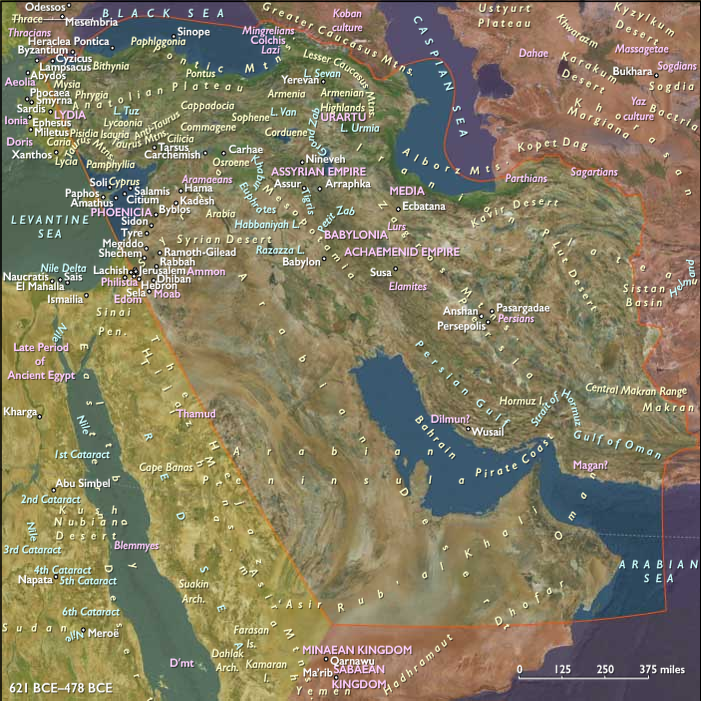
In 621 BCE, Cyaxares, the ambitious king of the Medes, allies with Nabopolassar, ruler of Babylon, significantly altering the balance of power in the Middle East. The alliance between these two formidable kingdoms poses a critical threat to the already declining Assyrian Empire. With coordinated military campaigns, they swiftly move against Assyrian strongholds.
By 615 BCE, the combined Median and Babylonian forces capture the strategically important frontier city of Arraphka, followed closely by the sacking and destruction of Ashur, the religious heart of Assyria, in 614 BCE. These significant victories cripple Assyrian power, setting the stage for a decisive strike against the empire's heartland.
The ultimate assault occurs in 612 BCE with the dramatic siege and destruction of Nineveh, the Assyrian capital famed for its magnificent palaces, temples, and extensive library containing thousands of clay tablets. Nineveh's fall marks a catastrophic end to Assyrian dominance in Mesopotamia.
Surviving Assyrian forces regroup under their remaining leaders and retreat to the northwest, establishing a temporary stronghold at Harran. However, Median and Babylonian forces quickly pursue them, capturing and partially destroying Harran in 610 BCE. This defeat effectively extinguishes Assyrian political and military power, ushering in a new geopolitical era dominated by the rising powers of Babylonia and Media.
Median Consolidation and Cultural Legacy
Under Cyaxares, the Medes consolidate their gains, absorbing territories formerly under Assyrian influence and strengthening their dominion across northern and western Iran. Ecbatana becomes a prominent center, signaling the emergence of the Median Empire as a significant regional power.
Babylonian Revival
Simultaneously, Nabopolassar solidifies control over Babylonia, marking the start of the Neo-Babylonian Empire. His reign initiates substantial rebuilding efforts and cultural revival, laying the foundations for Babylon's subsequent prominence under his son, Nebuchadnezzar II.
Thus, the decade from 621 to 610 BCE decisively reshapes the Middle East, as the fall of Assyria opens new avenues for Median and Babylonian ascendancy, profoundly influencing the region's historical trajectory.
People
Groups
- Medes
- Babylon, Kingdom of
- Assyria, (New) Kingdom of (Neo-Assyrian Empire)
- Persian people
- Scythians, or Sakas
- Neo-Babylonian, or Chaldean, Empire
- Medes, Kingdom of the
Topics
Subjects
Regions
Subregions
Years: 621BCE - 610BCE
People
Groups
- Medes
- Babylon, Kingdom of
- Assyria, (New) Kingdom of (Neo-Assyrian Empire)
- Persian people
- Scythians, or Sakas
- Neo-Babylonian, or Chaldean, Empire
- Medes, Kingdom of the
Topics
Subjects
Regions
Subregions