
The Middle East: 640–651 CE Islamic …
Years: 640 - 651
The Middle East: 640–651 CE
Islamic Expansion and the End of the Sassanian Empire
Arab Conquest of Persia
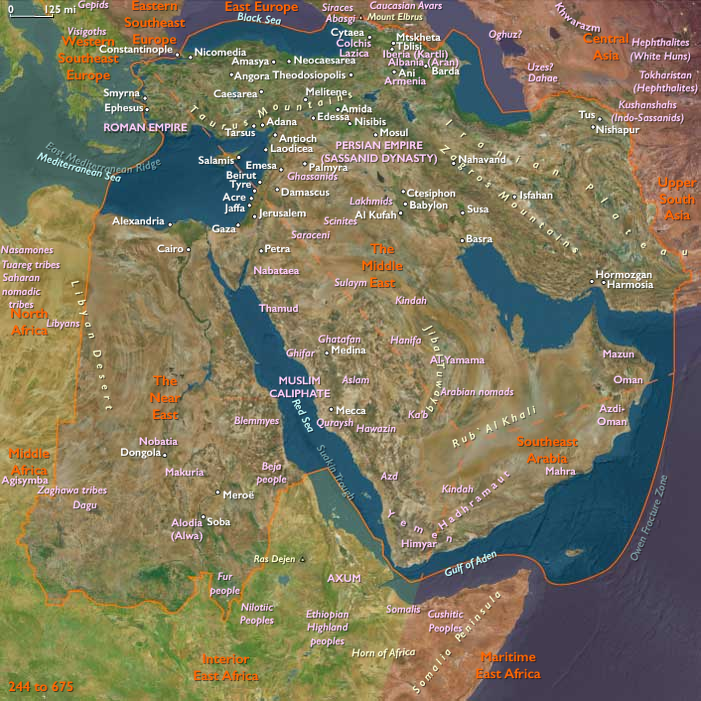
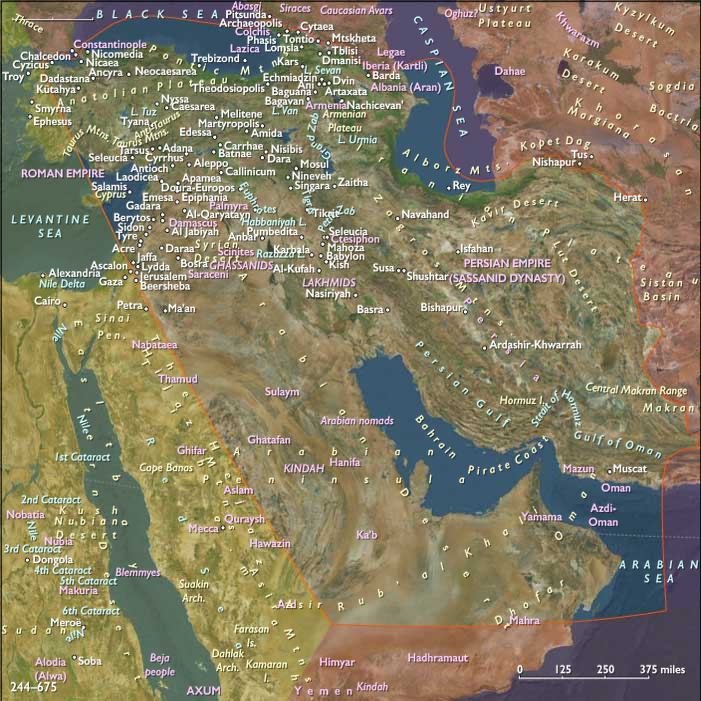
Between 640 and 651 CE, the Islamic Caliphate under the Rashidun Caliphs decisively defeats the remnants of the once-powerful Sassanian Empire, rapidly extending Islamic control into Persian territories. Arab armies under Caliph Umar ibn al-Khattab and his successor, Uthman ibn Affan, achieve a series of remarkable victories, capturing major Persian cities such as Ctesiphon (the Sassanian capital), Nishapur, and Isfahan. The critical Battle of Nahavand in 642, often termed the "Victory of Victories," decisively ends Sassanian military resistance, heralding the empire's complete collapse.
Fall of the Sassanian Dynasty
The weakening Sassanian regime, internally fragmented after decades of war and succession disputes, is unable to mount sustained resistance against the advancing Arab forces. The last Sassanian emperor, Yazdegerd III, flees eastward, attempting to gather support from regional governors and allies. Despite his efforts, Yazdegerd is ultimately unable to restore his authority and is killed in 651, marking the definitive end of the Sassanian dynasty and its centuries-long rule.
Establishment of Islamic Rule
With the fall of the Sassanian Empire, Arab rulers establish firm control over Persia, integrating the region into the expanding Islamic Caliphate. Administratively, Persian territories are reorganized into Islamic provinces, governed by appointed Arab officials. Nonetheless, the caliphate initially adopts a pragmatic approach, retaining many Persian bureaucrats and administrators, allowing for continuity and relative stability during the transitional period.
Cultural Integration and Legacy
The conquest profoundly alters the cultural and religious landscape of Persia. While Zoroastrianism, the state religion under the Sassanians, loses its privileged status, Islamic rulers generally exhibit tolerance towards local religious traditions during this initial period of conquest. Over time, however, Persian culture and administrative traditions significantly influence Islamic civilization, contributing substantially to its rich intellectual and cultural heritage.
By the end of this era, the Middle East witnesses the decisive transformation from ancient Persian and Byzantine dominance to Islamic leadership, setting the stage for profound cultural and historical developments in the centuries to come.
People
Groups
- Arab people
- Zoroastrians
- Mesopotamia (Roman province)
- Persian Empire, Sassanid, or Sasanid
- Syria Prima (Roman province)
- Syria Secunda (Roman province)
- Christianity, Chalcedonian
- Roman Empire, Eastern: Non-dynastic
- Islam
- Rashidun Caliphate
Topics
- Arab-Byzantine Wars
- Muslim Conquest of Persia
- Byzantine-Muslim War of 633-42
- Muslim Conquest of Armenia
- Nahāvand, Battle of
- Byzantine-Muslim War of 645-56
Subjects
Regions
Subregions
Related Events
Showing 10 events out of 56578 total
Years: 640 - 651
People
Groups
- Arab people
- Zoroastrians
- Mesopotamia (Roman province)
- Persian Empire, Sassanid, or Sasanid
- Syria Prima (Roman province)
- Syria Secunda (Roman province)
- Christianity, Chalcedonian
- Roman Empire, Eastern: Non-dynastic
- Islam
- Rashidun Caliphate
Topics
- Arab-Byzantine Wars
- Muslim Conquest of Persia
- Byzantine-Muslim War of 633-42
- Muslim Conquest of Armenia
- Nahāvand, Battle of
- Byzantine-Muslim War of 645-56
Subjects
Regions
Subregions