
The Middle East: 477–334 BCE Persian …
Years: 477BCE - 334BCE
The Middle East: 477–334 BCE
Persian Dominance and the Path to Hellenization
Achaemenid Rule and Administrative Stability
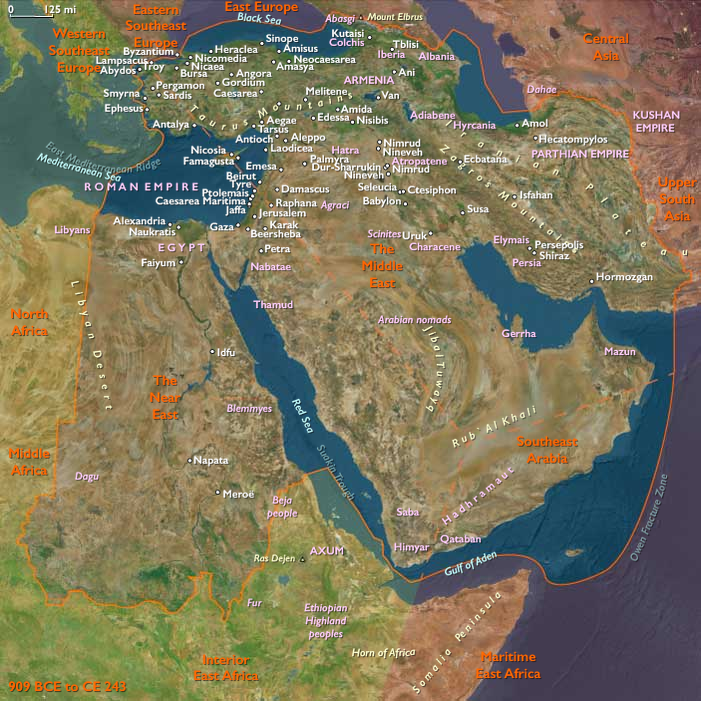
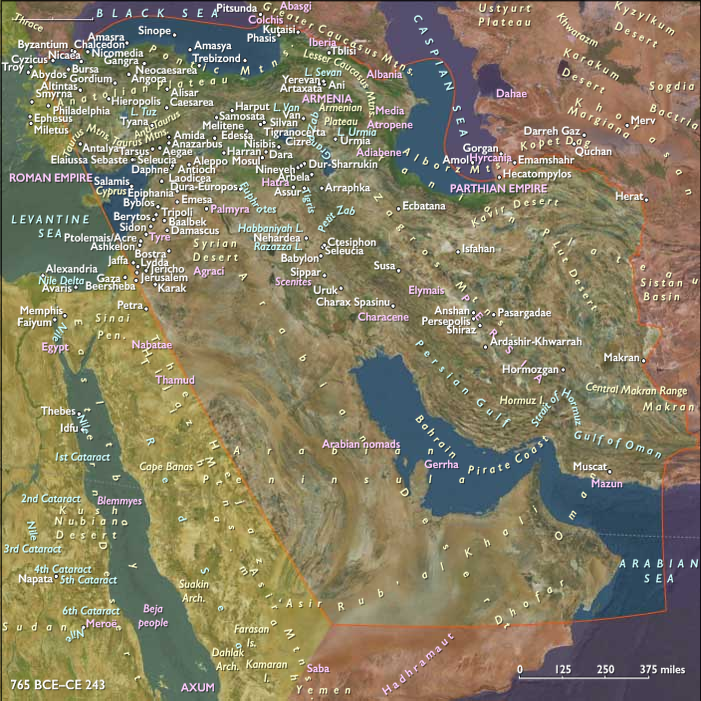
The Achaemenid Persian Empire continues to exercise considerable influence across the Middle East from 477 to 334 BCE, achieving significant territorial and administrative sophistication despite earlier setbacks such as the Greco-Persian Wars. Persian control remains effective over a vast region including Anatolia, the Levant, Egypt, and parts of Central Asia. Cultural inclusivity, economic vitality, and innovative governance methods initiated by Cyrus and Darius are sustained, reinforcing the empire’s enduring stability.
Artaxerxes’ Reign and Internal Challenges
Under the successive reigns of Artaxerxes I (465–424 BCE) and Artaxerxes II (404–358 BCE), internal factionalism and provincial rebellions periodically challenge Persian authority. Revolts in Egypt and Cyprus demand repeated Persian military intervention, reflecting the complexity and vastness of imperial governance. Despite such disruptions, the robust Persian infrastructure, including the extensive road network, effectively mitigates these threats by enabling rapid administrative and military responses.
Phoenician Maritime Dominance
Phoenician cities, vital components of the Persian naval and economic power, significantly bolster Persian dominance in maritime trade. Tyre emerges as a crucial economic hub, renowned for its purple dye and luxury textiles, widely distributed across the Persian Empire and the Mediterranean. The Phoenicians also supply critical naval assets, maintaining Persian military strength at sea.
Evagoras and Cypriot Autonomy
Cyprus maintains a distinctive degree of autonomy during this period, primarily through its culturally Greek-oriented city-kingdoms, especially Salamis under King Evagoras (411–374 BCE). Evagoras unifies the Cypriot kingdoms, promotes Greek culture, introduces the Greek alphabet to replace the Cypriot syllabary, and initially maintains friendly ties with Persia, even securing Persian support for Athens against Sparta in 394 BCE. However, relations deteriorate, leading to conflict. Following his naval defeat at the Battle of Citium in 381 BCE, Evagoras negotiates a peace in 376 BCE, retaining nominal kingship under Persian oversight. His assassination in 374 BCE ends a notable reign marked by cultural advancement and regional influence.
Technological and Cultural Innovations
Persian rule fosters significant technological and scientific advancements, including improvements in mercury amalgamation techniques that enhance metalworking and mining. Persian engineering expertise is evident in the sophisticated architecture at Persepolis and other regional capitals, demonstrating a fusion of diverse cultural influences under Persian governance.
Decline of Persian Power and Macedonian Ascendancy
By the mid-fourth century BCE, Persian influence wanes, paving the way for the ascendancy of Macedon under Philip II (359–336 BCE). His son, Alexander the Great (336–323 BCE), initiates ambitious military campaigns against Persian territories. Alexander decisively defeats Persian forces in battles such as Granicus (334 BCE), significantly shifting the geopolitical balance and accelerating the decline of Achaemenid rule.
Cultural Legacy and Transition to Hellenism
The era concludes with rapid Hellenization, marked by extensive cultural exchanges and integration of Greek and Persian traditions. Persian governance structures, cultural innovations, and economic achievements deeply influence subsequent civilizations. Alexander’s expansive vision ushers in a new Hellenistic age, dramatically reshaping the cultural and political landscape of the Middle East and embedding a lasting legacy of Persian influence.
People
Groups
- Cyprus, Archaic
- Phoenicia
- Macedon, Argead Kingdom of
- Egypt (Ancient), Late Period of
- Achaemenid, or First Persian, Empire
- Corinth, League of
Topics
Commodoties
Subjects
Regions
Subregions
Years: 477BCE - 334BCE
People
Groups
- Cyprus, Archaic
- Phoenicia
- Macedon, Argead Kingdom of
- Egypt (Ancient), Late Period of
- Achaemenid, or First Persian, Empire
- Corinth, League of
Topics
Commodoties
Subjects
Regions
Subregions