
The Middle East: 604–615 CE Escalation …
Years: 604 - 615
The Middle East: 604–615 CE
Escalation of the Byzantine–Sassanian Conflict
Rise of Khosrau II and Renewed Warfare
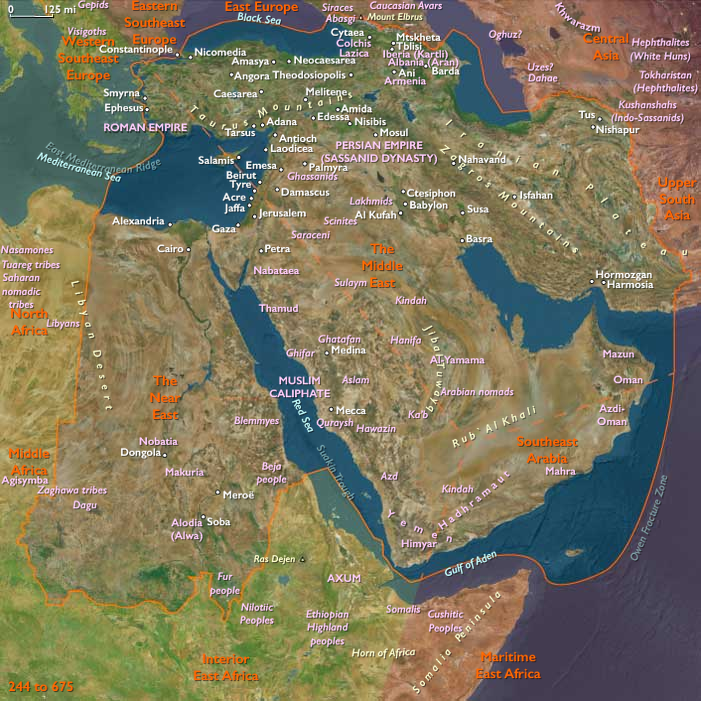
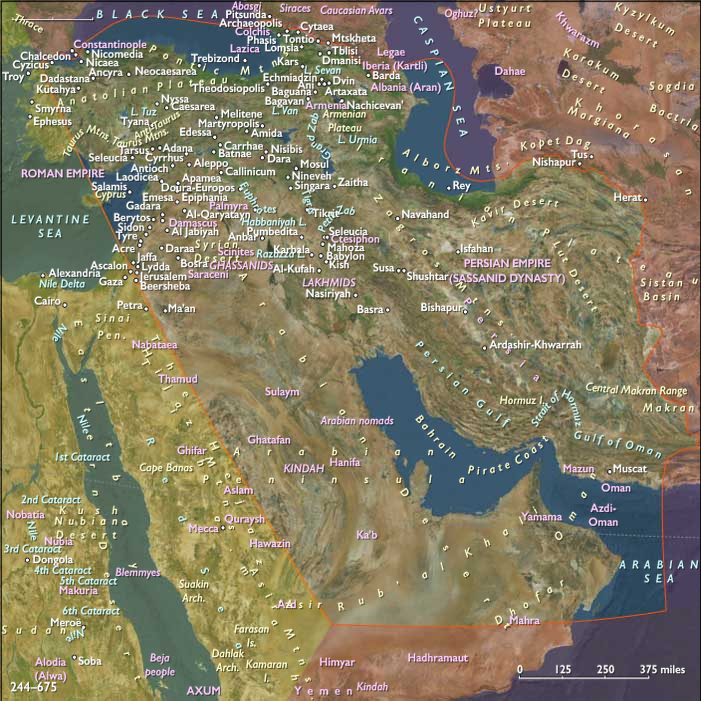
This era witnesses the dramatic escalation of the conflict between the Byzantine Empire and the Sassanian Empire, fueled by the ambitions of Persian king Khosrau II (Parviz). After the murder of Emperor Maurice in 602, Khosrau, under the pretext of avenging Maurice—his former ally and patron—initiates hostilities against the Byzantines. Beginning in 603, Khosrau's armies launch sweeping invasions into Byzantine territories, swiftly capturing major cities such as Dara and Amida in Mesopotamia.
Persian Advances in the Levant
The Persian forces rapidly expand their control into the Levant, securing key strategic locations and cities, including parts of Armenia and Syria. This territorial expansion severely weakens Byzantine influence and defense lines, significantly altering the regional balance of power. These victories mark the onset of a brutal and prolonged confrontation known historically as the final and most devastating phase of the Byzantine–Sassanian wars.
Impact on Regional Stability
The aggressive Persian campaigns profoundly disrupt regional stability, exacerbating existing economic hardships and social dislocation across affected areas. The conquest and subsequent occupation by Persian forces lead to increased tensions and hardships among local populations, reshaping political loyalties and setting the stage for further conflicts and shifts in regional power dynamics in subsequent decades.
This period, therefore, stands as a critical juncture, underscoring the fragility of imperial authority and foreshadowing greater turmoil in the Middle East.
People
Groups
- Persian Empire, Sassanid, or Sasanid
- Roman Empire, Eastern: Justinian dynasty
- Roman Empire, Eastern: Non-dynastic
Topics
Subjects
Regions
Subregions
Related Events
Showing 10 events out of 57091 total
Years: 604 - 615
People
Groups
- Persian Empire, Sassanid, or Sasanid
- Roman Empire, Eastern: Justinian dynasty
- Roman Empire, Eastern: Non-dynastic
Topics
Subjects
Regions
Subregions